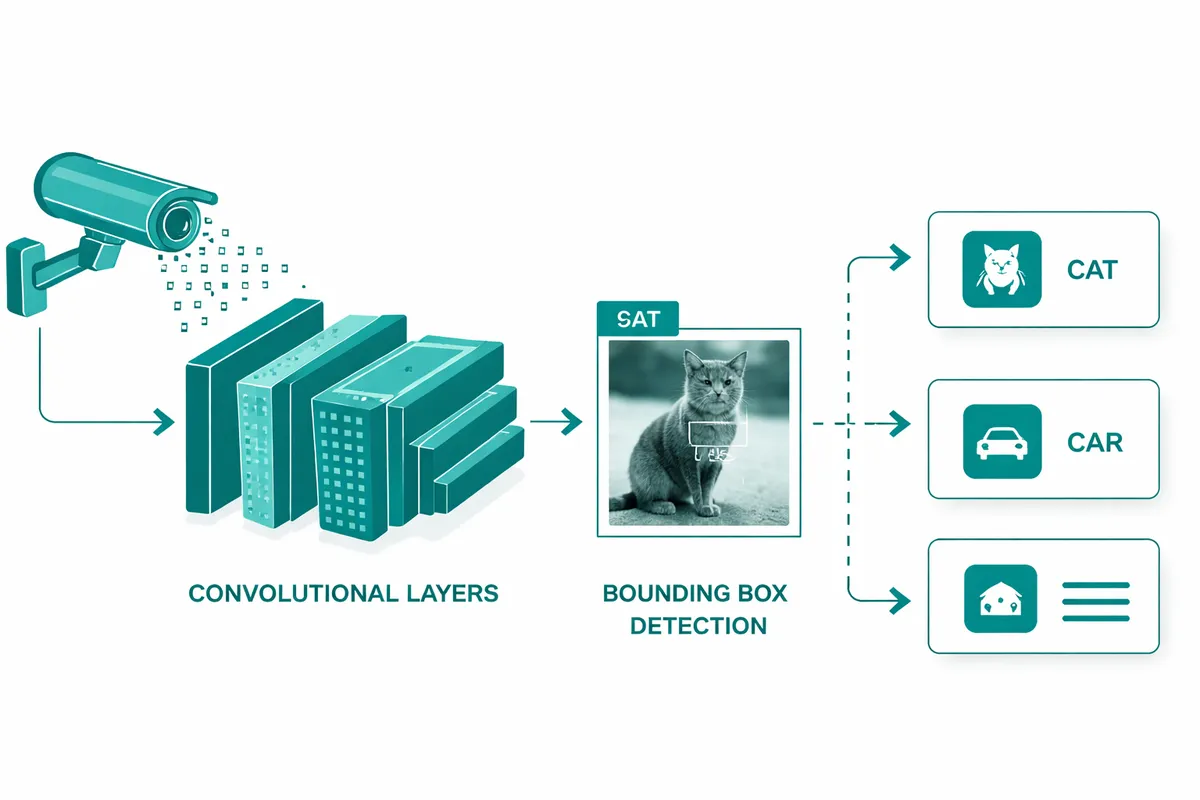
How We Build Computer Vision for Lincoln Square
The design process begins with a visual operations assessment. We spend time at your Lincoln Square business observing the specific visual tasks currently performed by staff, the decision rules applied to those tasks, and the consequences of visual errors. For a bakery on Lincoln Avenue, that means observing the quality inspection workflow for each product type, understanding the criteria applied by experienced bakers, and identifying where inconsistency or volume exceeds the capacity for reliable human inspection.
From the operations assessment, we define the computer vision system's scope: what it monitors, what criteria it applies, what alerts or data outputs it produces, and how it integrates with the business's existing operational systems. We also assess the camera and infrastructure requirements: where cameras need to be positioned, what resolution and frame rate are required for reliable detection, and what edge computing or cloud processing approach matches the business's connectivity and latency requirements.
Model development and training follow the infrastructure assessment. Computer vision models for quality inspection require training on labeled examples of passing and failing items specific to your product standards. For a Lincoln Square bakery, that means images of acceptable and unacceptable product at each quality checkpoint. Model training requires sufficient labeled examples to achieve reliable detection accuracy and sufficient diversity to handle the variation in product appearance that occurs across different batches and conditions.
Deployment includes the camera installation, the model deployment on local or cloud inference infrastructure, and the dashboard and alert systems that surface computer vision outputs to your Lincoln Square business staff. We train staff on how to use the system, how to interpret outputs, and how to report cases where the system's determination differs from their own assessment, which is the data that drives ongoing model improvement.
Industries We Serve in Lincoln Square
Bakeries and food production businesses along Lincoln Avenue represent the strongest quality inspection application for computer vision in Lincoln Square. The visual quality criteria for artisan bread, European pastries, and specialty food products are specific and learnable. A computer vision system trained on a Lincoln Square bakery's quality standards runs continuously without fatigue, captures data on failure rates and patterns, and frees experienced bakers from routine inspection to focus on the craft decisions that require genuine skill and judgment.
Specialty retail and home goods boutiques on Damen Avenue and Leavitt Street use computer vision for shelf monitoring and inventory accuracy. A boutique near Giddings Plaza that tracks shelf presentation and stock levels visually in real time reduces the manual inventory counting that currently occupies staff time and generates less frequent data. Stock alerts when a product section falls below display threshold drive timely reorder decisions without requiring a full manual inventory.
Restaurants and food service businesses near Western Avenue and the Lincoln Avenue corridor use computer vision for kitchen station monitoring, preparation quality check, plating consistency review, and dining room occupancy tracking. Restaurants with high service volume and quality consistency requirements benefit from visual monitoring that provides objective data on where service quality varies and when operational intervention is needed.
Music retailers and instrument dealers near Old Town School of Folk Music use computer vision for showroom floor monitoring, instrument position tracking, and the visual security monitoring that protects high-value inventory. A music retailer whose showroom computer vision system generates an alert when a valuable guitar has been moved from its designated position has a security and loss prevention tool that runs without dedicated security staff.
Event venues and community spaces near Giddings Plaza use computer vision for occupancy monitoring, crowd flow analysis, and the operational intelligence that improves event staffing and layout decisions. A venue that can see, in real time, that the bar area is congested while the outdoor patio is underused can redirect staff and encourage better space utilization.
Professional services and medical offices on Lawrence Avenue use computer vision for waiting room occupancy monitoring, patient flow analysis, and the privacy-compliant visual operational data that improves staff deployment. A medical practice with accurate waiting room occupancy data can staff front desk appropriately for volume patterns and reduce patient wait times.
What to Expect Working With Us
1. Visual operations assessment. We spend time at your Lincoln Square business observing the specific visual tasks, decision criteria, and failure modes that define your computer vision opportunity. This assessment determines scope, model requirements, and infrastructure needs before any development begins.
2. System design and infrastructure planning. We design the camera placement, processing architecture, and alert and dashboard systems. We specify the exact infrastructure requirements and provide a complete implementation plan before the build begins.
3. Model training and deployment. We collect the training data specific to your product or operational standards, train the computer vision models, validate accuracy against your quality criteria, and deploy the system in your Lincoln Square facility.
4. Monitoring, model improvement, and ongoing support. We monitor system performance after deployment, collect staff feedback on detection accuracy, and use that feedback to continuously improve model performance. Computer vision models improve with use. A system that is eighty-five percent accurate at launch is typically ninety to ninety-five percent accurate six months later with systematic model refinement.