How We Build Process Automation for Lincoln Square
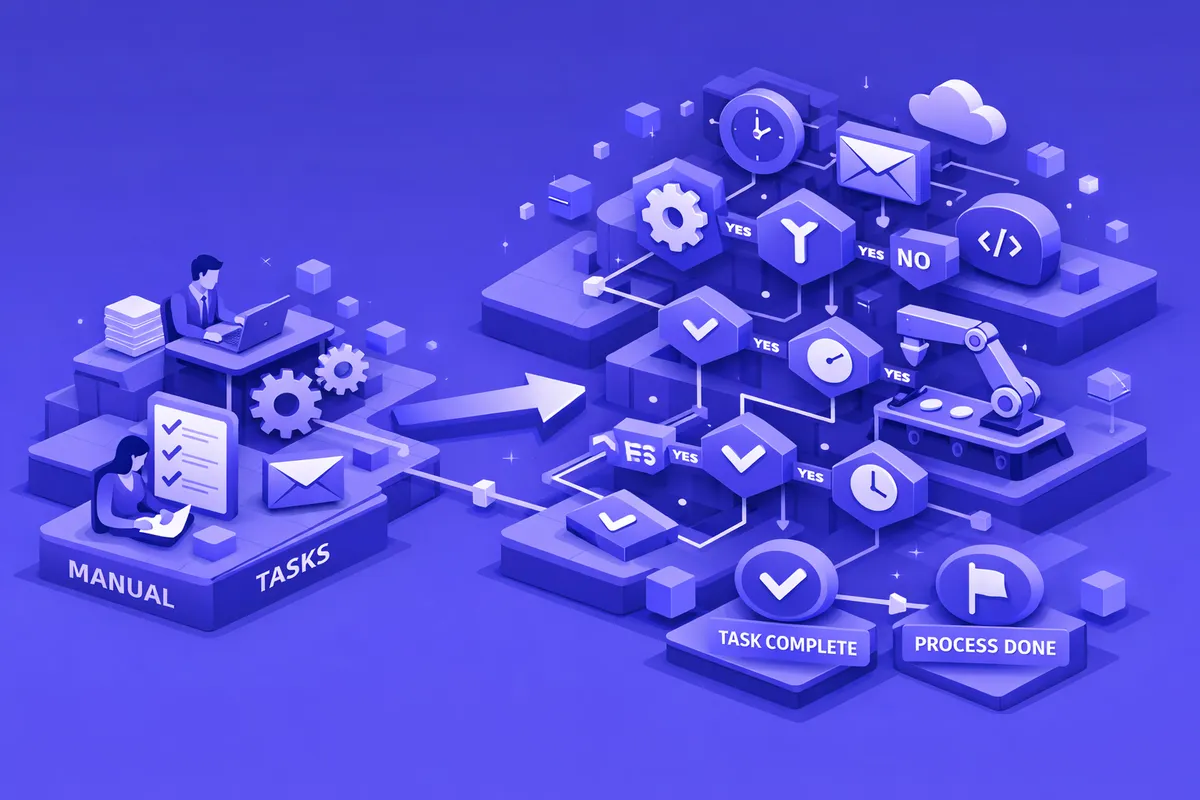
We start with a process audit. We spend time with your team understanding the specific workflows that run your business: what triggers each workflow, what steps it involves, who is responsible for each step, and what the output should be. We focus on the workflows that are both high-frequency and high-predictability, those are the best automation candidates.
We document each candidate workflow as a process map and identify the automation approach appropriate for each one. Some workflows are suited to no-code automation tools like Zapier or Make. Others require custom code because the logic is complex or the systems involved do not support standard integration platforms. We make this assessment explicitly so you know what each automation will cost to build and maintain.
We build the automations in priority order, starting with the highest-value and most predictable workflows. We test each automation with real data, including edge cases, before putting it into production. Automations that fail silently are worse than no automation; we ensure that failures generate alerts and that fallback processes exist for when automation breaks.
We document every automation: what triggers it, what it does, and what to do when it fails. This documentation is essential because the person who built the automation is not always the person who needs to maintain it.
Industries We Serve in Lincoln Square
Music schools and arts education businesses near the Old Town School of Folk Music corridor automate student enrollment processing, tuition billing reminders, lesson scheduling confirmations, recital registration, and instructor payment calculations. These workflows run on regular schedules with consistent patterns, making them highly suitable for automation.
Fitness and wellness studios on Western Avenue automate new member onboarding sequences, class reminder notifications, membership renewal reminders, lapsed member re-engagement campaigns, and instructor scheduling confirmations. Studios that automate these touchpoints maintain consistent communication with members without requiring staff attention for each individual interaction.
Independent restaurants and cafes on Lincoln Avenue and Lawrence Avenue automate catering inquiry acknowledgment and follow-up, vendor invoice routing and approval, reservation confirmation sequences, staff scheduling notification, and end-of-day sales summary delivery to management. These automations reduce the operational coordination load that currently falls on managers.
Boutique retail shops along Lincoln Avenue and near Giddings Plaza automate inventory reorder alerts when stock drops below set thresholds, customer follow-up sequences after purchases, birthday and anniversary communications to loyalty program members, and order confirmation and shipping notification sequences for online orders.
Professional service businesses operating from Damen Avenue into Ravenswood automate client onboarding document routing, project milestone notifications, invoice generation and delivery, payment reminder sequences, and project status update communications. Service businesses with multiple active client engagements particularly benefit from automation that ensures nothing falls through the cracks.
Event and cultural businesses near Welles Park automate ticket confirmation and attendee communication sequences, volunteer coordination communication, post-event feedback surveys, and seasonal event promotion sequences to past attendees. Events with large audiences generate high communication volumes that benefit most from automation.
What to Expect Working With Us
1. Process audit and automation planning. We document your key business processes, identify the automation candidates, and produce a prioritized plan with estimated time savings for each automation. You see the expected value before any work begins.
2. Automation design and build. We design and build each automation to the documented specification, using the appropriate tools for each workflow. We configure error handling and alerting for every automation so failures are visible rather than silent.
3. Testing and validation. We test each automation against real data and real edge cases before it goes into production. We document the test cases and results. We run each automation in monitoring mode for the first two weeks in production before removing the manual backup process.
4. Documentation and team training. We document every automation and train your team on what each one does, how to monitor it, and what to do when it fails. Automation should not create a black box that the business depends on without understanding.