How We Build Autonomous Workflow Agents for Lincoln Square
We begin by mapping the workflow in detail. We observe how work currently flows through your business, interview the staff members who execute each step, and document the sequence of actions, the information required at each step, and the systems that hold that information. We identify decision points where the workflow diverges based on the situation: an enrollment inquiry for an instrument the school does not offer requires a different response path than one for a primary instrument. We map these branching paths as part of the workflow design.
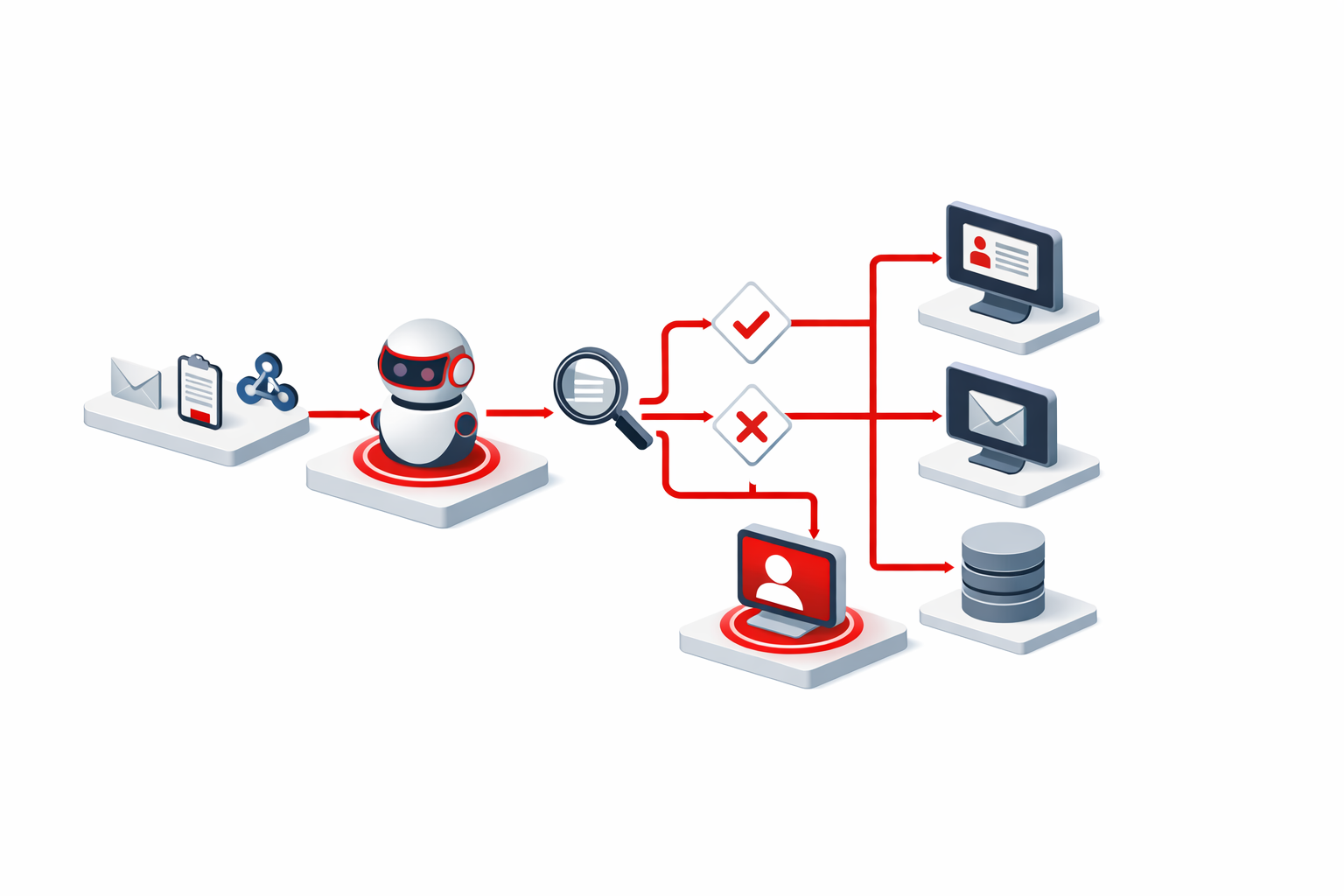
We identify which steps require human judgment and which can be automated reliably. Not every step in a complex workflow should be autonomous. Steps that require professional assessment, client relationship judgment, or contextual interpretation should remain with humans. Steps that require information transfer, system updates, template-based communication, and status tracking are candidates for automation. We design the agent system to handle the automatable steps and route to humans for the judgment steps, with clear context provided to the human about what has already happened.
We build the agents. Each agent is specialized for a specific function: a communication agent handles outbound messages, a scheduling agent manages calendar and availability, a data agent handles record creation and updates, a compliance agent checks required steps and completions. We configure each agent with your specific business rules, your system credentials, your communication templates, and the decision logic for the steps it handles.
We connect the agents to your existing systems. The scheduling agent needs access to your actual availability calendar. The billing agent needs access to your payment processing system. The communication agent needs access to your email platform. We build the integrations that give agents the access they need to execute their steps reliably.
We test the agent system with real workflow scenarios before deploying it to live business operations. Testing reveals edge cases that design does not anticipate: the enrollment inquiry that arrives at an unusual time, the client record that has formatting inconsistencies, the scheduling request that conflicts with an already-committed time slot. We refine the agent's decision logic and exception handling based on what testing reveals.
Industries We Serve in Lincoln Square
Music schools and lesson studios near the Old Town School of Folk Music use autonomous workflow agents to execute enrollment inquiry sequences: initial response, availability check, scheduling confirmation, billing setup, welcome communication, and placement assessment scheduling, without requiring administrator coordination through each step. Fall enrollment season, which previously required maximum staff attention for six weeks, becomes a managed flow rather than a crisis.
Professional service practices near the Brown Line Western station use autonomous workflow agents to execute client intake sequences: inquiry response, consultation scheduling, intake form collection, conflict check, engagement letter generation, and account setup. Attorneys and financial advisors spend their time on client work rather than on the administrative coordination that precedes it.
Yoga and wellness studios near Welles Park use autonomous workflow agents for class launch sequences: instructor scheduling, booking availability activation, member announcement, website bio update, and marketing campaign trigger. A new class or session opens without requiring the studio owner to coordinate each launch step manually.
Independent retailers on Lincoln Avenue and Damen Avenue use autonomous workflow agents for supplier ordering sequences: inventory threshold triggers purchase order generation, purchase order sends to vendor, confirmation creates receiving record, delivery updates inventory, and payment schedules billing. The supply chain workflow runs with minimal human coordination.
Medical and therapy practices use autonomous workflow agents for patient onboarding sequences: intake form collection, insurance verification request, appointment confirmation, reminder sequence activation, and billing setup. New patient experiences are consistent and complete without requiring front desk staff to manually track each onboarding step.
Community organizations and nonprofits in Lincoln Square use autonomous workflow agents for program enrollment and volunteer onboarding sequences. A volunteer who completes an application form triggers a sequence that sends confirmation, collects required documents, schedules orientation, and adds the volunteer to the scheduling system, without requiring staff to manually track each step.
What to Expect Working With Us
1. Workflow mapping and automation assessment. We spend two to three weeks documenting your most complex and time-consuming workflows in detail. We identify which steps are candidates for automation and which require human judgment to remain in the workflow. We assess the system integrations required to support automation for each step and estimate the implementation complexity.
2. Agent design and configuration. We design the agent network for your priority workflow, build each specialized agent, and configure them with your business rules, communication templates, and system integrations. We define the exception handling logic that determines how the agent network responds when a step encounters a situation outside the normal flow.
3. Integration and testing. We integrate the agents with your existing systems and test the complete workflow against real scenarios. We run parallel testing alongside your manual process for two to four weeks, comparing agent-executed outcomes against manually-executed outcomes to validate accuracy and completeness.
4. Deployment and ongoing monitoring. We deploy the agent system to live operations and monitor performance in the first thirty days. We track exception rates, identify patterns in workflow steps that frequently require human intervention, and refine the agent logic to handle these cases more effectively. Most Lincoln Square businesses see exception rates below ten percent within the first month, with the rate declining further as refinement incorporates real-world workflow data.