How We Build AI Strategy for Lincoln Square
We begin with a strategic assessment. We spend time understanding your business model, competitive position, and growth priorities. We interview leadership and staff about current workflows, pain points, and where time is being consumed on work that feels like it should not require human attention. We understand your customer relationships and what aspects of those relationships are most important to preserve through any AI adoption. We assess your current technology infrastructure and the integrations that exist or would need to be built to support AI adoption.
We identify the highest-value AI opportunities for your specific business type. For a music school in Lincoln Square, the highest-value opportunities are typically in enrollment management, parent communication, and scheduling optimization rather than in content generation or competitive intelligence. For a professional service firm near Damen Avenue, they may be in research automation, document preparation, and client reporting. For a yoga studio near Welles Park, they may be in member retention, class schedule optimization, and marketing automation. We prioritize based on your specific value drivers rather than generic AI opportunity lists.
We assess organizational readiness. What AI expertise exists in your team? What is your staff's capacity and appetite for new tools? What are the realistic time and financial resources available for AI adoption? A solo practitioner has a very different adoption capacity than a business with five employees. An organization with strong existing data infrastructure has different readiness than one with fragmented, manual record-keeping. The roadmap needs to reflect actual organizational capacity rather than theoretical best practices.
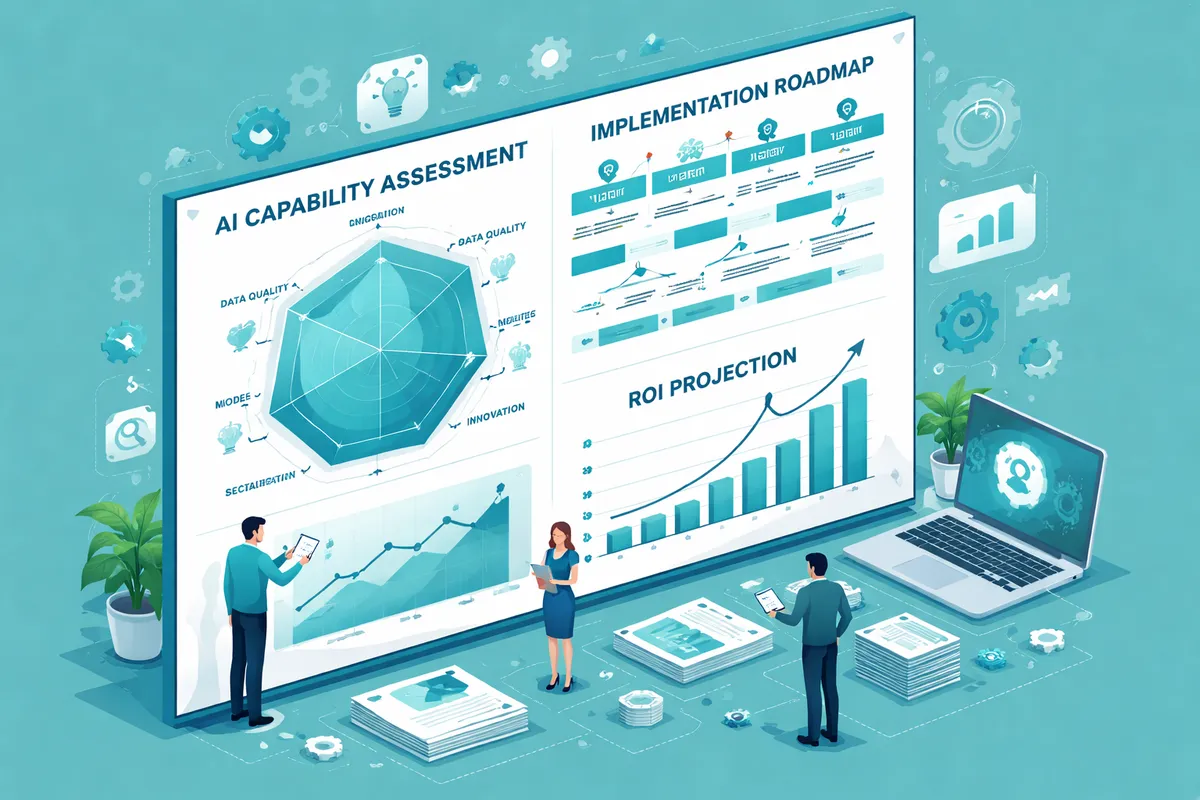
We produce a phased adoption roadmap with specific recommendations for each phase. Phase one typically focuses on one or two high-value, low-complexity AI adoptions that demonstrate clear value quickly and build organizational confidence in the approach. Phase two introduces more complex adoptions that may require infrastructure work or organizational change. Phase three, for businesses that reach it, evaluates custom AI development for use cases where off-the-shelf tools don't adequately serve the specific business needs.
Industries We Serve in Lincoln Square
Professional service practices near the Brown Line Western station and along Damen Avenue develop AI strategies focused on research automation, document preparation, client communication, and business development intelligence. The strategy accounts for compliance requirements in regulated fields like financial services and law, where AI adoption must fit within professional practice obligations.
Music schools and performing arts institutions near the Old Town School of Folk Music develop AI strategies that fit the specific context of music education: enrollment management, parent communication, scheduling, and marketing automation. We identify AI tools that are genuinely useful in an arts education context rather than recommending enterprise tools designed for corporate environments.
Yoga and fitness studios near Welles Park develop AI strategies focused on member retention, class optimization, marketing automation, and instructor scheduling. The strategy reflects the community-rooted character of Lincoln Square's wellness businesses and prioritizes AI adoptions that enhance rather than replace the human relationships that drive member loyalty.
Independent retailers on Lincoln Avenue and Damen Avenue develop AI strategies for inventory intelligence, customer relationship management, marketing personalization, and competitive monitoring. The strategy accounts for the small scale of most Lincoln Square independent retail operations and prioritizes AI adoptions with clear, near-term financial return.
Specialty food businesses and restaurants between Montrose and Lawrence develop AI strategies for marketing automation, customer relationship management, reservation optimization, and menu and pricing intelligence. The strategy reflects the operational realities of restaurant businesses and prioritizes AI adoptions that reduce administrative burden without compromising the hospitality character that Lincoln Square dining customers value.
Community organizations and educational nonprofits in the Lincoln Square area develop AI strategies for donor communication, program management, grant research, and community outreach. The strategy accounts for nonprofit resource constraints and prioritizes AI adoptions with clear impact on mission effectiveness.
What to Expect Working With Us
1. Business assessment and workflow analysis. We spend two to three weeks in structured conversation with your leadership and key staff, reviewing current workflows, identifying pain points and time sinks, and understanding your competitive context and customer relationships. We produce a structured summary of the highest-value AI opportunity areas for your specific business.
2. Opportunity prioritization and roadmap development. We assess each opportunity area against impact potential, implementation complexity, organizational readiness, and risk profile. We produce a phased adoption roadmap that sequences opportunities from lowest-complexity and highest-value to more complex and potentially higher-value adoptions. The roadmap is specific to your business type and operational context, not a generic framework.
3. Phase one implementation planning. We develop a detailed implementation plan for your first-phase AI adoptions: specific tool recommendations with vendor assessment, implementation timeline, resource requirements, success metrics, and risk mitigations. You leave with a plan you can execute, not just a strategic document.
4. Implementation support and ongoing advisory. We provide hands-on support during phase one implementation and are available for questions and course corrections as adoption proceeds. We conduct quarterly strategy reviews to assess progress against the roadmap, evaluate new AI developments that may affect your plan, and update phase two and three recommendations based on what phase one has revealed.