How We Build AI Sales Intelligence for Lincoln Square
We begin with a data assessment. We review your historical sales or enrollment data: closed deals or enrollments, their characteristics, how long they took, which channel produced them, and what actions occurred during the sales process. We also review unconverted prospects: what they looked like, where they dropped off, and whether there were patterns in the prospects who did not convert. For a Lincoln Square business with two to three years of history, this data is typically sufficient to build a useful predictive model.
We identify the features that predict conversion. For a music school, these might include: parent inquiry source, whether the family visited the school, child age relative to instrument appropriateness, timing of inquiry relative to semester start, and speed of family response to initial contact. For a fitness studio, they might include: how the trial class was discovered, class type attended, time of visit, conversation at checkout, and whether the prospect asked about membership pricing. We determine which of these features correlate with actual conversion by analyzing your historical data.
We build and validate the predictive model. Using the identified features, we train a model that assigns probability scores to current prospects based on their similarities to past conversions. We validate the model against historical data to assess its accuracy before deploying it on live prospects.
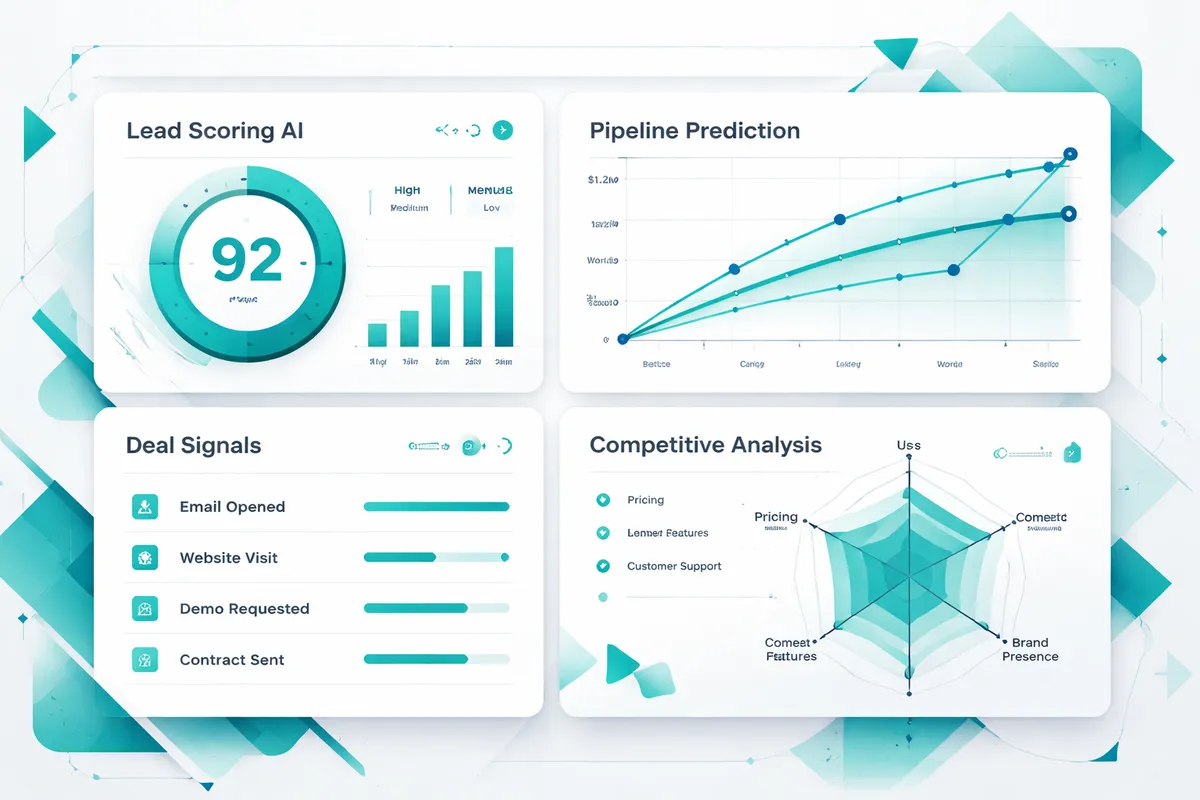
We deliver the intelligence through whatever tools your team uses: a scoring layer added to your CRM, a simple dashboard, or a weekly priority list. The goal is to make the intelligence immediately actionable rather than requiring your team to learn a new tool or process.
We review model performance monthly and update based on new conversion data. The model improves over time as it incorporates more historical data and as your team provides feedback on cases where the scores did or did not match actual outcomes.
Industries We Serve in Lincoln Square
Music schools and lesson studios near the Old Town School of Folk Music use sales intelligence to score enrollment inquiries by conversion probability and prioritize follow-up accordingly during enrollment season. A school that can identify the twenty highest-probability families out of forty inquiries in September and focus personalized follow-up on those families converts a higher percentage without requiring more total follow-up time.
Professional service practices near the Brown Line Western station use sales intelligence to identify which consultation requests are most likely to become clients and which marketing channels produce clients with the highest lifetime value. A financial planning practice that discovers referral clients convert at three times the rate of cold inquiry clients can reallocate marketing investment accordingly.
Yoga and fitness studios near Welles Park use sales intelligence to identify which trial class attendees are most likely to become ongoing members. Patterns in class type, visit timing, instructor assignment, and post-class conversation can predict conversion probability, allowing studios to focus retention efforts on the highest-probability trial members.
Boutique retail businesses on Lincoln Avenue and Damen Avenue use sales intelligence to identify which customer segments drive the highest repeat purchase rates and which first-time customers are most likely to become regulars. This intelligence guides loyalty program investment and customer relationship follow-up.
Therapy and wellness practices use sales intelligence to identify which initial consultation inquiries are most likely to become ongoing clients, and which existing clients are showing early signals of discontinuing services. Both the acquisition and retention intelligence help a small practice maintain a stable client base.
Independent restaurants near Giddings Plaza use sales intelligence for private event and catering sales, identifying which event inquiry characteristics correlate with booked events and focusing business development effort on the highest-probability inquiries.
What to Expect Working With Us
1. Data audit and feature identification. We review your historical conversion data, identify the features that correlate with successful conversions, and assess the quality and completeness of your historical records. For most Lincoln Square businesses, this phase takes two to three weeks and produces a clear picture of what predicts conversion in your specific business context.
2. Model development and validation. We build the predictive scoring model and validate its accuracy against historical data. We present validation results transparently, including cases where the model performs well and cases where its predictions are less reliable. We only recommend deploying the model when its accuracy justifies the operational change of prioritizing based on scores.
3. Dashboard setup and team training. We deliver the intelligence through your existing tools where possible and train your team on interpreting scores and acting on recommendations. We provide guidance on how to adjust follow-up cadence for high-score versus low-score prospects without abandoning low-score prospects entirely.
4. Monthly review and model refinement. We review model performance monthly, incorporating new conversion data and feedback from your team on cases where scores were accurate or inaccurate. Most models improve measurably over the first three months as the historical data set grows and refinement incorporates real-world performance feedback.