How We Build AI Integration for Lincoln Square
We start with a systems audit. We document every software tool the business uses, what data each tool holds, and what integration capabilities each tool exposes. Most modern business software tools provide APIs, the standard mechanism for system-to-system data exchange. Some older tools provide only data export capabilities. We assess what is available before designing an integration architecture.
We map the data flows that need to exist. For a music school, this typically means: new enrollment in the scheduling system triggers record creation in billing, billing; lesson completion in the scheduling system updates attendance in the student record; payment receipt in the billing system updates account status in the scheduling system. For a restaurant, POS sales data flows to accounting and inventory; new reservations flow to CRM for customer relationship tracking; customer preferences from CRM flow to POS for server reference.
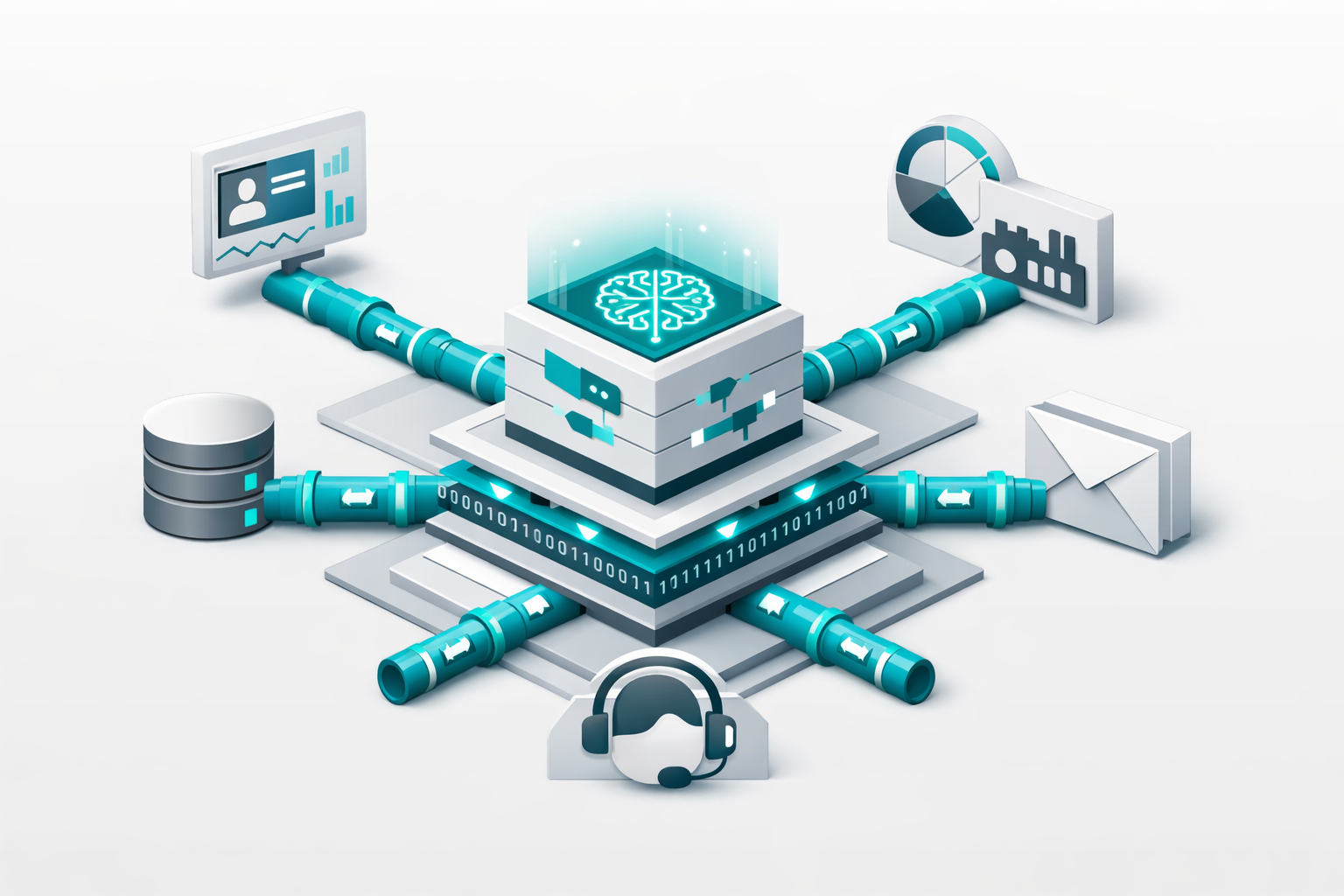
We design the integration architecture that will create those flows. For some connections, existing integration platforms provide prebuilt connectors that can be configured without custom development. For systems that require custom work, we build the API connections and data transformation logic needed to move data between systems accurately. We define how data is validated before passing between systems and what happens when a record fails validation.
We build, test, and deploy the integrations using your actual business data. Testing with real data exposes edge cases that are missed in theoretical design. We run integrated systems in parallel with existing manual processes during a validation period before fully cutting over. After cutover, we monitor integration health and respond to connection issues as software vendors update their systems.
Industries We Serve in Lincoln Square
Music schools and lesson studios near the Old Town School of Folk Music benefit from integration connecting scheduling, billing, parent communication, and teacher payroll systems. A student's complete record, lessons scheduled, attendance, billing status, and instructor notes, exists in a single integrated view. AI tools built on this integrated data can identify at-risk students, automate instructor communications, and generate parent progress reports without manual data assembly.
Independent restaurants along Lincoln Avenue integrate reservation systems, point-of-sale, inventory management, and customer email platforms. A regular customer's dining preferences flow from the reservation platform to the POS server interface. Post-visit email campaigns are triggered by POS transaction data. Inventory depletion signals purchasing thresholds automatically. AI tools on this integrated stack can personalize customer outreach, optimize menu pricing, and predict inventory needs.
Fitness studios and yoga practices near Welles Park integrate booking platforms, membership management, payment processing, and attendance tracking. Member behavior across all touchpoints, bookings, attended classes, missed sessions, membership tenure, lives in a unified view. AI retention tools built on this integrated data identify members at churn risk and trigger personalized outreach before they cancel.
Boutique retail shops on Lincoln Avenue and Damen Avenue integrate point-of-sale, e-commerce, inventory management, and email marketing. Purchase behavior from in-store and online transactions feeds a unified customer profile. AI recommendation tools built on this complete profile suggest new arrivals and complementary products based on the customer's full purchase history, not just their most recent transaction.
Wellness and therapy practices near the Brown Line Western station integrate scheduling, billing, patient records, and insurance processing. Patient intake flows from a single source of record into all downstream systems. Appointment reminders draw from the scheduling system automatically. Insurance billing data reconciles against payment records without manual matching. AI tools on this integrated stack can identify scheduling gaps, automate routine patient communications, and flag billing anomalies.
Professional service businesses in the Lincoln Square area integrate CRM, project management, billing, and accounting. A new client engagement triggers record creation across all systems from a single entry point. Project progress updates billing status automatically. Invoice generation draws from project data without re-entry. AI tools on this integrated stack can forecast revenue, identify at-risk projects, and surface client relationship data for proactive outreach.
What to Expect Working With Us
1. Systems audit and integration mapping. We document your complete technology stack, assess integration capabilities, and map the data flows that need to exist. We identify which connections are available through existing integration platforms and which require custom development. We estimate the complexity and timeline of each integration before any build work begins.
2. Architecture design and vendor selection. We design the integration architecture, select tools and platforms appropriate to your system mix and budget, and define data schemas and transformation rules. For Lincoln Square small businesses, we prioritize architectures that are maintainable without ongoing developer involvement so you are not permanently dependent on external technical support.
3. Build and testing. We build the integrations and test with your actual data. We validate that data flows correctly across every connection, that validation rules catch data quality issues, and that exception handling works as designed. We document the integration architecture so you have a record of how your systems connect.
4. Deployment and ongoing maintenance. We deploy to production and monitor integration health in the first thirty days. We provide documentation and training for your team so they understand how to identify and report integration issues. We offer ongoing maintenance agreements that cover integration updates when software vendors change their APIs, which typically happens one to two times per year for each tool in your stack.