How We Build AI Compliance Governance for Lincoln Square
We start with an inventory. Most businesses have adopted AI tools without systematically tracking them. Scheduling software with embedded AI features. Email platforms that use AI to generate draft replies. Accounting software with AI-powered categorization. Marketing tools that use AI to optimize send timing or personalize subject lines. We document every tool: what it does, what data it accesses, what decisions it informs, and what the vendor's data handling and retention policies actually say.
From the inventory we assess regulatory exposure. For healthcare practices, we evaluate each tool against HIPAA requirements, paying particular attention to whether patient data is transmitted to or processed by third-party AI systems and whether business associate agreements are in place. For financial advisors and insurance professionals, we review state and federal requirements around automated guidance and recommendation generation. For businesses in non-regulated industries, we identify Illinois Biometric Information Privacy Act and general privacy law implications.
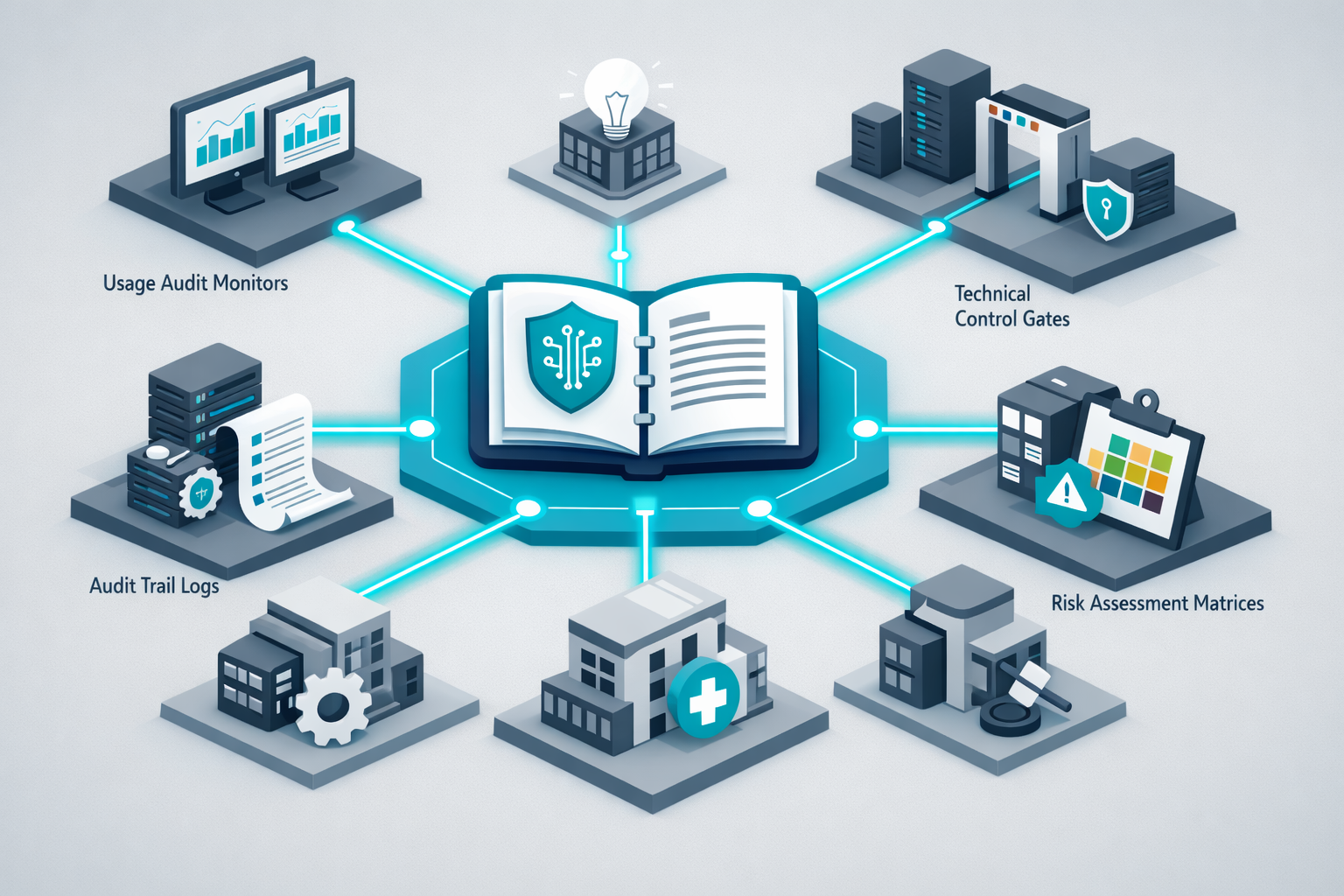
We build the governance policy document: what AI tools are authorized for use, what data each tool may access, what review is required before AI outputs are acted on, how incidents are documented and escalated, and how employees are trained. We write this at a level of specificity that satisfies an auditor without producing a document so bureaucratic that it gets filed and never referenced again.
We implement review workflows that fit within existing business routines. A solo therapist cannot add thirty minutes of compliance review to each session. We design documentation habits that take seconds: a checkbox field when AI assists with a session note, a brief log entry when AI is used to generate a client communication. These small habits create an audit trail that demonstrates responsible use without overwhelming a small practice.
We provide ongoing support as regulations evolve and the business adds new tools. The governance framework is a living document, not a one-time deliverable.
Industries We Serve in Lincoln Square
Medical and therapy practices along Lincoln Avenue and in the side streets off Lawrence Avenue use governance frameworks to manage HIPAA implications when AI tools assist with scheduling, documentation, and patient communication. We build documentation protocols and vendor assessment tools that give practice owners confidence that their AI use is compliant.
Financial planning and insurance offices near Giddings Plaza use governance frameworks to document the role of AI in client analysis and recommendation generation, ensuring that licensed professionals review AI outputs before acting on them and that the business can demonstrate appropriate oversight to state regulators and clients.
Legal and professional service offices near the Brown Line Western station area use governance frameworks to address bar association guidance on AI use in client communication and document preparation. We build disclosure language and review protocols that let attorneys use AI efficiently while meeting professional responsibility obligations.
Wellness studios and fitness businesses near Welles Park use governance frameworks to manage customer data used in AI-powered scheduling and personalization systems. A clear member data policy protects the business and signals the community values that Lincoln Square fitness customers respond to.
Independent retailers on Lincoln Avenue and Damen Avenue that use AI-powered recommendation engines or customer segmentation tools need privacy governance that meets Illinois law requirements and the transparency expectations of Lincoln Square's community-minded customer base.
Music schools and educational programs affiliated with the Old Town School of Folk Music corridor use governance frameworks appropriate to educational data, particularly when AI tools process information about minor students or generate communication to families.
What to Expect Working With Us
1. AI use inventory and risk assessment. We document every AI tool currently in use across your business, assess the data each tool accesses, and map regulatory exposure for your specific industry. For a therapy practice this includes reviewing vendor business associate agreements. For a financial advisor this includes reviewing guidance from state and federal regulators on automated recommendation systems. The inventory typically requires one working session and a documentation review period of one to two weeks.
2. Governance framework design. We build a governance policy document tailored to your business size, industry, and regulatory context. The policy defines authorized AI uses, data access boundaries, review requirements, incident documentation procedures, and training requirements. We write it at a practical level of detail that functions as a real operational guide rather than a compliance formality.
3. Review workflow implementation. We design and integrate the practical review habits that make governance operational rather than theoretical. For a therapy practice, this might be a thirty-second documentation step when AI assists with a session note. For a financial advisor, it might be a brief pre-use checklist before AI-generated analysis goes into a client communication. The goal is workflows that are sustainable without dedicated compliance staff.
4. Training, rollout, and ongoing support. We train your team on the governance framework and review workflows. For regulated industries, we provide documentation of the training itself. We schedule quarterly check-ins to update the framework as new AI tools are adopted or regulatory guidance changes.