How We Build Accounting Automation for Lincoln Square
We start by mapping your current accounting workflow in full. Where does money come in? Where does money go out? What systems do you currently use for invoicing, payments, and expenses? What does your current month-end close look like, and where does it break down? This diagnostic phase reveals the specific failure points and the places where automation will produce the most immediate time savings.
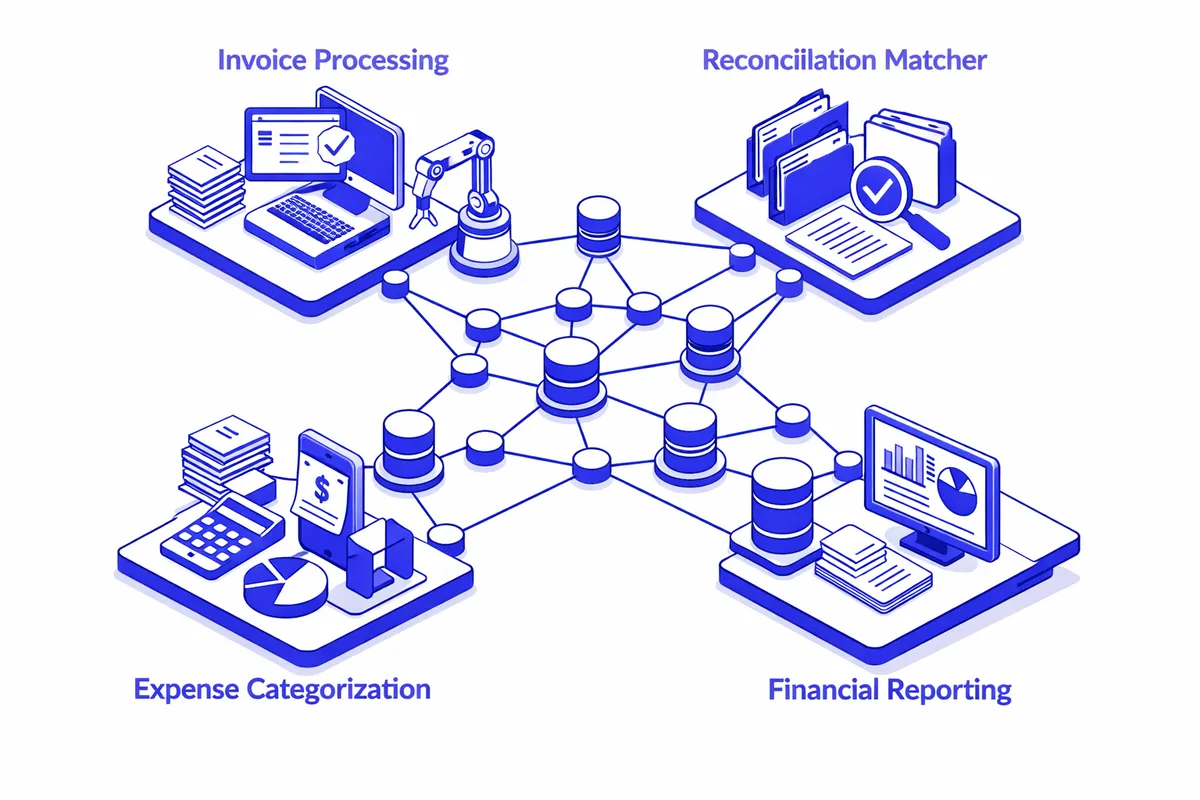
We then design an automation stack appropriate for your business type and scale. For most Lincoln Square small businesses, this means building on top of QuickBooks Online or Xero as the accounting core, connecting bank feeds for automatic transaction import, integrating your point-of-sale system so that daily sales post automatically, setting up a receipt capture tool linked to your business cards, and configuring automated invoice processing for your primary vendors.
We build and configure each integration, test the data flows to confirm accuracy, and run a parallel period where both the manual and automated systems operate simultaneously so you can verify that the automation is capturing everything correctly before switching over entirely.
We also document the system for your use and for any bookkeeper or accountant you work with. The automation does not replace your accountant; it gives them clean, organized data to work with instead of a month of manual catch-up every quarter.
Industries We Serve in Lincoln Square
Independent restaurants and food businesses on Lincoln Avenue and Lawrence Avenue deal with high transaction volumes across cash, card, delivery platforms, and catering. Accounting automation connects the POS system, the delivery platform payouts, and the vendor invoice flow into a single clean ledger that updates daily without manual entry.
Music schools and arts education businesses near the Old Town School of Folk Music manage tuition billing across semester, monthly, and per-session payment structures. Automation handles recurring tuition charges, tracks partial payments, generates statements for families, and posts all revenue to the accounting system without manual entry.
Fitness and wellness studios on Western Avenue and throughout the neighborhood manage membership fees, drop-in purchases, class packs, and instructor payments. Automation connects the scheduling and membership platform to accounting, so that every transaction appears in the books within minutes of occurring rather than at the end of the week when someone has time to reconcile.
Boutique retail and home goods shops along Lincoln Avenue track inventory purchases, point-of-sale revenue, and vendor invoices. Accounting automation connects the retail POS to accounting, processes vendor invoices automatically, and generates margin reports by product category without requiring a separate manual analysis.
Specialty service businesses, including salons, skilled trades, and professional service firms operating in Lincoln Square and into Ravenswood and North Center, use automation to handle project invoicing, track billable time against customer accounts, and generate the accounts receivable reports that tell them which clients are overdue.
Event and creative businesses near Giddings Plaza and Welles Park manage deposits, installment billing, vendor payments, and contractor payroll in patterns that are irregular compared to retail. Automation handles the event billing lifecycle: deposit invoice, balance invoice, payment receipt, and expense allocation, without requiring manual tracking for each engagement.
What to Expect Working With Us
1. Accounting workflow audit. We map your current income sources, expense categories, payment tools, and accounting system to identify the specific manual steps that can be eliminated. We document the full current state before proposing any changes, so the automation design is grounded in how your business actually operates rather than a generic template.
2. Automation design and tool selection. We design the specific automation stack for your business, selecting tools that integrate with your current accounting system and eliminating redundant platforms. We configure the integrations, set up the bank feeds, and build the invoice processing rules that handle your specific vendor and payment patterns.
3. Testing and parallel-run validation. We run the automated system in parallel with your existing process for two to four weeks, verifying that every transaction is captured correctly and that the automation handles edge cases specific to your business. We do not cut over to automation until the data matches.
4. Handoff and training. We document the system, train you and any team members who interact with the accounting workflow, and establish a support channel for the first ninety days. We connect your bookkeeper or accountant to the new system and ensure they have what they need to work efficiently with the clean data the automation produces.