How We Build Accessible Design for Lincoln Square
We begin with a structured audit of your current site, evaluating it against the four WCAG 2.1 principles: perceivable, operable, understandable, and robust. We test with actual screen readers, keyboard-only navigation, and automated accessibility scanners. We document every failure with severity, location, and remediation recommendation.
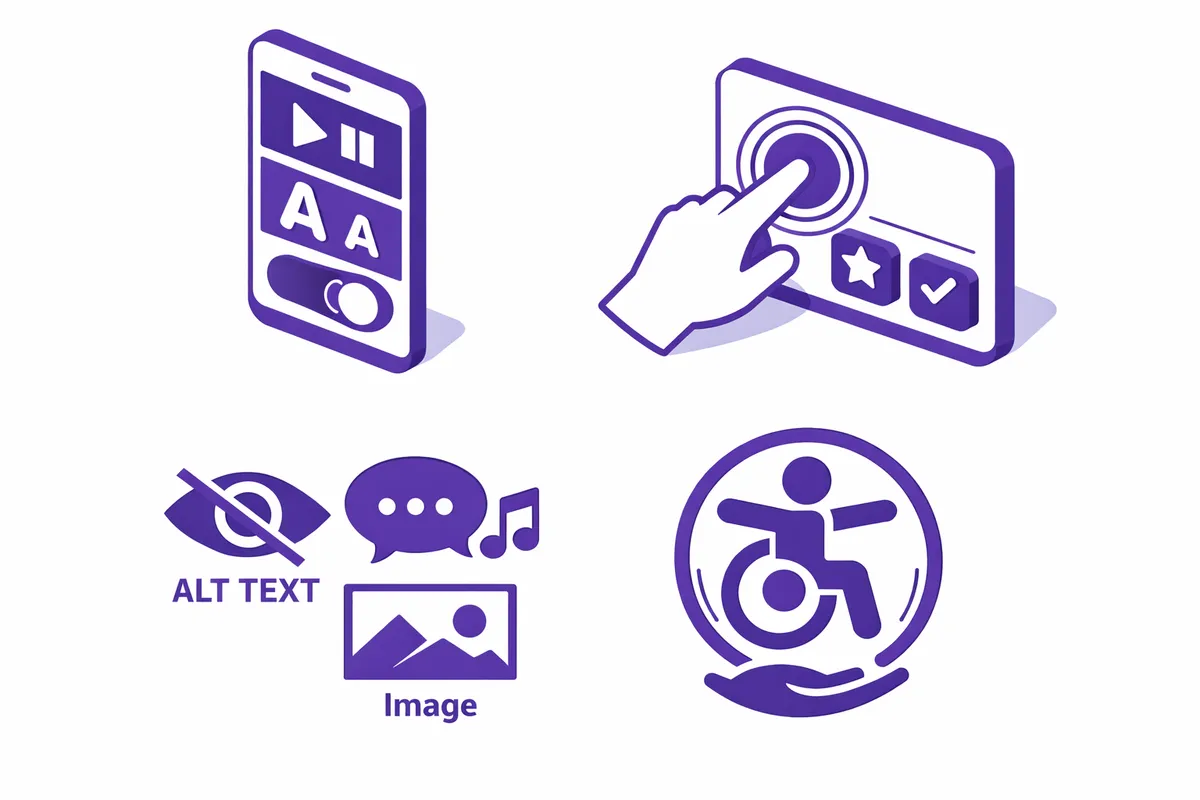
For new builds, we start with an accessibility-first design system. This means semantic HTML structure from the first line of code, color palettes that meet WCAG contrast ratios at AA or AAA level, form components that work correctly with screen readers, focus states that are visible for keyboard users, and image components with alt text workflows built in. Accessibility integrated from the start costs a fraction of what remediation costs after the fact.
For remediation of existing Lincoln Square business sites, we prioritize by severity and customer impact. We fix critical failures that block screen reader users entirely before addressing lower-severity issues. We work in the actual codebase or CMS platform your site runs on: Squarespace, WordPress, Webflow, Shopify, or custom builds. We document all changes and provide a remediation report suitable for legal compliance purposes.
We also build internal content workflows that maintain accessibility over time. Alt text guidelines for your team, heading structure templates, video captioning protocols. Accessibility is not a one-time fix; it degrades as content is added without the right practices. We make sure your team has what it needs to keep the site accessible after we complete the initial work.
Industries We Serve in Lincoln Square
Music schools and arts education businesses near the Old Town School of Folk Music need accessible registration forms, course catalog pages that work with screen readers, and event listings that communicate clearly to users with visual impairments. Parents who rely on screen readers should be able to register their children without assistance from a sighted intermediary.
Independent restaurants and cafes on Lincoln Avenue need accessible menus, online reservation systems, and ordering platforms. A customer with low vision should be able to read your seasonal menu and book a table for Friday evening without needing to call. The experience should be equivalent to what a sighted user receives.
Fitness and wellness studios on Western Avenue and surrounding blocks need accessible class scheduling systems, accessible membership signup flows, and event registration pages that work for users with motor impairments navigating by keyboard. Inclusive design also includes designing for users who may be navigating with limited fine motor control.
Boutique retail and home goods shops along Lincoln Avenue need product pages with descriptive alt text, accessible checkout flows, and navigation structures that work logically when traversed by keyboard or screen reader. These technical details directly determine whether a customer who relies on assistive technology can complete a purchase.
Bookstores and cultural businesses near Welles Park and Giddings Plaza serve community members across a wide age range. Accessible design ensures that older residents who may rely on text enlargement, high contrast settings, or screen magnification can use your digital presence as easily as younger customers who navigate without accommodations.
Service businesses and professional offices operating along Damen Avenue and into North Center serve clients who may have disabilities that affect digital access. Legal, financial, healthcare-adjacent, and consulting businesses have both ethical and legal reasons to ensure their client-facing digital properties meet accessibility standards.
What to Expect Working With Us
1. Accessibility audit and prioritized remediation plan. We run a comprehensive audit of your current digital properties using screen readers, keyboard testing, and automated tools. We deliver a prioritized remediation report that distinguishes critical blockers from lower-priority improvements, with clear guidance on what to fix first and why.
2. Design and development remediation. We make the changes. Whether that means restructuring your site's HTML, replacing inaccessible navigation components, updating color schemes to meet contrast ratios, or rebuilding your contact form with proper ARIA labels, we handle the technical work in your platform and document every change.
3. Content and workflow training. We train your team on the content practices that maintain accessibility over time: how to write alt text, how to structure headings, how to caption video, how to check new content before publishing. A Lincoln Square business that publishes new content regularly needs these practices embedded in the workflow, not handled as a periodic audit.
4. Compliance documentation and ongoing monitoring. We provide a remediation report that documents the work done and the accessibility level achieved. We can also set up ongoing monitoring that alerts you when new content or site changes introduce accessibility regressions, so you do not need to rely on periodic manual audits to stay compliant.