Your Cart (0)

Your cart is empty

Lincoln Park, Chicago

Supply Chain Automation in Lincoln Park

Supply Chain Automation for businesses in Lincoln Park, Chicago. We know the neighborhood, the customers, and what it takes to compete locally.

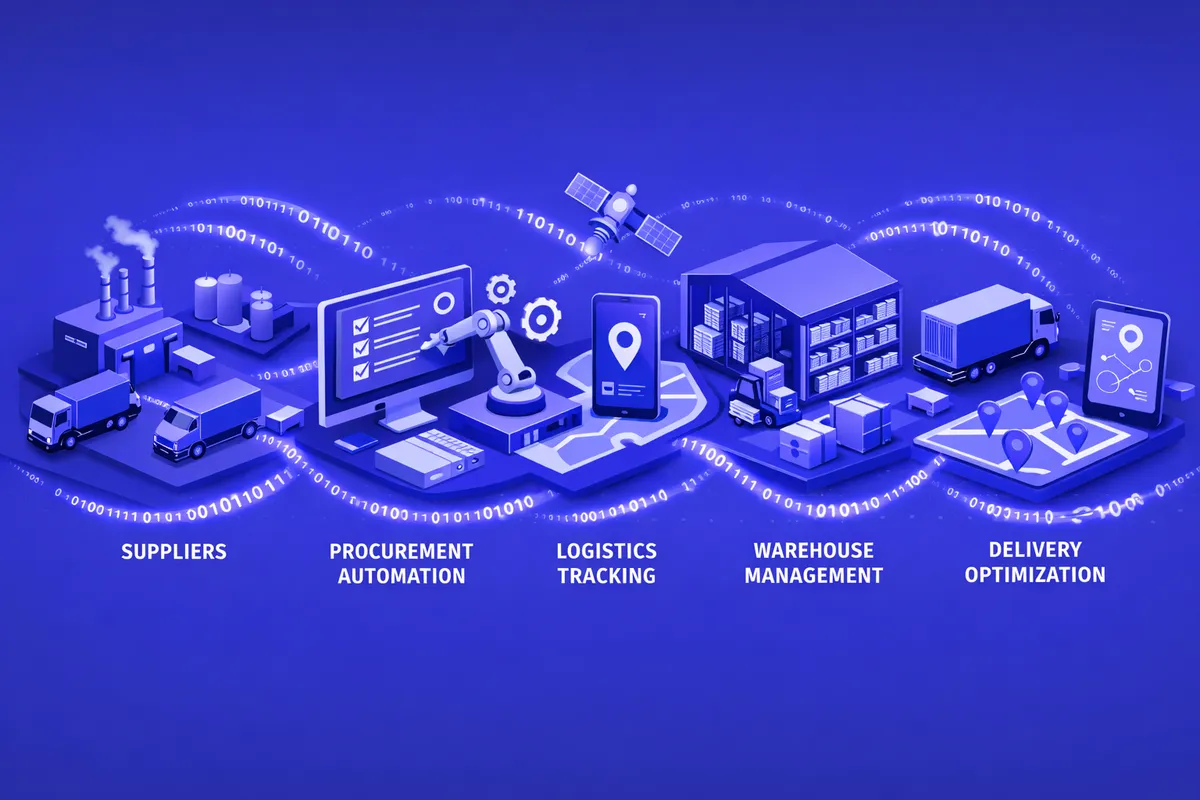
Supply Chain Automation in Lincoln Park service illustration

Our Supply Chain Automation Work for Lincoln Park

  • Procurement workflow automation for Lincoln Park boutiques and specialty retailers: demand-triggered purchase order generation, supplier communication, and acknowledgment management
  • Restaurant supply chain automation for Lincoln Park dining establishments: ingredient reorder triggers based on projected covers and recipe requirements, supplier management, and delivery confirmation tracking
  • Inventory replenishment automation with demand forecasting calibrated to Lincoln Park seasonal patterns and DePaul academic calendar influences
  • Supplier communication automation: order confirmations, advance shipping notices, delivery window updates, and exception alerts
  • Receiving and invoice matching automation reducing manual reconciliation between purchase orders, receiving records, and supplier invoices
  • Perishable goods automation with FIFO enforcement and waste tracking for Lincoln Park restaurant and specialty food retail operations
  • Multi-location supply chain coordination for Lincoln Park businesses with operations at multiple North Side locations
  • Integration with ERP, POS, and accounting systems common in Lincoln Park's business mix

Industries We Serve in Lincoln Park

Boutique Retail: The boutiques along Armitage and Webster managing multi-vendor inventory across a physical store and e-commerce channel benefit from purchase order automation, receiving workflow management, and supplier performance tracking that replaces the manual purchasing processes that work at small scale but break under growth.

Restaurants and Dining: The restaurants on Clark and Halsted sourcing from regional suppliers, specialty distributors, and local vendors manage supplier relationships and reorder cycles where automation reduces both the administrative burden and the human error that drives food cost variance and stockouts.

Specialty Food and Beverage: The specialty food retailers, wine shops, and beverage businesses throughout Lincoln Park manage perishable inventory with short turnover windows where FIFO enforcement, expiration tracking, and demand-driven replenishment automation reduce waste and improve margin.

Fitness and Wellness Retail: The retail components of Lincoln Park's fitness studios, managing supplement lines, branded apparel, and equipment, benefit from supply chain automation integrated with their scheduling and POS systems.

What to Expect

Process Assessment: We map your current supply chain workflows, identify the highest-cost bottlenecks, and produce a prioritized automation roadmap with ROI estimates for each opportunity. For Lincoln Park restaurants, this includes mapping supplier relationships, ordering cycles, and the manual reconciliation burden that automation will eliminate.

Design and Integration Architecture: We design automated workflows and define integration architecture with your existing systems before implementation begins.

Implementation: Highest-priority automations first. Real-data testing before go-live. Monitoring that ensures reliable performance in Lincoln Park's operational context, including Cubs season demand spikes for Clark Street businesses.

Expansion and Optimization: We extend automation to additional process areas and optimize live workflows based on operational data.

Frequently Asked Questions

For Lincoln Park boutiques, purchase order automation delivers immediate ROI by eliminating the manual ordering process and the errors that accompany it. For restaurants on Clark and Halsted, inventory replenishment automation and invoice matching deliver the fastest measurable returns through food cost control and administrative time savings. Both categories typically see 40 to 60 percent reductions in time spent on routine supply chain administration within the first sixty days of implementation.

Lincoln Park's demand patterns include Cubs season traffic concentration near Clark and Sheffield, DePaul's academic calendar influence on the neighborhood's weekly rhythm, and summer weekend tourist and resident activity that affects retail and restaurant volume. We build demand forecasting that captures these patterns from your historical data and uses them to generate forward-looking reorder signals. A restaurant near Wrigley Field gets replenishment triggers that anticipate game day demand, not signals calibrated to a normal Tuesday.

Yes. We integrate with the systems Lincoln Park businesses already use: Square, Toast, Lightspeed for POS; QuickBooks, Xero for accounting; and specialty platforms specific to restaurant and retail operations. Integration ensures supply chain transactions flow to financial records automatically, eliminating the double-entry that manual processes require and the reconciliation errors that compound over time.

Exception handling is designed into every automated workflow from the start. When a delivery variance is detected during receiving, the automation flags the discrepancy, captures the variance details, and routes the exception to the appropriate person with context for resolution. Rather than errors being discovered during monthly reconciliation when resolution options are limited, automation surfaces them at the moment of receiving when action is still immediate and options are broader.

Yes. Supply chain automation handles vendor diversity by building each supplier relationship into the system with the appropriate communication method, lead times, minimum order requirements, and contact information. A boutique on Armitage working with a combination of national wholesalers, regional designers, and individual artisans manages all of these relationships through the same system with workflows calibrated to each supplier type. Artisan suppliers who communicate via email get automated order emails. Larger wholesalers with B2B portals get automated portal submissions. The automation adapts to each supplier's capabilities.

A focused automation for a single process, such as purchase order generation for a boutique's primary vendors, takes four to six weeks from kickoff to go-live. Restaurant supply chain automation connecting inventory management, ordering, and invoice matching typically takes eight to fourteen weeks. Multi-location coordination and complex ERP integration add time depending on scope. Learn more about [supply chain automation across Chicago](/chicago/supply-chain-automation) or explore other [digital services for Lincoln Park businesses](/chicago/lincoln-park).

Ready to get started in Lincoln Park?

Let's talk about supply chain automation for your Lincoln Park business.