Your Cart (0)

Your cart is empty

Lincoln Park, Chicago

Inventory Management in Lincoln Park

Inventory Management for businesses in Lincoln Park, Chicago. We know the neighborhood, the customers, and what it takes to compete locally.

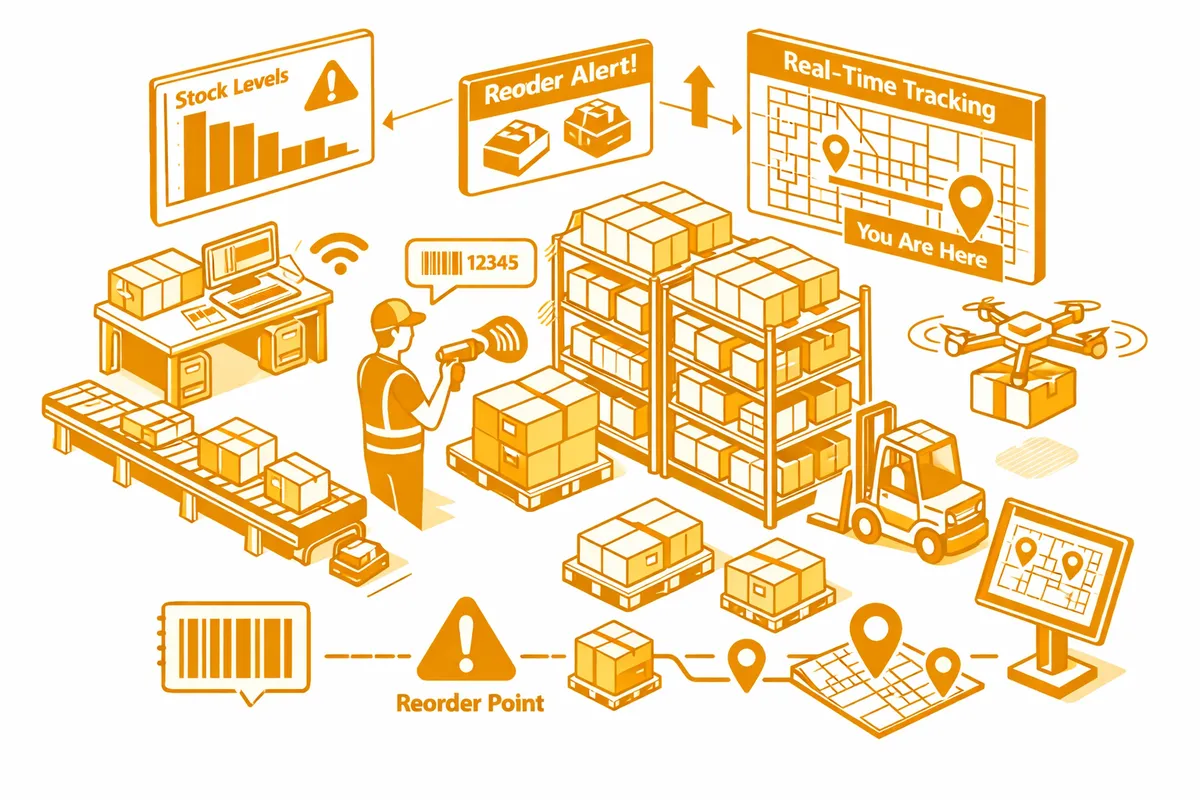
Inventory Management in Lincoln Park service illustration

Our Inventory Management Services for Lincoln Park

  • Inventory process audit and operational gap assessment calibrated to Lincoln Park's business mix
  • Custom inventory management platform design and development
  • Real-time stock tracking across locations, channels, and product categories
  • Automated reorder point management based on Lincoln Park demand patterns and supplier lead times
  • Multi-location synchronization for Lincoln Park businesses expanding to additional North Side locations
  • Barcode and QR code scanning integration for retail and restaurant environments
  • Demand forecasting using historical sales data, Lincoln Park seasonal patterns, and promotional calendars
  • Consignment inventory management for boutiques with mixed ownership models
  • Perishable goods management with FIFO enforcement and waste tracking for Lincoln Park restaurants
  • E-commerce channel integration syncing brick-and-mortar and online inventory in real time
  • Supplier management and purchase order generation with lead time modeling
  • Financial integration with accounting software for inventory valuation and COGS tracking
  • Mobile inventory management for warehouse and stockroom use

Industries We Serve in Lincoln Park

Boutique Retail: The independent retailers along Armitage, Webster, and the Clark and Halsted corridors manage inventory that requires flexibility: owned goods, consignment, seasonal buying, and online channel synchronization. We build retail inventory systems for this complexity.

Restaurants and Bars: Lincoln Park's competitive dining scene on Clark and Halsted requires food cost control that only accurate, real-time inventory provides. We build restaurant inventory systems with FIFO enforcement, waste tracking, recipe-level cost analysis, and reorder automation that reduces both stockouts and overstock.

Specialty Food and Beverage: The specialty food retailers and wine shops scattered through Lincoln Park manage SKU complexity and perishable inventory that standard tools handle poorly. Custom systems with lot tracking, expiration monitoring, and vendor management address these requirements.

Fitness and Wellness Retail: The retail components of Lincoln Park's fitness studios and wellness practices, including supplement lines, branded apparel, and equipment, benefit from inventory systems integrated with their scheduling and POS software.

What to Expect

Step 1: Inventory Process Audit. We document your current state: what you track, where tracking breaks down, what decisions are made on incomplete information. For Lincoln Park businesses, this includes mapping seasonal demand patterns, channel complexity, and any consignment or special inventory categories.

Step 2: System Design and Scoping. We design the system architecture, define integrations, and establish a phased delivery roadmap with clear timelines.

Step 3: Build and Integration. We build and integrate the system with your existing POS, e-commerce platforms, and accounting software. Testing uses your actual product catalog and operational scenarios.

Step 4: Launch and Continuous Improvement. We launch with your team, provide training, and monitor early cycles. Post-launch, we support ongoing optimization as your Lincoln Park business evolves.

Frequently Asked Questions

The most common problems are stockouts on fast-moving items during peak North Side weekends, excess inventory in slow-moving SKUs that is difficult to identify without category-level turnover reporting, reconciliation between physical counts and system records taking hours each week, and inability to see what is selling in real time across an online channel and the storefront simultaneously. Any one of these is a signal that inventory management capability is constraining business performance.

Lincoln Park's demand has distinct seasonal patterns: Cubs season drives foot traffic and impulse buying along Clark and Sheffield, the DePaul academic calendar affects the neighborhood's rhythm from September through June, and the summer weekend tourist traffic creates demand spikes in the restaurant and retail corridor. We build demand forecasting that captures these patterns from your historical data and uses them to generate forward-looking reorder signals. The result is reorder timing that anticipates seasonal peaks rather than reacting to stockouts after they happen.

Yes. Multi-channel inventory synchronization is one of the most common requirements for Lincoln Park boutique retailers who have grown their online presence alongside the Armitage or Webster storefront. The integration maintains a single inventory count shared across both channels, routes online orders to fulfill from the appropriate inventory pool, and updates availability in real time to prevent overselling. A Lincoln Park retailer who manually reconciles online and in-store inventory knows exactly how valuable eliminating that process would be.

Consignment inventory has different financial treatment than owned inventory and requires separate tracking to avoid valuation errors. We build consignment tracking as a distinct module within the inventory system: items are categorized by consignment relationship, consignor payables are calculated automatically based on sales and consignment terms, and consignment inventory is excluded from owned inventory valuation. For Armitage boutiques running significant consignment alongside owned goods, this distinction is both operationally and financially important.

Yes. Restaurant inventory management is one of our most impactful implementations because food cost control directly determines profitability. We build systems with daily usage tracking by recipe, waste logging at the line and prep level, purchase order generation tied to forecasted covers, and vendor management that tracks lead times and pricing over time. A Lincoln Park restaurant that moves from manual inventory to a system with these capabilities typically sees food cost percentage improve measurably within the first ninety days.

A focused system for a single-location business with standard product types typically takes six to ten weeks from kickoff to launch. Multi-location systems, consignment complexity, restaurant-specific perishable management, and e-commerce integration add time depending on scope. We phase delivery so your team has a working system and better inventory visibility before all features are complete. Learn more about [inventory management systems across Chicago](/chicago/inventory-management) or explore other [digital services for Lincoln Park businesses](/chicago/lincoln-park).

Ready to get started in Lincoln Park?

Let's talk about inventory management for your Lincoln Park business.