How We Build Custom ERP for Lincoln Park
Operations mapping starts with observation. Before we design architecture we spend time in the business. For a boutique retailer we spend time in the stores watching transactions, receiving shipments, and running the end-of-day process. For a restaurant group we spend a service shift in the kitchen, the dining room, and the back office. For a professional services firm we sit with partners and administrators walking through a monthly billing cycle.
Data model built around your actual entities. The data model for a Lincoln Park boutique retailer's ERP should reflect how you actually think about inventory, vendors, customers, and locations, not how a generic retail ERP vendor models those entities for a national chain. Consignment vendors, seasonal buys, VIP customer segments, and cross-location inventory transfers between Armitage and Halsted stores all appear in the data model because they are real parts of your operation.
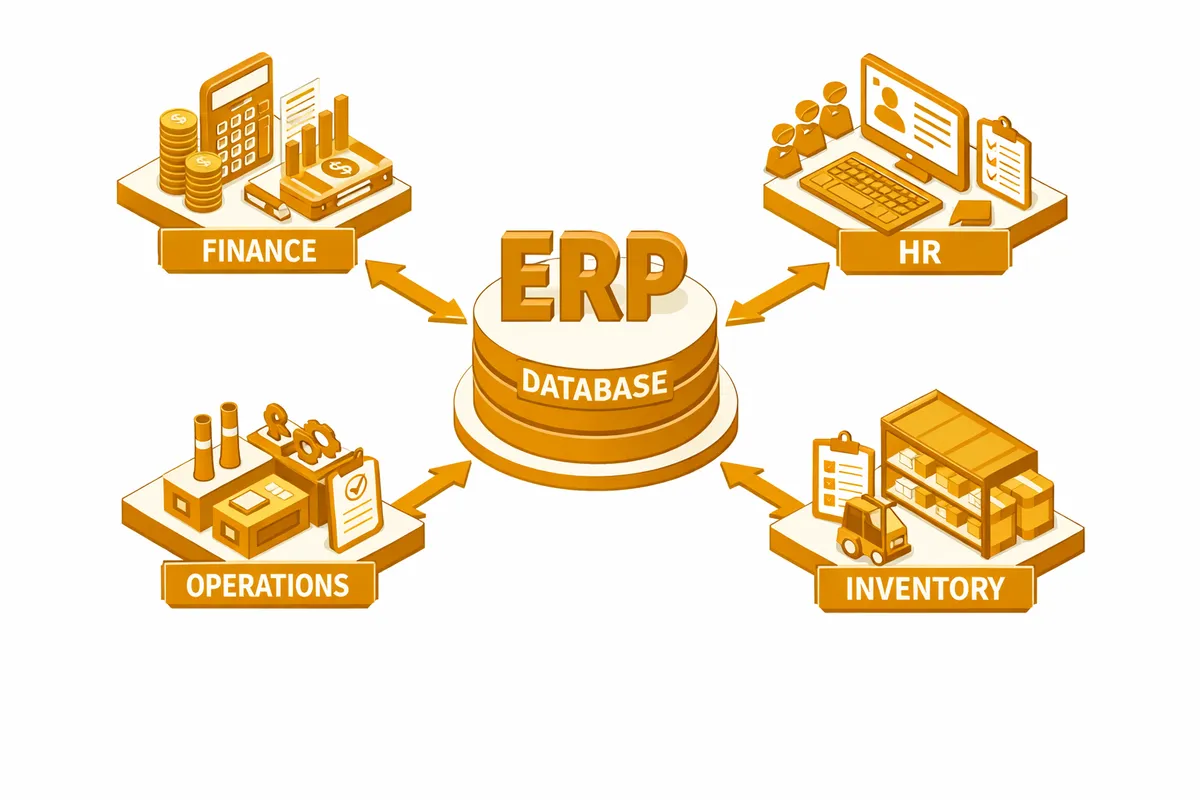
Phased delivery. A full ERP replacement is a significant project, and we structure delivery so you see value early. For most Lincoln Park clients the first phase covers the most operationally important module, often inventory or project accounting, with subsequent phases adding finance, reporting, and integration layers.
Integration rather than replacement where it makes sense. Your point-of-sale system, your reservation platform, your accounting system during transition, or your document management platform may be staying even as the ERP replaces the middle layer that ties everything together. We design the integration architecture to preserve what works and replace what doesn't.
Mobile and field access built in. Retail staff working the floor, restaurant managers running service, and professional services staff working from client sites all need access that does not require sitting at a desktop. We design mobile interfaces for the operational functions that need them rather than treating mobile as an afterthought.
Industries We Serve in Lincoln Park
Multi-location boutique retail along Armitage, Halsted, and Clark Street use custom ERP to unify inventory, purchasing, customer relationship management, and e-commerce across stores. Operations that have outgrown standalone point-of-sale systems and spreadsheet-based inventory find significant operational improvement.
Multi-unit restaurant groups near the Steppenwolf Theatre district, along the Clark Street corridor, and in the Lincoln Avenue dining strip use custom ERP to connect food cost, labor, reservations, private events, and financial consolidation into one system.
Professional services firms in the Armitage and Lincoln Avenue brownstones, including law practices, consulting firms, architecture studios, and design practices, use custom ERP for project accounting, time tracking, billing, document management, and client relationship history.
Boutique hotels and hospitality operations near the zoo and in the Old Town adjacent blocks use custom ERP to integrate reservations, housekeeping, maintenance, guest history, and financial reporting into a system sized for independent operations.
Membership-based businesses including wellness studios, private clubs, and specialty fitness operations along Clark Street and Halsted use custom ERP for member lifecycle management, class scheduling, retention analytics, and multi-location operations.
Specialty e-commerce brands headquartered in Lincoln Park office spaces use custom ERP to unify inventory across warehouses, integrate with multiple sales channels, and provide the operational reporting that growth-stage consumer brands need.
What to Expect Working With Us
1. Discovery and observation. Two to three weeks of structured operations mapping including on-site observation of the business in motion. For Lincoln Park retail, restaurant, and hospitality clients the observation phase is where the requirements actually get right.
2. Architecture and phasing. We design the data model, module structure, integration architecture, and phased delivery plan. You review and approve before any development starts.
3. Phased development. The first operational module is typically live within fourteen to twenty weeks. Subsequent phases build on the foundation without disrupting what is already working.
4. Cutover and support. Data migration from legacy systems is run in parallel with current operations until the new system is validated. Post-launch support covers warranty fixes, operational adjustments, and feature additions.