Retail Conversion on Armitage Avenue and Halsted Street
The Armitage Avenue shopping corridor is one of Chicago's premier boutique retail destinations. Stores like independent clothing boutiques, home furnishing shops, specialty gift retailers, and beauty brands draw a mix of neighborhood residents and visitors from across the city. These retailers increasingly operate across both physical and digital channels, which means conversion optimization spans in-store, ecommerce, and the bridge between them.
Ecommerce conversion for Armitage Avenue retailers starts with the product page. We analyze how shoppers interact with product imagery, descriptions, sizing information, and pricing. Common conversion issues include insufficient product photography that leaves shoppers uncertain about what they are buying, sizing guides that are hard to find or difficult to use, and "add to cart" buttons that blend into the page rather than standing out visually. Each of these issues is testable and fixable.
Cart abandonment is the largest single source of lost revenue for Lincoln Park ecommerce retailers. Industry average cart abandonment rates hover around 70%, meaning seven out of ten shoppers who add a product to their cart leave without purchasing. We reduce abandonment by identifying and addressing the specific causes for each retailer. Shipping cost surprises at checkout are the most common offender. Displaying shipping costs on the product page or offering free shipping thresholds eliminates the surprise and keeps shoppers in the purchase flow.
For retailers with physical locations, we optimize the online-to-offline conversion path. This includes store location pages with accurate hours and directions, "available in store" indicators on product pages, and click-and-collect functionality that lets shoppers reserve products online and pick up at the Armitage Avenue location. These features capture the significant segment of Lincoln Park shoppers who research online but prefer to buy in person.
Healthcare and Wellness Conversion Along Fullerton and Diversey
Lincoln Park has a high concentration of healthcare and wellness providers including dental practices, dermatology clinics, physical therapy offices, chiropractic centers, mental health practices, and boutique fitness studios. These businesses compete for patients and clients who research providers extensively before booking an initial appointment.
Healthcare conversion optimization focuses on reducing the gap between interest and appointment booking. The typical patient journey begins with a Google search, proceeds to the provider's website, involves review of credentials, services, and patient reviews, and ideally concludes with an appointment booking. Each step presents a potential drop-off point.
We optimize provider websites by ensuring that the information patients need to make a decision is accessible without excessive clicking. Services pages should describe what to expect during a visit, not just list service names. Provider bio pages should include credentials, specializations, and a professional photo that builds familiarity before the first visit. Insurance and payment information should be prominent rather than buried in a footer link. And the appointment booking mechanism, whether it is an online scheduler, a phone number, or a contact form, should be accessible from every page.
Online scheduling is the highest-impact conversion tool for Lincoln Park healthcare providers. Practices that offer online booking through platforms like Zocdoc, Calendly, or integrated scheduling tools consistently convert at higher rates than practices that require phone calls during business hours. We help providers implement and optimize online scheduling, including testing the placement of booking buttons, the number of steps in the scheduling flow, and the confirmation and reminder sequences that reduce no-shows.
For mental health practices, conversion optimization requires particular sensitivity. Prospective patients are often making their first contact with therapy, and the website experience must be welcoming and low-pressure while still driving the conversion action. We design intake flows that feel supportive rather than clinical, with clear explanations of what the first session involves and simple scheduling mechanisms that do not require sharing extensive personal information before the first meeting.
Professional Services Conversion in Lincoln Park
Attorneys, financial advisors, accountants, architects, and consultants operating in Lincoln Park serve the neighborhood's affluent residential population and the businesses along Clark Street, Clybourn Avenue, and the Halsted corridor. Professional services conversion optimization focuses on trust-building and consultation booking.
The professional services website must demonstrate expertise without overwhelming the visitor. We structure these sites to lead with the client problem, explain the firm's approach, support claims with case results or testimonials, and present a clear path to an initial consultation. The consultation booking is the primary conversion event, and we optimize it by testing form length, scheduling flexibility, and the copy that frames what the consultation includes.
For financial advisors and wealth management firms, compliance requirements add constraints to conversion optimization. We work within regulatory guidelines while still creating compelling, conversion-focused experiences. This often means using client testimonials carefully within compliance boundaries, providing educational content that demonstrates expertise without constituting advice, and designing landing pages that generate consultation requests without making performance promises.
The Lincoln Park Conversion Optimization Process
We follow a structured process adapted to Lincoln Park's specific business environment.
Conversion Audit. We analyze your current website performance, identify baseline conversion rates for each meaningful action, and map the user journey from entry to conversion. For Lincoln Park businesses, we pay special attention to mobile performance because the neighborhood's audience is heavily mobile-dependent for local discovery and purchasing.
Competitive Benchmarking. We analyze how your direct competitors in Lincoln Park convert visitors. What do their booking flows look like? How are their product pages structured? What trust signals do they display? This competitive intelligence identifies gaps and opportunities specific to your market position.
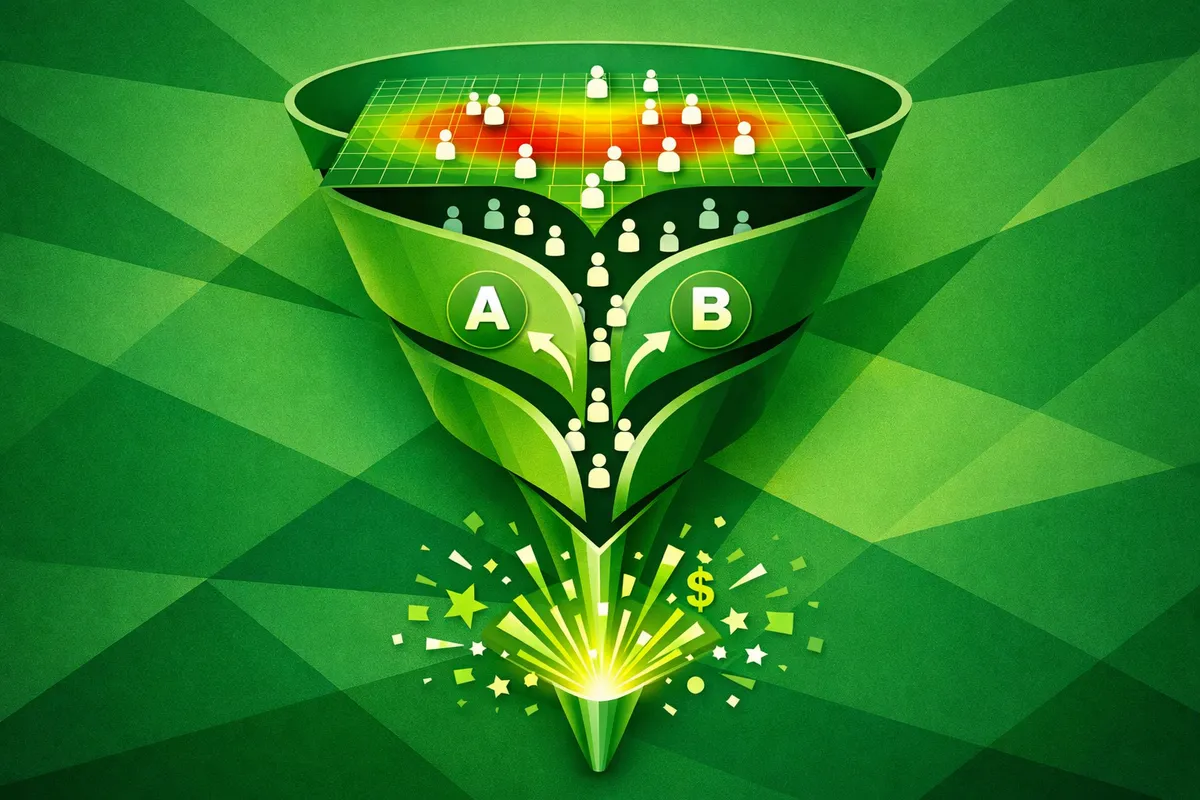
Hypothesis Testing. Based on the audit and competitive analysis, we develop a prioritized list of changes expected to improve conversion. Each hypothesis is tested through A/B experiments or phased implementation, depending on your traffic volume and the nature of the change.
Implementation and Monitoring. Winning changes are implemented permanently and become the new baseline. We continue monitoring conversion rates to detect any regression and to identify the next round of improvement opportunities.