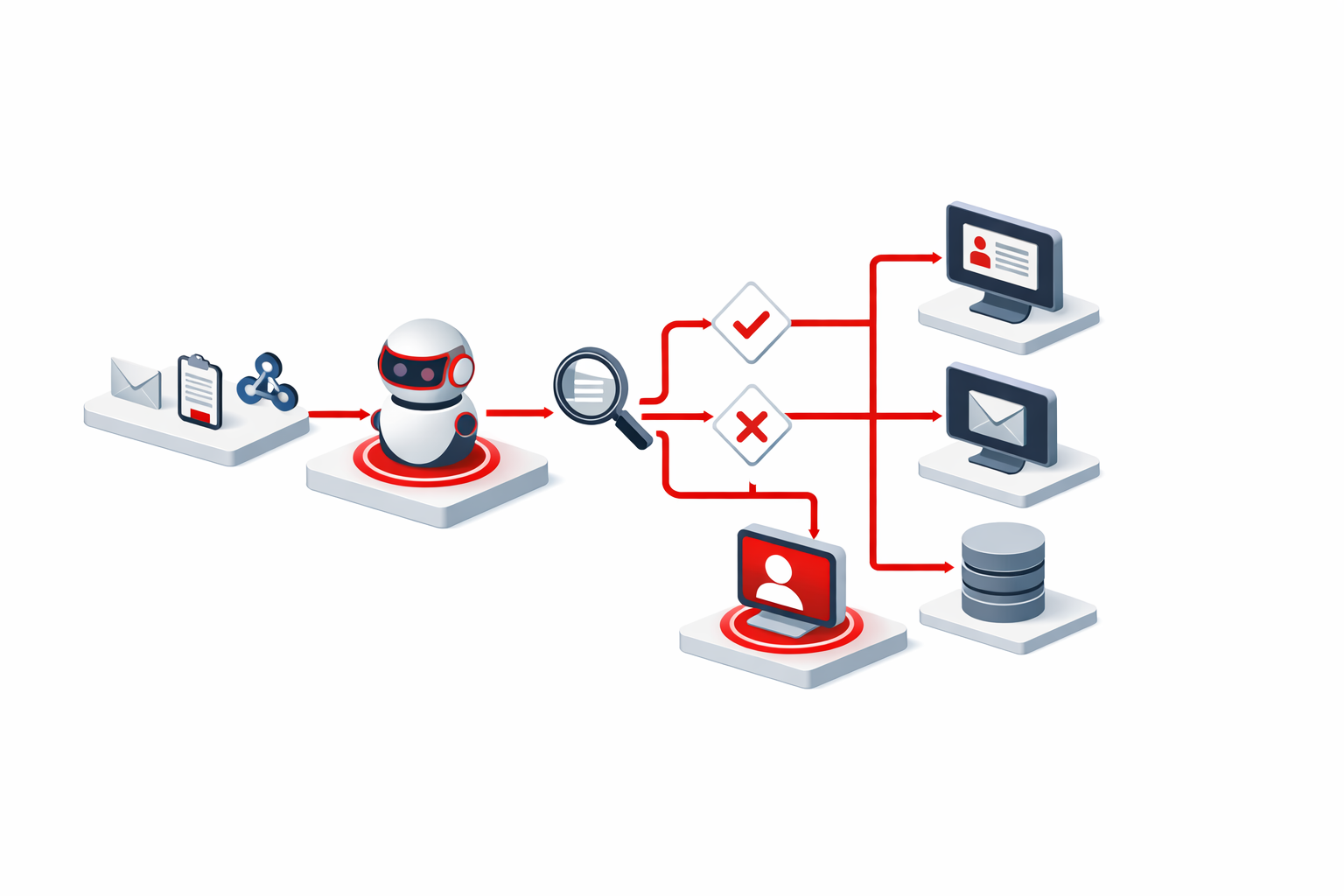
How Agent Deployment Works
Autonomous agent deployment begins with objective definition: what specific goal does the agent pursue, what tools does it have access to, and what decisions require human approval before the agent proceeds? Goal clarity and explicit scope boundaries are what distinguish responsible agent deployment from undirected AI that takes consequential actions without appropriate oversight.
We design the agent architecture, select the appropriate agent framework, configure tool access with the minimum permissions necessary, and implement the human approval checkpoints for high-consequence decisions. A Lincoln Park medical practice's patient communication agent can send reminders and handle scheduling questions autonomously, but appointment cancellations and rescheduling requests go to human review before the agent acts. The scope of autonomous action matches the risk profile of each decision type.
Testing covers both the intended workflow paths and the exception scenarios where agent behavior matters most. An agent that handles standard scenarios correctly but fails poorly in edge cases creates operational risk. We test systematically against the exception scenarios relevant to your Lincoln Park business before any agent goes into production.