How We Build AI Model Training in Lincoln Park
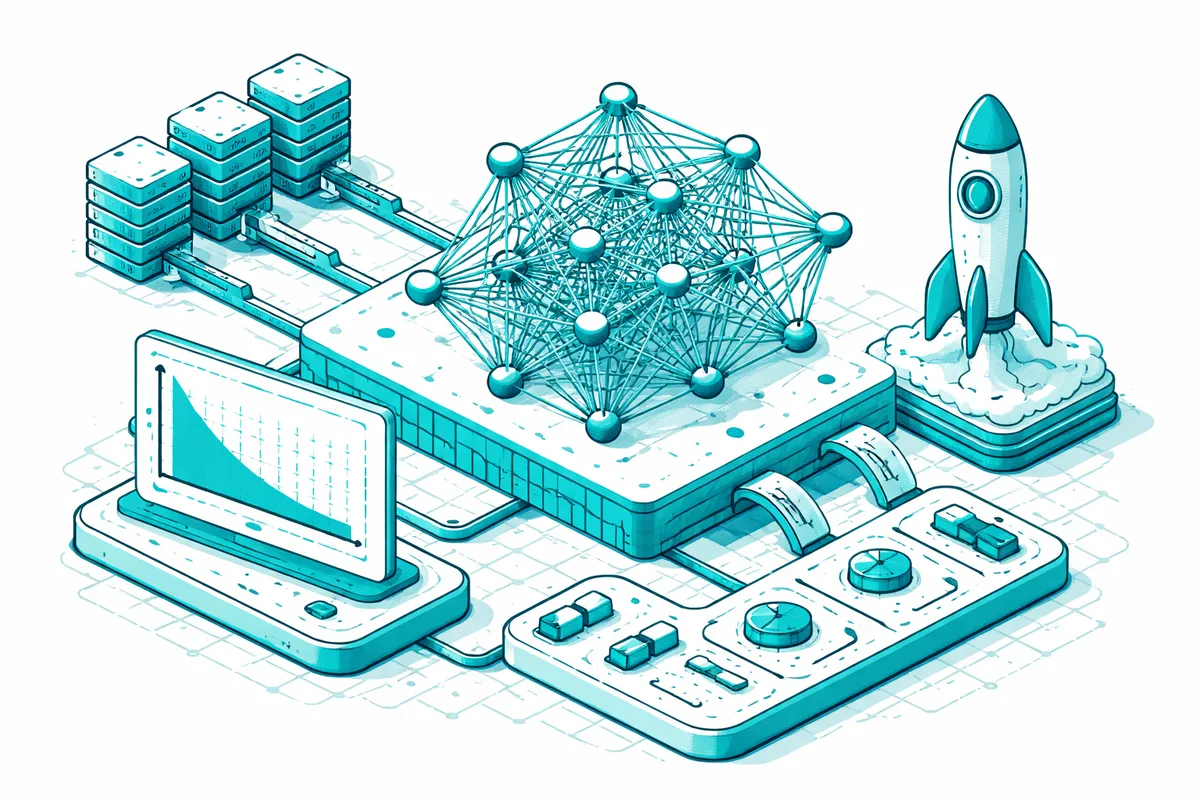
We begin with a data audit. We inventory what you collect, assess data quality, and identify the highest-value model opportunity. Then we clean, prepare, and engineer features from your data before training models tailored to your business objectives. For Armitage Avenue retailers, that might be a product recommendation engine or customer lifetime value predictor. For Clark Street restaurants, a demand forecasting model that accounts for DePaul event schedules and zoo traffic. For startups along the Clybourn Corridor, custom models built into their own products, whether that is a scoring engine, a classifier, or a language model fine-tuned on domain data.
We validate every model against historical outcomes before deployment and only release it into production when it demonstrably outperforms your current approach. After launch, we monitor performance and schedule retraining updates as your data grows and your market evolves.
Industries We Serve in Lincoln Park
Retail businesses along Armitage Avenue and Clark Street use custom-trained models to power product recommendations that actually reflect their customer base. A model trained on your purchase history, browsing patterns, and return data outperforms generic Shopify or Magento recommendations by 20 to 40 percent on click-through and conversion metrics. These models also power customer lifetime value predictions that help you focus marketing spend on the customers most likely to become long-term buyers.
Lincoln Park's restaurant scene benefits from demand forecasting models trained on historical covers, weather data, DePaul academic calendar, Lincoln Park Zoo event schedules, and neighborhood festival dates. Restaurants using custom models reduce food waste by 10 to 15 percent and optimize staffing levels because predictions account for the specific variables that drive their traffic, not national averages that miss these local signals entirely.
Tech startups and growing companies in Lincoln Park and the Clybourn Corridor use custom model training to build AI into their own products. Whether it is a classification model for a SaaS platform, a scoring engine for a marketplace, or a natural language model fine-tuned for a specific industry, we handle the training pipeline, evaluation, and deployment so founders stay focused on product and customers instead of ML infrastructure.
What to Expect Working With Us
1. Discovery and data audit. We inventory your data sources across all systems: POS, CRM, email platform, website analytics, and booking tools. We assess data quality and quantity, identifying which sources have the signal strength needed for reliable model training. Lincoln Park businesses typically have stronger digital data foundations than most Chicago neighborhoods, which means we can often move to model design within the first week.
2. Data preparation and model design. We clean, deduplicate, and engineer features from your raw data, building in Lincoln Park-specific signals like the DePaul calendar, the Lincoln Park Zoo event schedule, and weather sensitivity. We select the right model architecture for your use case and define performance benchmarks before training begins.
3. Training, validation, and refinement. We train on your historical data and validate on holdout periods, testing explicitly against the seasonal transitions and event-driven demand spikes that define Lincoln Park commerce. Performance metrics are shared transparently. If the model underperforms on specific scenarios, we refine before delivery.
4. Deployment and ongoing monitoring. We integrate the model into your workflow and train your team on how to use its outputs in daily decisions. For retail businesses, the model reaches its full accuracy after capturing at least one full annual cycle including the holiday shopping season. We schedule quarterly reviews and update training as your data grows.