Your Cart (0)

Your cart is empty

Lakeview, Chicago

Supply Chain Automation in Lakeview

Supply Chain Automation for businesses in Lakeview, Chicago. We know the neighborhood, the customers, and what it takes to compete locally.

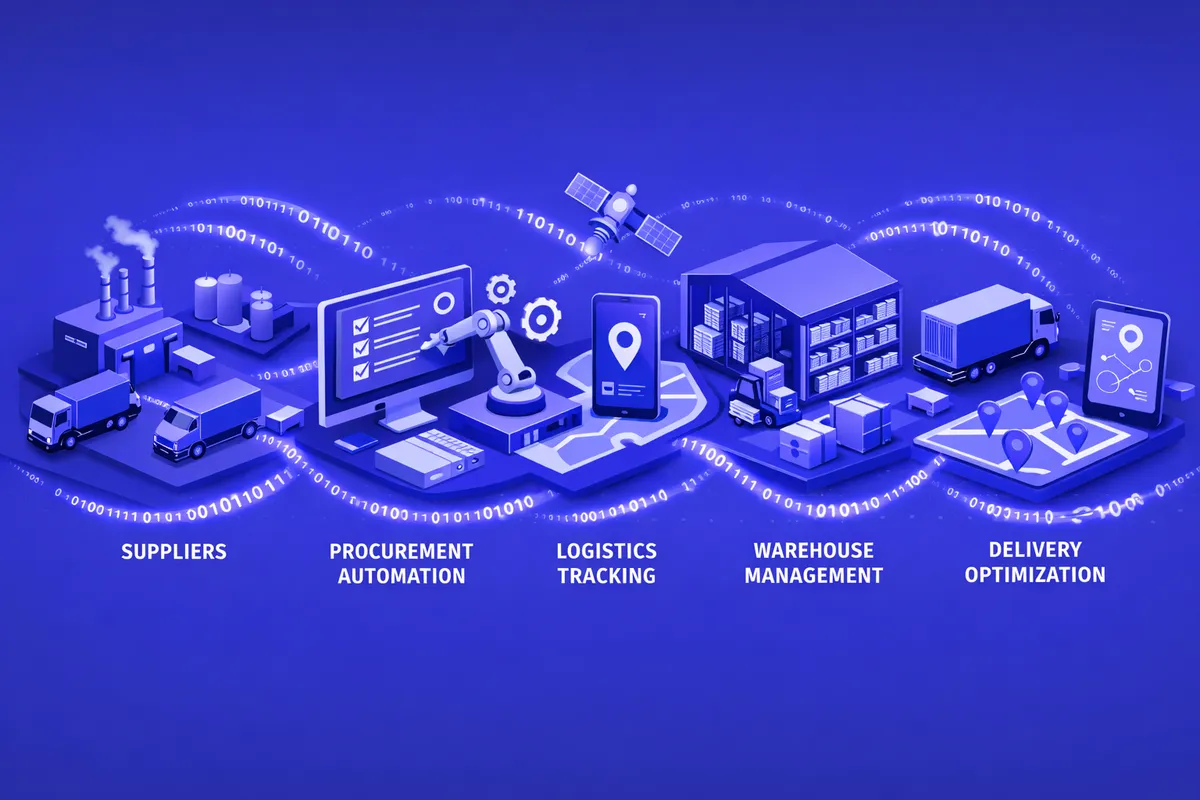
Supply Chain Automation in Lakeview service illustration

Our Supply Chain Automation Work in Lakeview

  • Demand-triggered purchase order automation for Wrigleyville hospitality businesses, using Cubs home schedule data and historical sales patterns to generate orders at the right time and quantity
  • Inventory management automation for Southport and Belmont boutiques, with reorder triggers, sell-through tracking, and seasonal transition management
  • Supplier communication automation: order confirmations, advance ship notices, delivery updates, and exception alerts for Lakeview's food service and retail businesses
  • Food distribution tracking and lot-level traceability for Lakeview restaurant and cafe operators managing fresh ingredient supply chains
  • Multi-location inventory synchronization for fitness studios and wellness businesses with retail components operating across multiple Lakeview locations
  • Procurement approval workflows for Boystown nonprofits and community organizations with internal purchase authorization requirements
  • Returns processing and reverse logistics for retail boutiques on the Southport corridor and Belmont managing seasonal merchandise
  • Integration with the distributor portals, POS systems, and inventory platforms Lakeview businesses already use
  • Real-time inventory visibility dashboards giving Lakeview operators a clear view of stock levels, pending orders, and incoming deliveries

Industries We Serve in Lakeview

Hospitality and Food Service. Wrigleyville and the Clark Street hospitality corridor operate at a demand pattern unlike any other residential commercial district in Chicago. We build procurement automation that accounts for the Cubs home schedule, connects to distributor ordering systems, and gives bar and restaurant operators visibility into inventory levels before each game-day service period rather than discovering shortfalls mid-shift.

Retail Boutiques. Southport and Belmont boutiques manage seasonal merchandise complexity that manual spreadsheet tracking consistently fails to handle well. We build inventory automation that tracks sell-through by SKU, triggers reorders at the right moment, and manages the seasonal transition from in-season to markdown inventory with the timing decisions that protect margin and reduce carrying costs.

Fitness and Wellness Studios. Lakeview's extraordinarily dense fitness market includes studios on Belmont, Broadway, Clark, and Sheffield that carry retail inventory alongside their service businesses. We automate the procurement and inventory management for fitness apparel, equipment, and supplements to eliminate the stock-out and over-order cycles that consume studio operator attention.

Food Production and Catering. Food businesses operating out of or serving Lakeview that manage ingredient supply chains need procurement automation with the compliance documentation that food safety requirements demand: lot traceability, temperature monitoring records, and the supplier acknowledgment workflows that commercial kitchen operations require.

Community Organizations. Boystown nonprofits and Lakeview neighborhood organizations managing supplies, event inventory, and operational procurement need streamlined purchasing workflows that create documentation for reporting purposes without requiring a dedicated procurement function.

What to Expect

Week 1 to 2: Supply Chain Assessment. We map your current procurement and inventory workflows, identify where manual processing creates the most cost and risk, and produce a prioritized automation roadmap. For Wrigleyville hospitality businesses, this typically starts with purchasing and demand planning. For Southport boutiques, it typically starts with inventory tracking and reorder automation.

Weeks 3 to 6: Design and Integration. We design automated workflows, map integration points with your existing systems, and produce the technical specification. For most Lakeview businesses, this means connecting to a POS system, a distributor portal, and an inventory platform already in use.

Months 2 to 3: Implementation. Highest-priority automations are implemented first. We test against real data and operational scenarios specific to your Lakeview business context before deployment.

Month 4 and Beyond: Expansion. Additional workflow areas are automated, live workflows are optimized based on operational data, and visibility dashboards are expanded as the automated footprint grows.

Frequently Asked Questions

The game-day demand pattern in Wrigleyville is predictable enough to build directly into procurement automation. Cubs home games, weekend series, and playoff games generate measurably different demand from Tuesday night games or off-schedule days. We integrate the Cubs home schedule into demand forecasting models alongside historical sales data so purchase order generation accounts for these patterns automatically. A Friday night game against a division rival generates a different order than a Wednesday afternoon game in April. Automation built around Wrigleyville's specific demand context produces more accurate orders than any general-purpose demand forecasting system applied without neighborhood knowledge.

Yes, and smaller boutique operations often see the clearest return because the owner is typically the person doing all of this manually. When an owner is tracking inventory in their head and on a spreadsheet, the failure modes are personal: forgetting to reorder, discovering a stockout when a customer asks, over-buying because a vendor offered terms and the demand estimate was wrong. Automation handles these decisions systematically without requiring a dedicated person to manage them. A Southport boutique with 200 active SKUs across multiple seasonal collections benefits from automated sell-through tracking and reorder triggering in the same way a larger operation does, just at the scale appropriate to its volume.

Clark Street and Halsted restaurant operators typically order from a combination of broadline distributors like Sysco or US Foods, specialty food distributors for specific product categories, and local vendors for fresh ingredients. Each has its own ordering portal or process. Automation connects these ordering channels into a unified workflow: demand data from the POS triggers reorder calculations, orders are routed to the right supplier through the right channel, confirmations are received and matched against pending orders, and delivery receipt updates inventory automatically. For food businesses with lot traceability requirements, the system maintains the documentation chain from order through delivery that compliance and recall management require.

The payback period depends on the volume of manual processing being replaced and the error rates in current workflows. For a Wrigleyville bar doing multiple distributor orders weekly, procurement automation that eliminates several hours of manual work per week at an operator's time value typically pays back within six to nine months on labor alone, before accounting for improved order accuracy and reduced stockout costs. For a Southport boutique where inventory mismanagement produces seasonal markdowns on merchandise that should have sold at full price, the margin protection from accurate reorder automation often pays back the investment within a single season.

Yes. For fitness studios with retail inventory managed alongside their service business, we integrate with the retail inventory and POS functions of studio management platforms alongside distributor and supplier ordering systems. When retail inventory tracked through the studio's POS falls below a reorder threshold, the procurement automation triggers an order to the appropriate supplier. Deliveries are received and update inventory records without manual entry. For studios running retail as a significant revenue line alongside their class business, this eliminates the inventory management overhead that typically falls on whoever happens to be available to count stock.

Nonprofits managing events, programming supplies, and operational procurement have purchasing workflows that often lack the documentation and approval structure that grant reporting and audit requirements demand. We build procurement automation for community organizations that creates the approval routing, purchase order documentation, and vendor communication records that compliance requires, without adding complexity to the actual procurement process. Staff submit purchase requests through a simple interface, approval routes automatically to the appropriate board member or administrator, and the approved purchase generates documentation that flows into financial reporting. The Boystown organizations doing real community work should not be spending organizational capacity on procurement paperwork. Learn more about our [supply chain automation services across Chicago](/chicago/supply-chain-automation) or explore other [digital services available in Lakeview](/chicago/lakeview).

Ready to get started in Lakeview?

Let's talk about supply chain automation for your Lakeview business.