How We Build Inventory Management Systems for Lakeview
We start by understanding the specific rhythms of your business. For a Clark Street bar near Wrigley Field, we map demand patterns against the Cubs schedule, weather, concerts at the Metro, and neighborhood events. For a Boystown retailer, we look at weekend versus weekday patterns and Pride-related seasonal surges. For a Southport fitness studio, we examine class enrollment data, member purchase cycles, and competitor activity. This understanding shapes the system we build so that reorder logic, par levels, and forecasting reflect how your business actually operates.
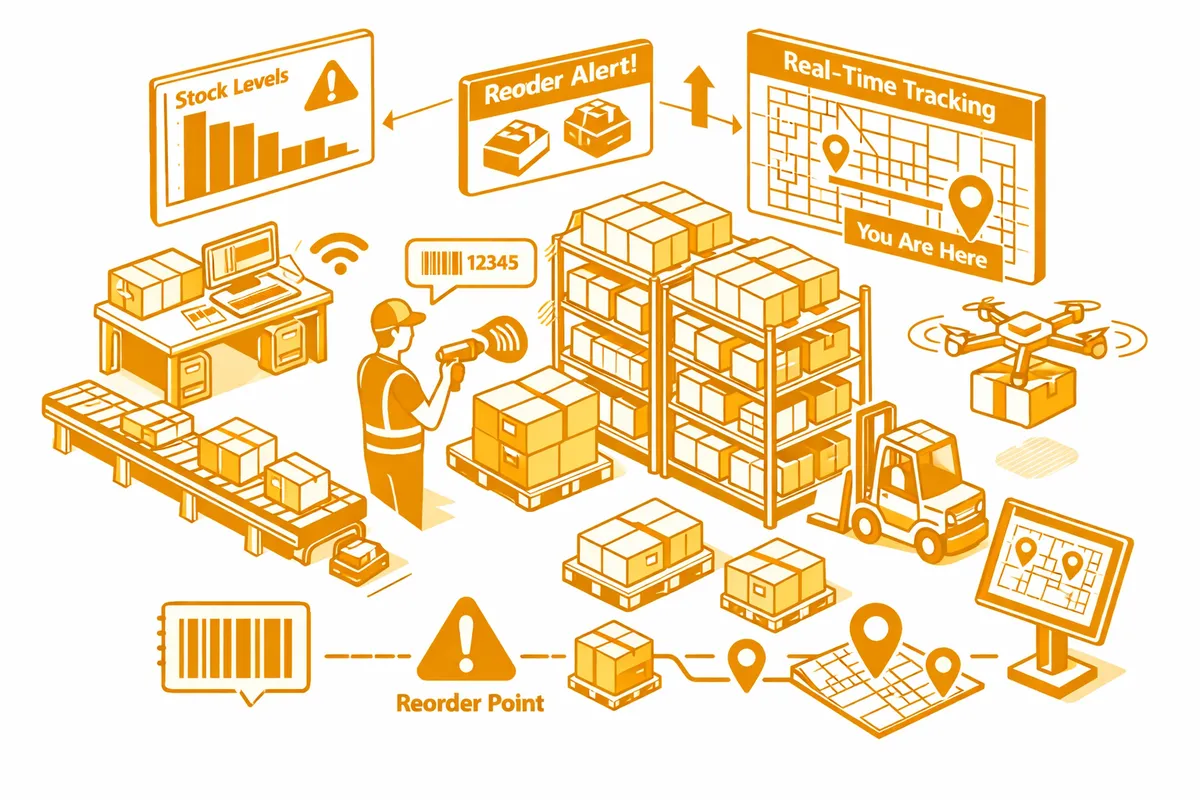
We build inventory systems that provide real-time visibility across every channel and location. For Lakeview retailers with storefront and online presence, this means when a sale happens at the register, the inventory count updates immediately across the Shopify site, the Amazon listing, and every marketplace integration. When an online order comes in, the storefront POS shows it reserved against inventory before staff can sell the same item. This multi-channel sync is foundational, and it eliminates the single most common operational failure we see in Lakeview retail.
Reorder automation reflects your actual demand patterns, not static par levels. The system learns that a specific wine sells 20 bottles on a typical Saturday but 45 bottles on a Cubs playoff Saturday, and reorders accordingly. It learns that apparel inventory for a Halsted fitness studio spikes in January and September, and adjusts reorder timing to avoid stockouts during those windows. It learns that a specialty food product near Belmont has a six-week supplier lead time and manages reorder timing to avoid the gap that would otherwise appear in stock. The system becomes smarter about your business over time rather than requiring your team to recalibrate manually every quarter.
We build with mobile access because Lakeview owners and managers are rarely sitting at a back office desk. Your phone shows current inventory across channels, alerts you when something needs attention, and lets you adjust par levels or approve reorders from wherever you are. For multi-location operations, mobile access becomes essential rather than convenient.
Reporting is designed around the decisions you actually make: which products to reorder and when, which products to mark down because they are moving too slowly, which suppliers are reliable and which are causing problems, and how inventory investment is distributed across categories. Reports are built to answer questions your business asks, not to generate generic metrics that require interpretation to become useful.
Industries We Serve in Lakeview
Bars, restaurants, and nightlife venues along Belmont, Halsted, Clark, and the Wrigleyville strip operate with beverage and food inventory velocity that demands real-time tracking. We build inventory systems with POS integration, theoretical versus actual pour analysis, waste tracking, and event-aware forecasting calibrated to the specific demand swings of Lakeview.
Retailers and boutiques on Southport Corridor, Clark Street, and the Belmont retail strip manage storefront, e-commerce, and occasional wholesale inventory across platforms like Shopify, Square, and Lightspeed. We build multi-channel inventory sync with reorder automation that handles the variance of Lakeview foot traffic.
Fitness studios and wellness businesses concentrated along Broadway, Halsted, and Southport manage apparel, supplements, merchandise, and equipment consumables alongside their core service operations. We build inventory systems connecting POS, e-commerce, member management, and supplier platforms into one coherent workflow.
Specialty food and beverage retailers near the Whole Foods Belmont location, along the Southport dining corridor, and throughout Wrigleyville manage perishable inventory with expiration date sensitivity and variable demand. We build systems with FIFO enforcement, waste tracking, and reorder logic tuned to food business realities.
Game day-oriented retailers and souvenir shops along Clark, Addison, and Sheffield near Wrigley Field manage licensed merchandise inventory through enormous demand variance between game days and off days. We build inventory systems that handle this variance without requiring massive safety stock that ties up capital on non-game weeks.
What to Expect Working With Us
1. Operations audit and requirements gathering. We spend time in your Lakeview operation observing how inventory actually moves, where counts go wrong, how stockouts happen, and what data your team wishes they had. The audit ends with a clear requirements document and a prioritized feature list.
2. System design and platform selection. We design the inventory architecture appropriate to your channels and volume, recommend the right combination of platforms and integrations, and provide a fixed scope and timeline. Whether your path forward is a custom system or a configured commercial platform depends on your specific needs, and we give honest recommendations.
3. Build, integrate, and migrate. We implement the system, integrate it with your existing POS, e-commerce, and accounting tools, and migrate your historical data with careful validation. Launch happens only after the system handles your actual operational scenarios without issue.
4. Launch support and optimization. We stay with your team through the first weeks after launch to tune reorder logic, adjust forecasting, and address any issues that emerge from real operation. Ongoing maintenance retainers cover system evolution as your business grows and changes.