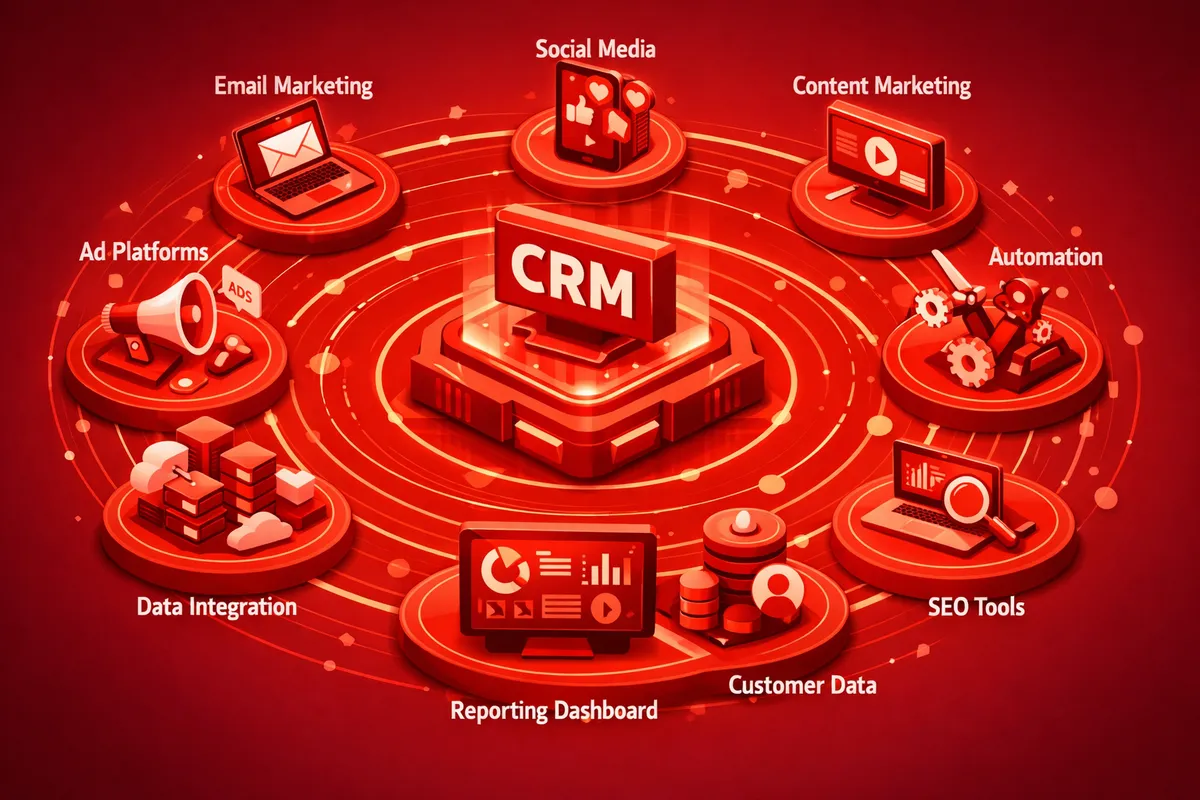
Platform Recommendations
Lakeview businesses share a common profile: small teams, limited technical resources, and a customer base that expects personalized attention. Platform recommendations must account for usability by non-technical staff.
For retail, Klaviyo with Shopify remains the strongest combination. For service businesses, the booking platform's built-in CRM features combined with Mailchimp or Klaviyo for marketing automation provides sufficient capability. For restaurants and bars, Toast or Square with integrated marketing tools handles the core needs, with HubSpot added for operations that need more sophisticated segmentation.
We evaluate every platform against the question: will the actual team operating this business use this system consistently? A platform that collects dust after the first month delivers zero value regardless of its feature set.
Customer Journey Mapping
Lakeview customer journeys reflect the neighborhood's walkable, discovery-oriented culture. A Southport shopper might discover a boutique walking past, browse the website that evening, follow on Instagram, and purchase during a visit the following weekend. The CRM must capture each touchpoint and recognize the individual across channels.
For Wrigleyville businesses, the journey often begins with event-driven discovery. A first visit tied to a Cubs game or concert becomes a repeat relationship only if the post-visit communication converts the occasion into a habit. The journey map identifies the critical window between first visit and second visit and builds automation around that conversion point.
For service businesses, the journey runs from referral or search through booking, first appointment, and the ongoing rebooking cycle. The journey map identifies the friction points where clients drop off and the automation that keeps them engaged.
What to Expect Working With Us
1. Audit of current systems and customer data. We evaluate your platforms, data quality, and communication workflows against Lakeview competitive standards.
2. CRM strategy with platform recommendation. Detailed plan including platform selection, integration architecture, automation workflows, and implementation timeline tailored to your business type and team capacity.
3. Implementation. Platform setup, data migration, integrations, and workflow building. Timelines range from 3 to 6 weeks.
4. Training and 90-day optimization. Hands-on training followed by monitoring and refinement to ensure the system performs.