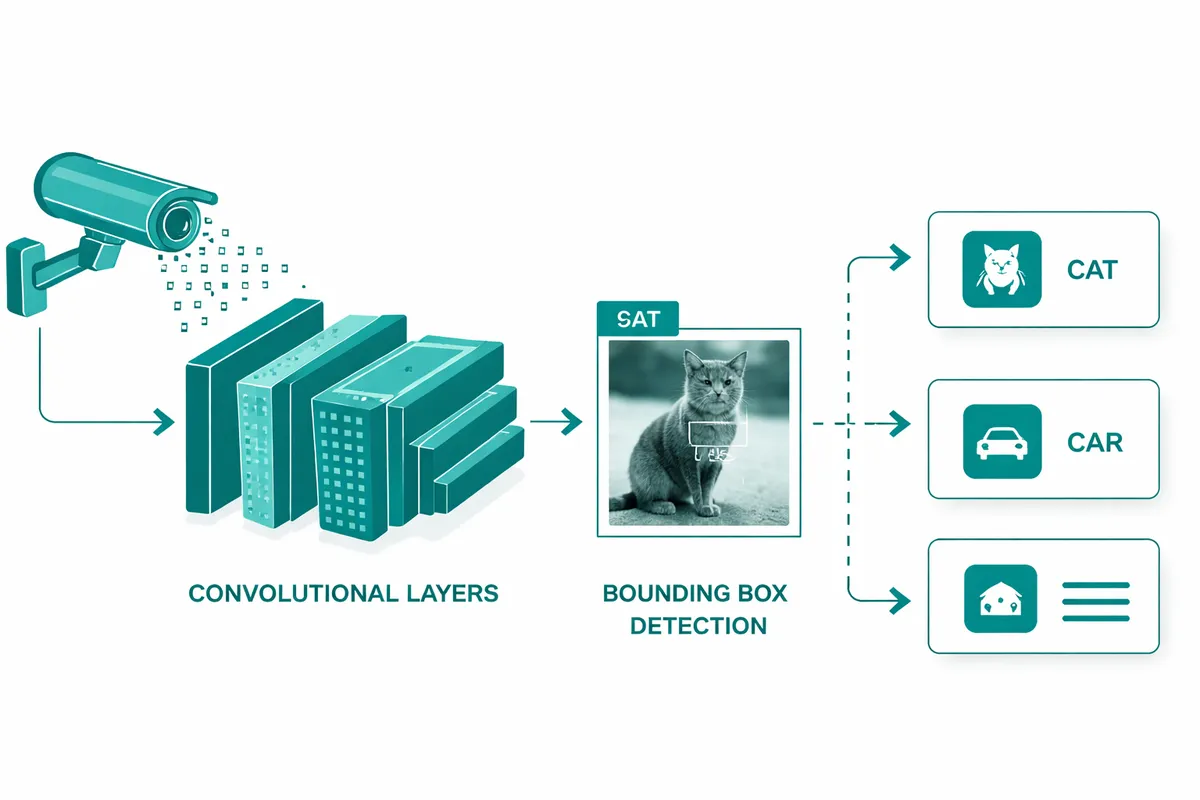
How We Build Computer Vision in Lakeview
We assess your visual monitoring needs and deploy solutions sized for your operation. For bars near Clark Street, that includes crowd density monitoring and capacity management during events. For fitness studios near Belmont, it means occupancy tracking and equipment utilization analysis. For restaurants on Broadway, it means kitchen line monitoring and table turnover analytics. For retail shops on Southport, it means customer flow analysis and loss prevention. Systems integrate with existing cameras where possible, and we install additional sensors where coverage gaps create blind spots in your monitoring.
Industries We Serve in Lakeview
Bars and nightlife venues along Clark Street use computer vision for crowd monitoring, capacity compliance, and security during high-volume events. The system provides real-time occupancy counts that allow door staff to manage entry accurately without manual counting. When capacity is approaching the limit, the system alerts management before the threshold is crossed, not after. During Cubs games and Wrigleyville events, this capability is operational rather than nice-to-have.
Fitness studios near Belmont track class occupancy, equipment utilization, and facility safety. Occupancy data at the class level reveals which time slots need more sections and which can be consolidated, informing schedule optimization that both improves member experience and increases revenue per square foot. Equipment utilization tracking shows which machines are consistently occupied and which sit unused, informing purchasing decisions and floor layout.
Restaurants on Broadway monitor kitchen operations, food presentation, and table turnover. Kitchen line monitoring identifies prep bottlenecks before they cause service delays during dinner rushes. Table turnover data breaks down by section and server, revealing whether uneven performance is a staffing issue or a seating routing issue. Retail shops on the Southport Corridor use loss prevention monitoring and customer traffic analysis that reveals which product areas attract the most attention and which sections of the store see the least engagement.
What to Expect Working With Us
1. Event-driven capacity planning: We design deployments around Lakeview's event calendar. Cubs games, Pride month, Wrigleyville festivals, and Boystown events all create specific capacity and crowd management needs that we build into the system configuration. The monitoring parameters scale with expected volume rather than using fixed thresholds that do not account for event-driven surges.
2. Camera coverage assessment: We map your space and identify the camera positions that provide comprehensive coverage with the fewest blind spots. For bars near Wrigley, that typically includes entry monitoring, bar area occupancy, and patio coverage. For fitness studios, it means class space, equipment areas, and the lobby.
3. Real-time alert configuration: We configure alerts to be actionable and specific. Capacity alerts tell you where you are relative to your limit and at what rate you are approaching it. Kitchen bottleneck alerts identify the specific station creating the delay. Table turn alerts flag the specific table that has been unoccupied beyond your target reset time.
4. Seasonal calibration: We recalibrate models and alert thresholds before Cubs season, before Pride month, and before any major neighborhood event cycle. The system's normal operation baselines are adjusted so that genuine anomalies are flagged accurately against the appropriate context.