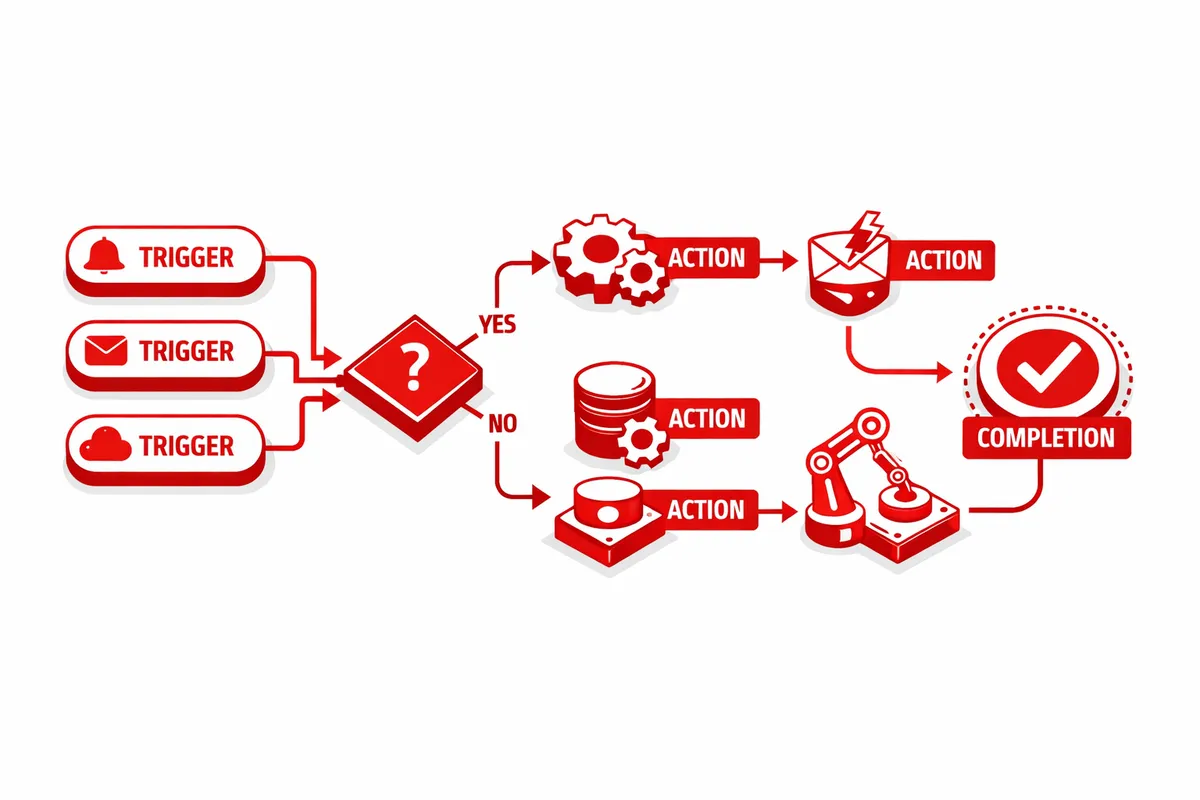
How We Build Workflow Automation for Irving Park
We start by spending time in the actual operation. Not in a discovery call, in the business. For a contractor near Elston Avenue, that means walking through what happens from the moment an inquiry arrives to the moment a check is deposited. For a family dental practice near Independence Park, it means understanding the patient journey from initial contact through appointment completion, including every form, every call, every manual step that a staff member touches along the way.
From that walkthrough we produce a process map. Every task is categorized: requires expertise, requires relationship, or requires only time and data. The third category is the automation target list. For most Irving Park small businesses, between forty and sixty percent of the administrative tasks in the average week fall into that third category. They are not complex. They are just consuming human attention that is worth more elsewhere.
We prioritize by impact. The first automations we build are the ones that prevent revenue loss: inquiry acknowledgment so no lead goes cold, appointment reminder sequences so no-show rates drop, estimate follow-up so prospects who expressed interest but went quiet are re-engaged systematically. These pay for the automation investment quickly and create the organizational confidence to tackle the second tier of workflow improvements.
For Irving Park contractors, that second tier usually includes job documentation workflows: progress photo collection, change order approvals, punch list management, and final invoice generation. For medical and dental practices, it includes insurance verification requests, patient intake form distribution and collection, and referral letter routing. For restaurants and specialty retailers, it includes vendor order triggers, low-inventory alerts, and staff scheduling notifications.
Industries We Serve in Irving Park
Residential contractors operating near Elston Avenue and Pulaski Road use workflow automation to manage the gap between incoming job inquiries and scheduled estimates. An automated inquiry response that acknowledges the request, asks qualifying questions, and schedules an estimate appointment runs within seconds of the initial contact. The contractor stays focused on the current job while the next job takes its first steps through the pipeline.
Dental and medical practices along the neighborhood's commercial corridors near Independence Park reduce staff administrative burden through automated patient intake, appointment reminder, and insurance verification workflows. A patient who schedules an appointment receives their intake forms by text link the same day and completes them from home, arriving for their appointment with all paperwork done. The front desk staff reviews completed forms rather than supervising form completion in the waiting room.
Specialty food shops and grocery retailers near Horner Park use automation to manage the operational layer between customer ordering and supplier procurement. When online or phone pre-orders reach a threshold, automated purchase orders go to vendors without requiring a manual review step. Inventory alerts trigger reorder workflows before stockouts occur. These automations reduce the daily operational attention required from the owner while improving consistency.
Family restaurants on Irving Park Road benefit from automated staff scheduling workflows that route shift availability requests, process swap approvals, and notify staff of confirmed schedules through a single system rather than a mix of group texts and verbal confirmations. The owner or manager sets the parameters. The automation manages the communication.
Auto service shops near Montrose Avenue use workflow automation to manage the customer communication layer around vehicle service. Estimate approvals route to the customer by text and return digitally signed, cutting the phone tag cycle that delays job authorization. Completion notifications, invoice delivery, and follow-up satisfaction messages run automatically, and the shop's records are updated with each step.
Preschools and childcare programs in the Athletic Field Park and Gompers Park corridor handle enrollment inquiry workflows that previously required multiple phone calls and manual form distribution. Automated enrollment sequences deliver application forms, collect required documents, route completed applications to the director, and communicate status updates to families without staff involvement in each step.
What to Expect Working With Us
1. Operational walkthrough and process map. We come to your Irving Park location and document how work actually flows through your business, not how it is supposed to flow in an org chart. We categorize every task by whether it requires a person and identify the highest-impact automation targets from that assessment.
2. Priority automation build. We build the first three to five automations that address the most expensive manual tasks in your operation. For most Irving Park businesses, this takes two to three weeks and includes inquiry handling, appointment or estimate workflows, and at least one follow-up sequence that recovers attention from leads or customers who have gone quiet.
3. Integration with your existing tools. We build on the platforms you already use wherever possible: your scheduling tool, your CRM, your invoice system, your project management software. If you are not using any of these yet, we recommend the simplest combination that supports the automation architecture without overcomplicating the toolstack.
4. Staff onboarding and exception management. Automation does not eliminate human involvement. It defines when human involvement is required and routes tasks appropriately when that moment arrives. We train your team on how to monitor the automated workflows, handle exceptions that the system flags for human review, and adjust parameters as your business needs evolve over the first six months.