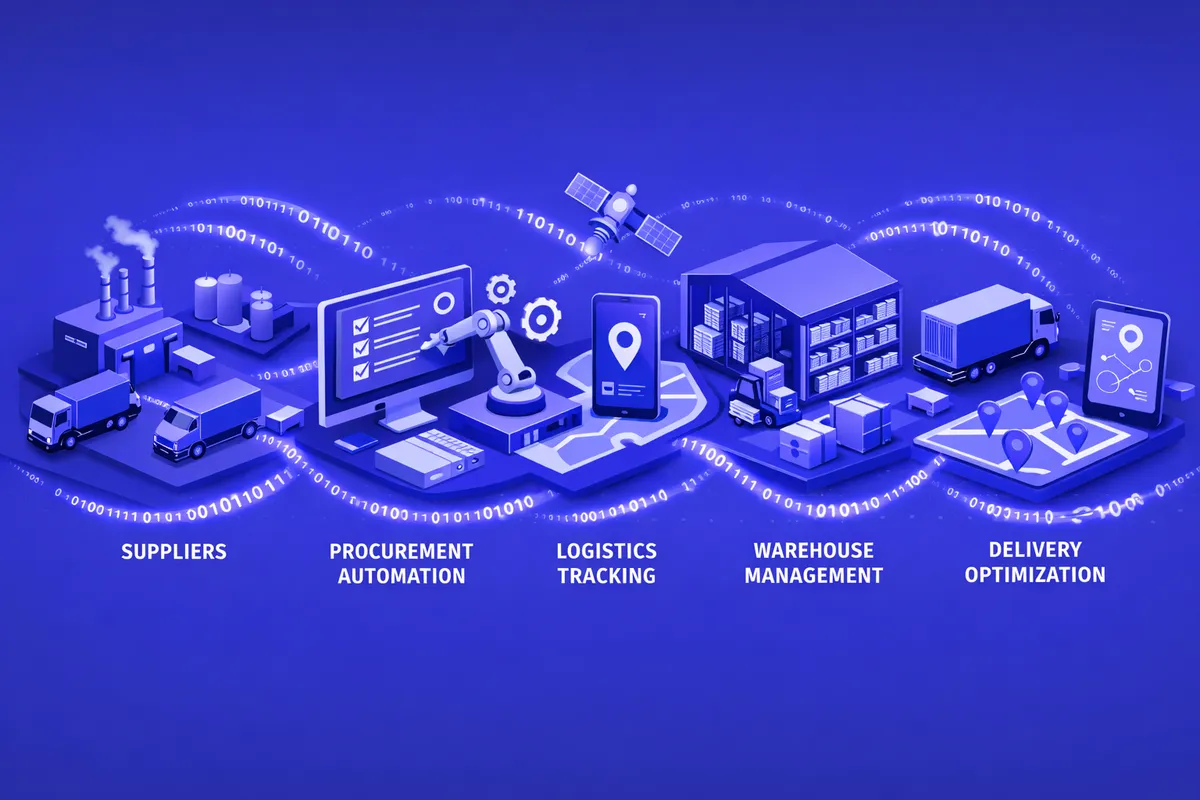
How We Build Supply Chain Automation for Irving Park
The starting point is a vendor and inventory audit. We map every supplier relationship: who the vendors are, what the ordering method is, what the lead time and reliability track record looks like, what the minimum order quantities and payment terms are. For an Irving Park contractor, that audit might cover four lumber yards, two electrical suppliers, a plumbing supply house, and three specialty trades vendors. For a specialty food shop, it might cover twelve to twenty small-batch producers, a main distributor, and a handful of local farm and artisan relationships.
From that map we build a priority list of the highest-impact automation opportunities. Usually the clearest wins are: automated reorder triggers based on inventory thresholds rather than manual checks, consolidated purchase order generation that eliminates the repetitive data entry of ordering from multiple vendors separately, and delivery tracking that creates a record of what was ordered versus what arrived so discrepancies surface immediately rather than at invoice reconciliation.
For contractors operating near Elston Avenue with project-based inventory needs, the automation logic is different from a retail or food service business. Supply chain automation for construction trades ties material orders to project status rather than to standing inventory levels. When a job reaches the framing stage, the system flags the time window to order roofing materials so they arrive when needed without sitting in the yard for three weeks. When a project closes out, the system reconciles materials received against materials used and flags discrepancies for review. This kind of project-linked supply chain visibility is largely unavailable to contractors managing inventory manually.
For medical and dental practices along the neighborhood's commercial corridors, supply chain automation covers the less glamorous but critical work of managing consumables: gloves, syringes, office supplies, sterilization materials, and equipment maintenance schedules. These practices often have a staff member spending three to four hours per week on supply management tasks that a properly configured automation system reduces to under thirty minutes.
Industries We Serve in Irving Park
Residential contractors and trades businesses working from shops near Elston Avenue and Pulaski Road use supply chain automation to tie material procurement to project schedules rather than to standing inventory guesses. Automated purchase orders triggered by project milestones reduce the emergency material runs that inflate costs and delay jobs. Delivery confirmations and discrepancy tracking protect margins by catching short-shipments before they become billing disputes.
Specialty food shops and grocery retailers near Horner Park manage complex supplier mixes of local producers, regional distributors, and specialty importers. Automated reorder points based on sales velocity ensure that popular products stay in stock without requiring daily manual inventory counts. Vendor performance tracking identifies which suppliers have chronic lead time issues so the business can adjust safety stock accordingly.
Family restaurants along Irving Park Road deal with fresh ingredient procurement that has both a timing sensitivity and a cost volatility that manual ordering handles poorly. Automated par-level management and vendor order templates reduce the time a kitchen manager spends on ordering from forty-five minutes per day to under ten, while improving consistency and reducing waste from over-ordering.
Auto service shops near Montrose Avenue and Pulaski Road carry parts inventory across multiple vehicle makes and models, with reorder points that vary by velocity and lead time from suppliers. Automated inventory management tied to vehicle service records predicts demand better than manual counts. When a common repair part reaches its reorder threshold, the system generates a purchase order without waiting for a physical inventory check.
Medical and dental practices along the commercial corridors near Independence Park have consumable supply requirements that are highly predictable but poorly managed in most small practices. Automated reorder schedules tied to usage rates ensure that a hygienist is never in the middle of an appointment when supplies run out. Vendor contracts are tracked in the system with renewal dates and pricing terms visible before auto-renewal deadlines pass.
Preschool and childcare programs operating near Athletic Field Park manage craft supply, cleaning supply, snack, and educational material procurement across multiple budget categories. Supply chain automation consolidates vendor ordering, tracks unit costs against budget allocations, and generates purchase requests that route through an approval workflow before orders are placed, giving directors the cost visibility they need to stay within operating budgets.
What to Expect Working With Us
1. Vendor and inventory mapping. We document every supplier relationship, product category, and current ordering method in your business, producing a clear map of where manual work is concentrated and where automation will deliver the fastest return.
2. System selection and integration. We identify the automation platform that fits your business model, whether that is a standalone inventory management tool, a module within your existing POS or ERP system, or a custom integration between your ordering systems and your vendors' digital order channels. For Irving Park contractors and specialty retailers, we have implemented several different platforms and can recommend based on direct experience with similar businesses.
3. Automation configuration and threshold setting. We configure reorder points, order quantities, and vendor routing based on your actual inventory turn rates and vendor lead times. Initial threshold settings are calibrated conservatively and adjusted based on the first sixty days of live operation.
4. Staff training and ongoing system management. Your team learns the system in a working session focused on the tasks they perform most often: receiving deliveries, reconciling invoices, and managing exceptions. We provide ongoing support for system questions and run quarterly reviews to adjust automation parameters as your business volume and vendor mix evolve.