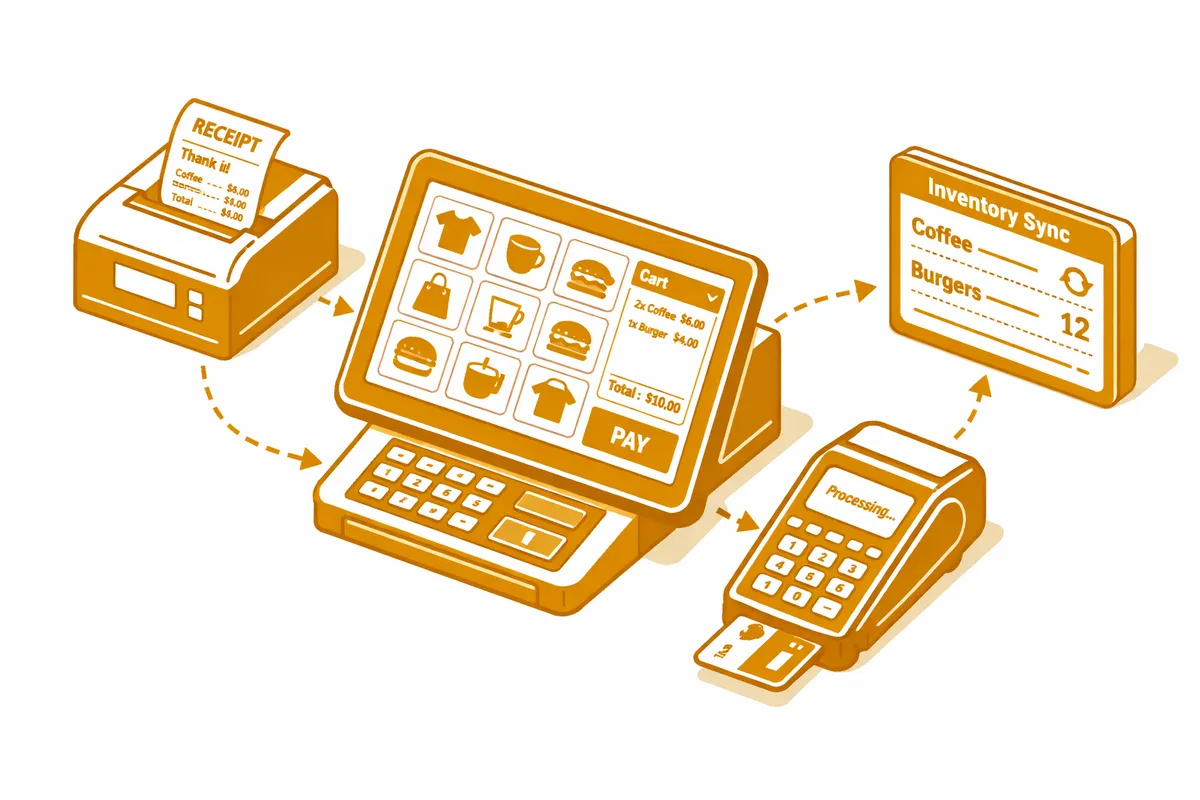
How We Build POS Systems for Irving Park
Irving Park implementations are designed with the second location in mind, even when the operator is only running one. We configure platforms with multi-location architecture from the start: centralized menu management that pushes updates to all locations simultaneously, inventory management with location-level visibility, and reporting that consolidates across locations with the ability to drill to individual location performance.
For restaurants on Irving Park Road with weekend family dining as their core service model, we evaluate Toast for full-service operations and Square for Restaurants at its mid-tier for simpler operations. The key configuration questions are table management complexity, kitchen display requirements, and how the kitchen communicates orders during a busy dinner service. We design the kitchen display and printer configuration to match the actual physical layout of the kitchen before any hardware is ordered.
Loyalty program configuration is a priority for Irving Park operators because repeat customer retention is the foundation of neighborhood restaurant economics. We configure loyalty programs that reward visit frequency rather than just spend amount, since neighborhood regulars who come twice a week at a moderate check size are more valuable over time than the occasional high-spend visitor. Loyalty point accrual, redemption rules, and the customer communication workflow that sends birthday offers and anniversary recognitions are configured during implementation, not as an afterthought.
For specialty retail and food shops near Athletic Field Park, we configure the catalog management that handles a rotating specialty inventory without requiring a full-time catalog manager. Seasonal and rotating items are added and retired through a clean workflow that keeps the register display current without exposing staff to a complex back-end configuration interface.
Industries We Serve in Irving Park
Family restaurants and neighborhood dining on Irving Park Road and near Independence Park serve the residential base with the lunch and dinner service that defines neighborhood dining. We configure these restaurants with table management, kitchen display integration, and the loyalty program that converts first-time visitors into regulars. For operators considering a second location near Gompers Park or in an adjacent neighborhood, we build the multi-location architecture from the first location's installation so that the expansion does not require a platform change.
Specialty food shops and delis along Montrose Avenue handle rotating specialty inventories, custom order management, and the catering inquiry workflow that a neighborhood specialty food business manages as a side business alongside regular retail. We configure these operations with catalog management that handles seasonal and rotating items, the custom order deposit and tracking workflow, and the catering order management that converts an inquiry to a delivered order through the POS rather than through a separate spreadsheet.
Auto service shops and contractors near Pulaski Road and on Elston Avenue manage parts inventory, service order creation, and customer billing from a workflow that traditional retail POS systems handle poorly. We configure these businesses with service order management that connects a customer's vehicle or project to the relevant parts inventory, tracks labor and parts costs on a single order, and produces a formatted invoice at completion. For shops that also have a small retail parts counter for walk-in customers, the retail and service order workflows run from the same terminal.
Medical and dental practices serving the residential base near Elston Avenue need patient payment processing, co-pay collection, and the payment plan management that makes healthcare accessible to patients managing costs over time. We configure these practices with the payment processing capability that handles credit, debit, HSA and FSA cards, and the installment plan workflow that records a payment schedule against a patient account without requiring full healthcare software.
Preschools and family-oriented service businesses near Horner Park that sell retail items or collect activity fees need simple POS capability that handles a modest transaction volume without requiring a trained operator. We configure these operations with the intuitive interface that a front-desk staff member or parent volunteer can operate correctly without training beyond a single walkthrough.
Restaurants actively planning multi-location expansion on the Irving Park corridor are the businesses we invest the most configuration time with. We run a pre-expansion audit of the current system configuration, identify the changes needed to operate two locations from a single management interface, and implement those changes before the second location opens rather than during the chaos of a new opening.
What to Expect Working With Us
1. Multi-location readiness assessment. Even if you are only running one location today, we assess whether your current or proposed platform supports multi-location operations cleanly. The platform decision made at location one determines whether location two requires a costly migration or a clean configuration expansion.
2. Loyalty program design. We spend time on loyalty configuration because repeat customer economics in Irving Park neighborhood restaurants are the business model, not a marketing add-on. Loyalty rules, communication cadence, and the redemption mechanics that actually bring customers back are designed collaboratively, not pulled from a default template.
3. Kitchen display and table management configuration. For full-service restaurants, the kitchen display layout and table management floor plan are configured before installation so that the system reflects your actual operation on day one. We do not deploy a generic floor plan template and leave configuration to the operator.
4. Expansion planning session. For operators who have a second location in mind, we include a planning session that covers the POS configuration requirements for multi-location operations, the inventory visibility and consolidated reporting setup, and the timeline for a clean expansion when the time comes.