How We Modernize Legacy Systems for Irving Park
We begin every Irving Park legacy integration project with a system audit that answers three questions: what data does the business have, where does it live, and what does it need to connect to. For a family restaurant on Irving Park Road, this means auditing the POS system, the bookkeeping software, and any customer loyalty or reservation system currently in use. For a dental practice near Athletic Field Park, it means auditing the practice management system, the billing software, and the patient communication tools.
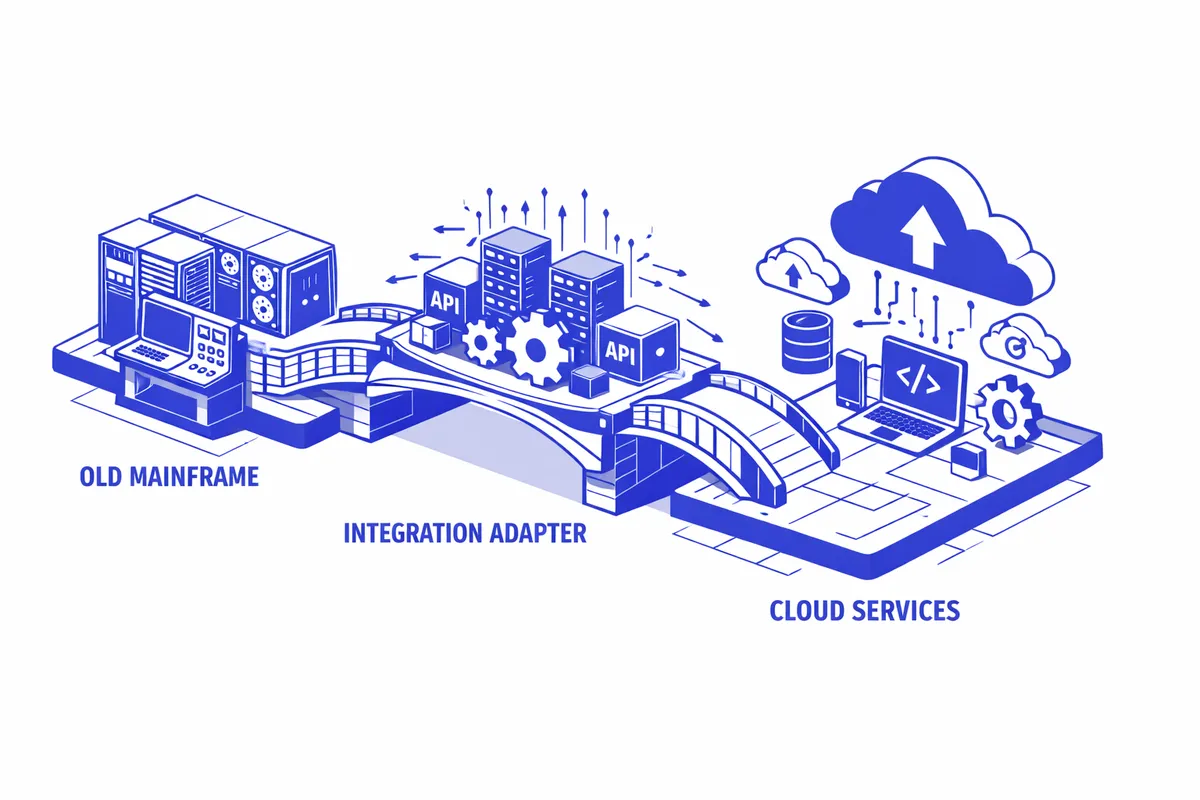
From the audit, we design a modernization path calibrated for risk and business continuity. We do not rip out working systems and replace them in a single high-risk migration. We phase the work so the business continues operating normally throughout the project. For businesses where a legacy system must be replaced entirely, we run old and new systems in parallel through a defined validation period before cutover. For businesses where the legacy system can be retained as a data source but connected to modern tools through a bridge layer, we build that bridge rather than forcing an unnecessary replacement.
Data migration for Irving Park's small businesses typically involves cleaning and normalizing years of data that was entered inconsistently across multiple operators and across software versions. We handle the data quality work as part of the migration rather than delivering messy data into a new system and leaving the business to clean it up. The result is a migration where the new system starts with reliable data.
Industries We Serve in Irving Park
Family Restaurants and Food Service: Restaurants along Irving Park Road and Montrose Avenue often run on aging POS and bookkeeping systems that cannot be connected to modern delivery platforms, online reservation tools, or accounting software. We migrate data from legacy systems and build the connections to modern platforms that restaurant owners have been delaying because the technical complexity felt insurmountable.
Auto Service Businesses: Auto repair shops along Elston Avenue and Milwaukee Avenue run legacy shop management software with years of vehicle service history that cannot be exported to modern alternatives without expert migration work. We migrate that history, preserve the customer relationships it represents, and connect the new system to the modern communication and booking tools customers expect.
Medical and Dental Practices: Healthcare practices near Gompers Park and Independence Park often operate on legacy practice management and billing software that is increasingly incompatible with current insurance clearinghouses and telehealth tools. We design migration paths that preserve patient history while opening access to modern clinical and billing infrastructure.
Specialty Food and Grocery: Specialty food retailers along Pulaski Road manage inventory and ordering data in systems that predate modern supplier integration capabilities. We migrate that data to platforms that can connect to supplier ordering systems and modern accounting tools without requiring the business to rebuild its product catalog from scratch.
Contractors and Home Services: The contractors serving Irving Park's bungalow residential market often run estimating, job tracking, and customer relationship data in custom spreadsheets or aging contact management software. We migrate that data to modern CRM and job management platforms calibrated for residential service contractors.
Preschools and Childcare: Early education programs near Horner Park manage student records, billing, and compliance documentation in legacy systems that cannot connect to modern family communication platforms. We migrate enrollment and billing data while building connections to the parent communication tools that families now expect.
What to Expect Working With Us
1. System Audit and Data Inventory: We document every software system currently in use, map the data stored in each, and identify the integration connections and data quality issues that define the scope of the modernization work. Irving Park businesses often discover during this phase that data quality problems they assumed were normal are actually consequences of their current software architecture.
2. Phased Migration Planning: We design a migration sequence that maintains business continuity throughout the project. For high-risk data migrations, we design parallel operation periods where old and new systems run simultaneously through a validation phase before the legacy system is retired.
3. Data Migration and Cleaning: We handle the data extraction, transformation, and quality cleaning that moves your business records from the legacy system to the new platform. We do not deliver raw exports and leave the business to figure out the quality issues.
4. Bridge Building and Integration Testing: Where legacy systems are being retained as data sources rather than replaced, we build the middleware or API bridge layer that connects them to modern tools. Integration testing covers every data flow before any bridge goes live in production.