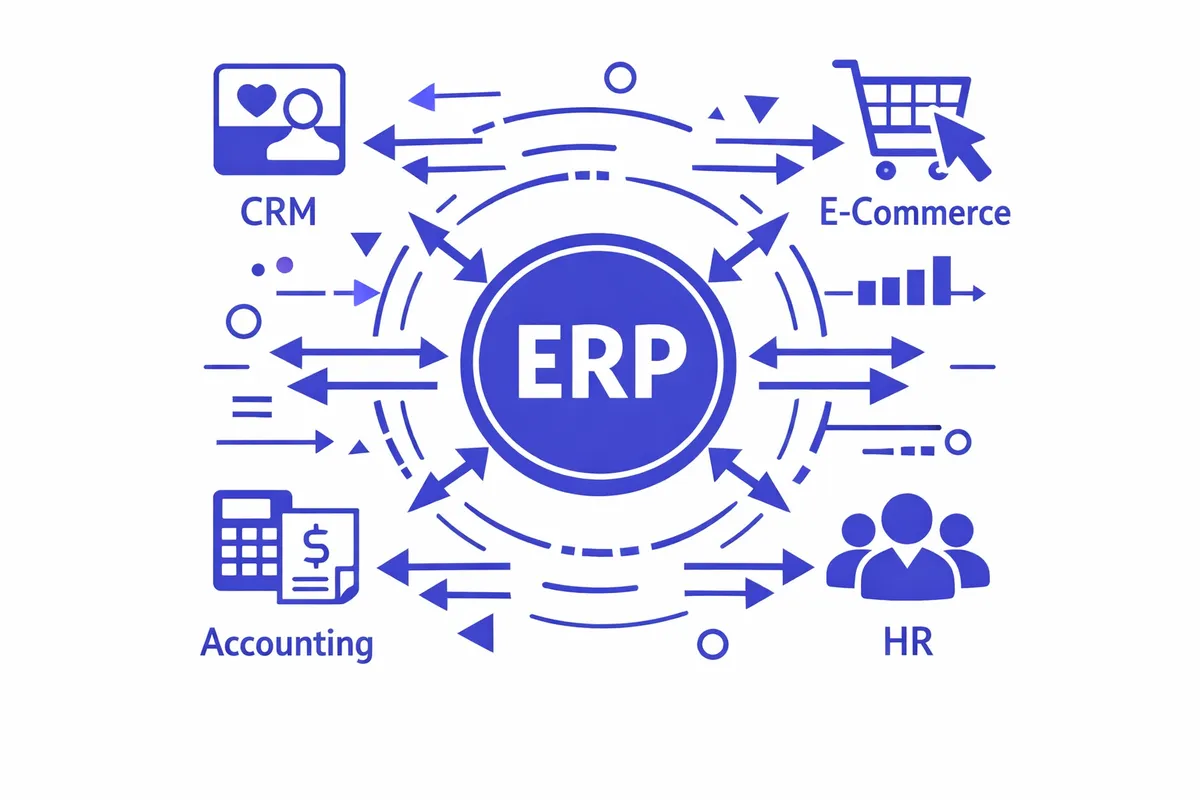
How We Build ERP Integration for Irving Park
We start by mapping the stack as it really runs. We sit with the owner of an auto shop on Irving Park Road and trace one job from the first phone call to the final invoice, marking every point where a person retypes data from one system into another. Those handoff points are the integration targets. The map is the project.
Then we design the connections. For each seam, we determine which system owns the data, which systems need it, and how often it should move. A contractor's estimating app might push approved jobs into the project tool and the accounting system automatically, so a number is entered once and lands everywhere it belongs. We build with the platforms' own APIs wherever they exist, and reliable middleware where they do not, so the integration holds up rather than breaking on the next software update.
Before anything goes live, we agree on what happens when systems disagree. Two tools that have run independently for years will hold conflicting versions of the same customer or the same job, and a connection that simply copies data forward will spread those conflicts rather than resolve them. For a dental practice on Pulaski Road or a shop near Gompers Park, we set the rules for which system wins, clean the existing records once, and build the connection to flag mismatches instead of burying them. That groundwork is unglamorous and it is the difference between an integration that helps and one that quietly corrupts.
We deliver the connections in order of pain. The seam costing the most time and causing the most errors gets connected first, and the business feels the relief before the full project is done. A restaurant on Irving Park Road might get POS-to-accounting connected first, then catering, then purchasing. Each phase stands on its own, so the operation improves step by step instead of waiting for one large switchover that never quite arrives.
Industries We Serve in Irving Park
Contractors and home service businesses working the housing stock near Athletic Field Park use ERP integration to connect estimating, project management, accounting, and payroll so an approved job flows through every system without re-entry. The owner stops reconciling labor and material costs by hand at billing and gets live job-cost visibility across every active site in Irving Park instead.
Family restaurants and catering operations along Irving Park Road and Milwaukee Avenue use ERP integration to link the dining-room POS, the catering platform, and the purchasing records into one view. Total food cost across table service, catering, and any meal-prep line becomes visible in real time rather than assembled from separate exports after the holiday rush.
Auto service shops on Elston Avenue rely on ERP integration to connect appointment scheduling, parts inventory, the repair-order system, and accounting. A job booked at the counter updates inventory and the financials automatically, so the shop owner sees technician productivity and parts margin without pulling numbers from four places.
Dental and medical practices along Central Avenue and Pulaski Road use ERP integration to connect practice management, billing, and scheduling so patient and financial data moves cleanly between them. The front desk stops re-keying information across systems, and the practice gets consolidated reporting without replacing the clinical software it already depends on.
Specialty food shops and neighborhood retailers near Gompers Park use ERP integration to connect retail POS, inventory, and any wholesale or subscription system into a single inventory and customer picture. A shop that added a wholesale line can finally see stock and demand across both channels without managing two disconnected systems.
Preschools and childcare programs near Independence Park use ERP integration to link enrollment software, billing, and staff scheduling so a new enrollment updates tuition billing and classroom rosters at once. The director stops maintaining the same family record in three systems and gets one reliable count of enrollment against capacity.
What to Expect Working With Us
1. Tracing one job end to end. We map your real workflow by following a single job, patient, or order through every system it touches, marking each spot where someone retypes data. For an auto shop on Irving Park Road, that trace is what defines the integration plan. We connect the seams that map reveals.
2. Designing connections that hold. For each handoff we decide which system owns the data and how it should move, then build on the platforms' own APIs where they exist and dependable middleware where they do not. The aim is integration that survives the next software update, not a fragile patch.
3. Connecting the worst seam first. We sequence the work by pain. The handoff costing the most time and producing the most errors gets connected first, so the operation feels relief early. Each phase stands alone, with no single high-risk switchover.
4. Validation through a real cycle. After each connection goes live we check it against actual operations, often through a busy stretch like the spring renovation surge or a catering-heavy season, to confirm data moves correctly under load before we move to the next seam.