How We Build Custom CRM for Irving Park
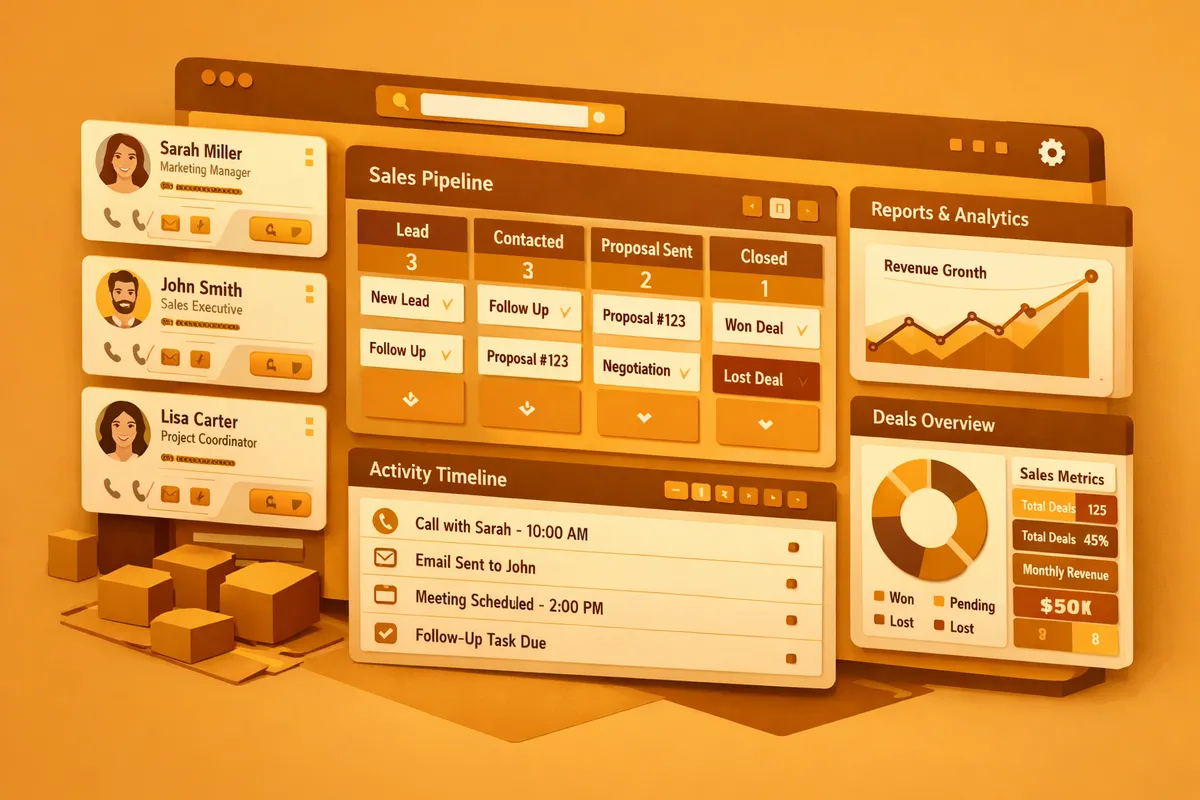
Every custom CRM we build starts with a structured discovery process that focuses on the specific records your business needs to maintain and the workflows that depend on them. We spend time with the people who will use the system daily. For a contractor off Elston Avenue, that means working with the dispatcher, the project manager, and the owner together to map every data point that currently lives in multiple places and should live in one. For a dental practice, that means understanding how the front desk navigates between clinical records and administrative records today, and what a unified view would need to contain to be genuinely useful.
From that discovery, we build the data model before writing any interface code. The data model defines what records exist, how they relate to each other, and what fields each record type contains. For a home service contractor, that model might have separate but linked record types for customers, properties, jobs, and vendors, with relationship logic that lets you pull a property's full job history, see the customer who owns it, and review which crew and materials were involved in each visit.
The interface is built for the people who will use it in the context where they will use it. A dispatcher at an Irving Park contractor shop might need a mobile-friendly daily dispatch view. A front desk coordinator at a medical practice needs a patient lookup that surfaces relevant history in two seconds, not a complex navigation flow. We design for the actual use case, not a generic data table.
Industries We Serve in Irving Park
Residential contractors and remodelers anchored in the Irving Park bungalow corridor need a CRM that tracks properties, not just people. A single property might have had three different owners over ten years, each generating job records that inform the current owner's maintenance and improvement decisions. A custom CRM built for property-centric tracking captures that history in a way no generic contact CRM will.
The auto service shops along Irving Park Road track customers by vehicle as much as by name. A custom CRM with vehicle records linked to customer records, and repair history linked to vehicle records, gives service advisors a complete view of every car in their system. Service interval tracking, deferred repair flags, and warranty notes live in the same place as the customer's contact information and communication history.
Preschools and early childhood programs serving Irving Park families manage an unusually complex set of relationships: the child, the primary parent, the secondary parent, authorized pickups, and sometimes a guardian who is different from all of the above. Off-the-shelf CRMs handle one contact record per customer. A custom CRM for a childcare program models those family relationships accurately, with communication routing logic that ensures the right message goes to the right person.
Medical and dental practices near Independence Park need a CRM that surfaces recall data, insurance information, and communication history without duplicating what lives in the clinical platform. A custom build with read-only integration into the clinical system gives the front desk a unified relationship view. Recall sequences, referral tracking, and patient communication history are all accessible without navigating between two separate systems.
Specialty food retailers and importers on Montrose Avenue serve both retail customers and wholesale accounts, which have fundamentally different relationship structures. A custom CRM can maintain separate record types for each, with wholesale accounts tracking order history, pricing agreements, and account contacts separately from the retail customer database that supports marketing and loyalty outreach.
Independent insurance and financial service offices serving Irving Park's working families manage policy records, renewal cycles, and referral relationships that generic CRMs handle poorly. A custom CRM tracks policy details alongside relationship notes, surfaces renewal dates automatically, and links referral relationships between customers so the business can understand and nurture its referral network systematically.
What to Expect Working With Us
1. Data model first, interface second. We will not start designing screens until we have mapped your complete data model: every record type, every relationship, every field that matters to your operation. For a contractor on Pulaski Road with a decade of customer history, that model needs to capture the complexity of how jobs, properties, customers, and crews relate to each other before a single line of interface code is written.
2. Phased build with usable releases at each stage. We do not disappear for three months and return with a finished system. We build in phases, releasing a functional version at each stage so your team can begin using core features while the remaining capabilities are under development. Most businesses start using the record-keeping layer within six weeks while the automation and reporting features are completed.
3. Integration with the platforms you already depend on. A custom CRM for a dental practice is only useful if it connects to the practice management software your clinical team uses. We build integration layers that pull relevant data from your existing platforms into the CRM without requiring manual duplication. For Irving Park businesses that have invested in specific industry software, the custom CRM extends those tools rather than replacing them.
4. Staff training that accounts for varying technical comfort. The team members who will use your CRM every day have different technical backgrounds. We do not deliver a user manual and assume proficiency follows. We run role-specific training sessions, build a short reference guide for the most common tasks, and schedule a follow-up session 30 days after launch to address the questions that come up in real use.