How We Build Business Process Automation for Irving Park
The first thing we do is shadow your operation. We ask to spend time with the people who actually do the administrative work: the person who handles new patient intake at the dental practice near Gompers Park, the dispatcher at the contractor shop on Pulaski Road, the manager who closes out the register at the specialty grocery on Montrose Avenue. Those conversations reveal the actual manual workflows, not the theoretical ones.
From that discovery, we prioritize automation candidates by three factors: how often the task occurs, how much time it takes, and how much human judgment it actually requires. Most businesses find that 60 to 70 percent of their manual administrative work fails all three tests for requiring human attention. It happens daily or more, it takes meaningful time, and it follows a rule that a system could apply consistently without error.
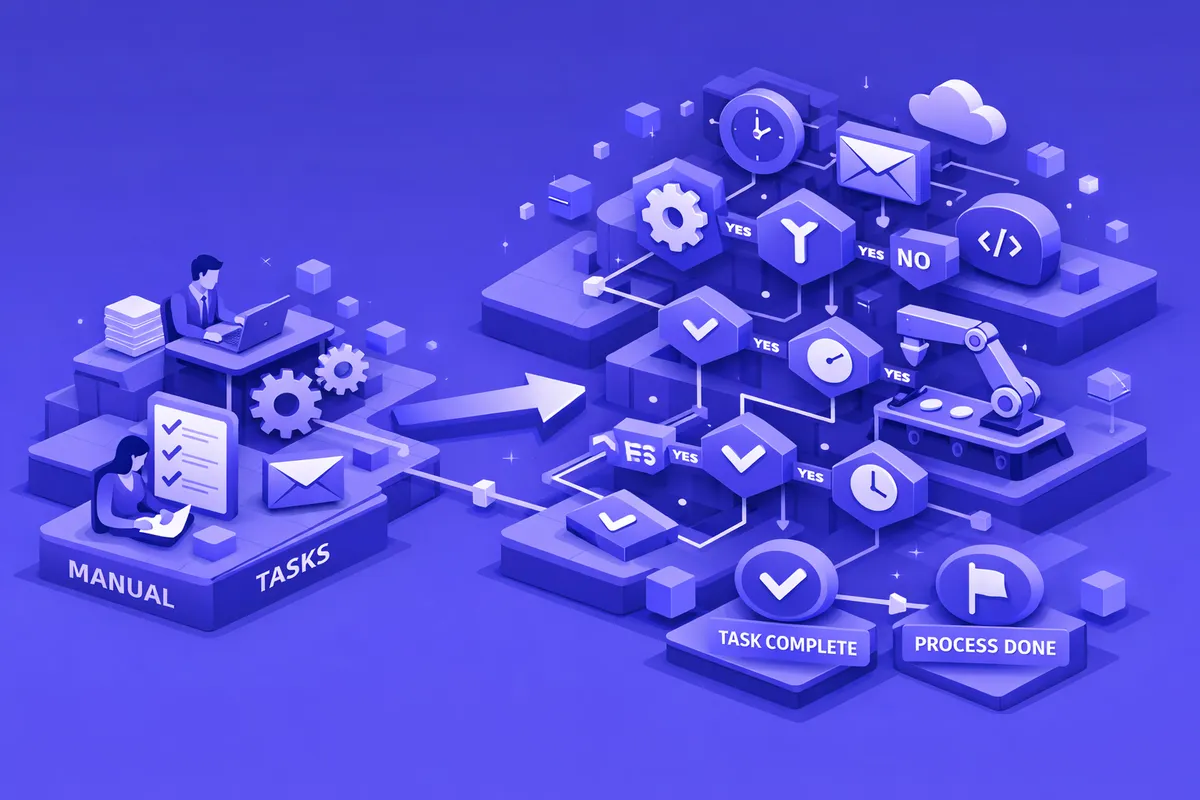
We then build each automation in layers. Simple triggers and notifications come first, because they are low-risk and immediately visible to the team. Scheduling reminders, follow-up sequences, and status updates can often be automated in days. More complex workflows involving conditional logic, multi-system coordination, or approvals take longer and receive more testing before deployment. Every automation is documented: what triggers it, what it does, and what a staff member should check if the output looks wrong.
Industries We Serve in Irving Park
Residential contractors and home remodelers on Pulaski Road deal with a predictable sequence for every job: inquiry intake, estimate generation, client follow-up, job scheduling, crew dispatch, materials tracking, and final invoicing. Automating the handoffs between those stages means a signed estimate automatically creates a project record, schedules an intake call, and queues an invoice template without anyone managing that sequence by hand.
Auto service centers along Irving Park Road handle customer communication at every stage of a repair: appointment confirmation, parts arrival notification, vehicle readiness, and post-service follow-up. Each of those touchpoints is currently a manual task. Automation converts them into triggered sequences that run when a technician updates a work order status, freeing service writers to focus on the customers standing at the counter.
Medical and dental offices near Horner Park spend significant staff time on insurance verification, appointment reminders, and recall outreach for patients due for checkups. Automating those sequences means reminders go out on schedule regardless of how busy the front desk is, insurance verifications are triggered automatically when appointments are booked, and recall lists generate and begin outreach without someone pulling a report each month.
Preschools and childcare centers serving Irving Park's working families manage enrollment, billing, and family communication through processes that are often manual by default. Automation that connects enrollment confirmations to billing setup, and billing records to parent communication, removes a category of administrative error that costs time and erodes trust with families.
Specialty food retailers and ethnic grocers on Montrose Avenue run inventory, ordering, and vendor communication processes that depend on staff remembering to check stock levels and initiate reorders manually. Automated inventory monitoring and supplier notification means reorder triggers fire when they should, not when someone gets around to checking.
Independent medical supply and equipment businesses serving Irving Park's residential health care needs field inquiries, process orders, and manage follow-up through steps that frequently depend on individual staff initiative. Automating the inquiry response and order status sequences removes that dependency and ensures customers receive timely communication even during peak periods.
What to Expect Working With Us
1. Process discovery with the people doing the work. We do not design automations based on org charts or management descriptions. We spend time with the staff members who carry out each manual process and document what they actually do, step by step. For a contractor dispatcher on Pulaski Road, that means understanding the exact sequence from inbound call to crew dispatch, not a summary of it.
2. Prioritization by impact, not complexity. The first automations we build are the ones that will be felt immediately by your team. High-frequency, low-judgment tasks that happen daily are the right starting point. More complex conditional workflows follow once the simpler automations have demonstrated reliability and your team has built confidence in the system.
3. Testing with real business data. Every automation is tested using actual records from your operation before it goes live. We do not test with dummy data and assume the real environment will behave the same way. For businesses in Irving Park that have years of customer history in their systems, that history is part of what the automation must handle correctly.
4. Ongoing refinement tied to Irving Park's business calendar. The spring home improvement season, the fall school enrollment cycle, and the summer activity peak around Independence Park and Horner Park create recurring demand patterns that should drive your automation calendar. We review and adjust automation logic seasonally so the system stays calibrated to your actual operational rhythm.