How We Build Business Intelligence for Irving Park
Every engagement starts at the counter, not in a software demo. We sit with the owner of the specialty food shop near Horner Park and ask what they check first thing in the morning, what number they wish they trusted, and what question keeps them up. That conversation tells us which metrics matter and which reports would just add noise. Irving Park owners are operators first, so we design for the five-minute read, not the analyst's deep dive.
From there we map the data sources the business already runs. For most operations here that means a POS, QuickBooks, a scheduling tool, and a spreadsheet or two that quietly hold the real answers. We connect those sources into a single reporting layer rather than asking anyone to change the tools they trust. The point is consolidation, not disruption, and it matters in a neighborhood where a business near Pulaski Road may have run the same accounting setup for fifteen years and has no appetite to relearn it.
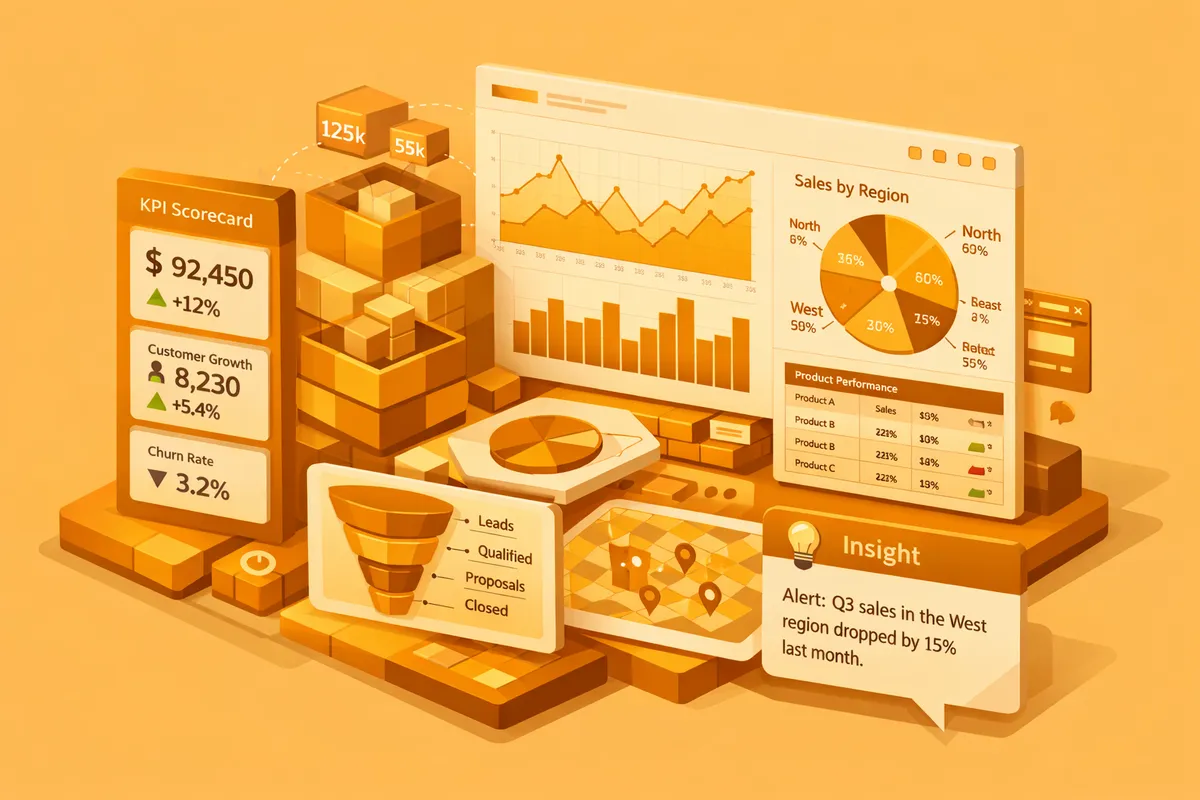
Then we build dashboards around the actual decisions. A contractor working sites across Irving Park sees job profitability, crew utilization, and the pipeline of estimates that have not closed. A dental practice on Central Avenue sees production by provider, chair utilization, and new-patient volume by month. Each view answers a question the owner used to answer from memory, and now anyone in the office can answer it from the screen.
We test every dashboard against a real week before we call it done. We sit back down with the owner of the auto shop on Elston Avenue, pull up the screen, and ask whether the numbers match what they already know in their gut. When the dashboard and the instinct disagree, one of them is wrong, and finding out which is the most useful part of the process. Only once the reporting earns the owner's trust do we hand it to the wider team.
Industries We Serve in Irving Park
Family restaurants and neighborhood bars along Irving Park Road get business intelligence that finally connects the dining room, the catering book, and the bar into one picture. Owners see which dayparts carry the week, how catering margin compares to table service, and which menu changes moved revenue. For a restaurant that has run on the founder's gut for thirty years, a dashboard turns that gut into a record a manager can read on a Monday.
Contractors and home service businesses working the bungalow stock near Athletic Field Park use business intelligence to track job costing, crew productivity, and estimate-to-close rates in real time. Instead of discovering a thin-margin job at billing, the owner sees labor and materials drift while the job is still open, which is the difference between catching a problem and absorbing one.
Medical and dental practices clustered along Pulaski Road and Central Avenue rely on business intelligence to surface provider production, schedule density, and new-patient trends without touching protected health information. As long-tenured practices watch their patient base age, the reporting layer shows whether younger Irving Park families are actually entering the schedule or whether the practice is only maintaining its existing book.
Auto service shops on Elston Avenue and Irving Park Road put business intelligence to work on bay utilization, technician efficiency, and the mix of repeat versus first-time customers. A shop that has always run by feel can see which service categories drive revenue and whether the slow weeks follow a pattern worth staffing around.
Preschools and early childhood programs near Independence Park use business intelligence to track enrollment against capacity, inquiry-to-tour conversion, and the seasonal cycle that governs the entire business. A director planning staffing for the fall sees this year's inquiry pace against last year's, and decides on data rather than hope.
Specialty food shops and neighborhood retailers around Gompers Park use business intelligence to read inventory turns, supplier performance, and the split between walk-in retail and any wholesale or subscription lines they have added. For a shop that grew a side business without quite noticing, the dashboard makes the new revenue line legible and manageable.
What to Expect Working With Us
1. The morning-coffee conversation. Before any tool gets named, we sit with you and learn how you actually run the business. What you check first, what you trust, what you guess at. For an owner-operator near Horner Park, this is the session that decides what the dashboards measure.
2. Source mapping and connection. We inventory the systems you already run, your POS, accounting, scheduling, and the spreadsheets that hold the real numbers, and connect them into one reporting layer. You keep your tools. We connect the seams.
3. Dashboard design around real decisions. We build views tied to the choices you make weekly: staffing, purchasing, pricing, hiring. Every dashboard answers a specific question and can be read in five minutes by anyone in the operation, not only by you.
4. Handoff and the succession layer. We train your team and document the reporting so it survives a change in management. For Irving Park's family businesses preparing a generational transition, this step turns an owner's instinct into a system the next person inherits intact.