How We Build AI Sales Intelligence for Irving Park
We begin by auditing the sales data the business has accumulated. What is tracked in the CRM, the project management tool, or even the spreadsheet? What information is captured about each opportunity at the point of inquiry: source, project type, customer characteristics, timeline? What is known about how each opportunity resolved: closed, lost, delayed, or still open? We need at least twenty to thirty resolved opportunities to identify reliable patterns. More historical data produces more reliable models.
We analyze that data to extract the patterns that predict outcomes. For a contractor, analysis might reveal that residential renovation projects in certain size ranges close at three times the rate of commercial projects, or that inquiries arriving through neighbor referral close twice as fast as those arriving through Google search. For a therapy practice, analysis might reveal that patients referred by one particular orthopedic surgeon complete treatment at significantly higher rates than those referred through other channels. Those patterns, once surfaced, immediately change how the business should prioritize its effort.
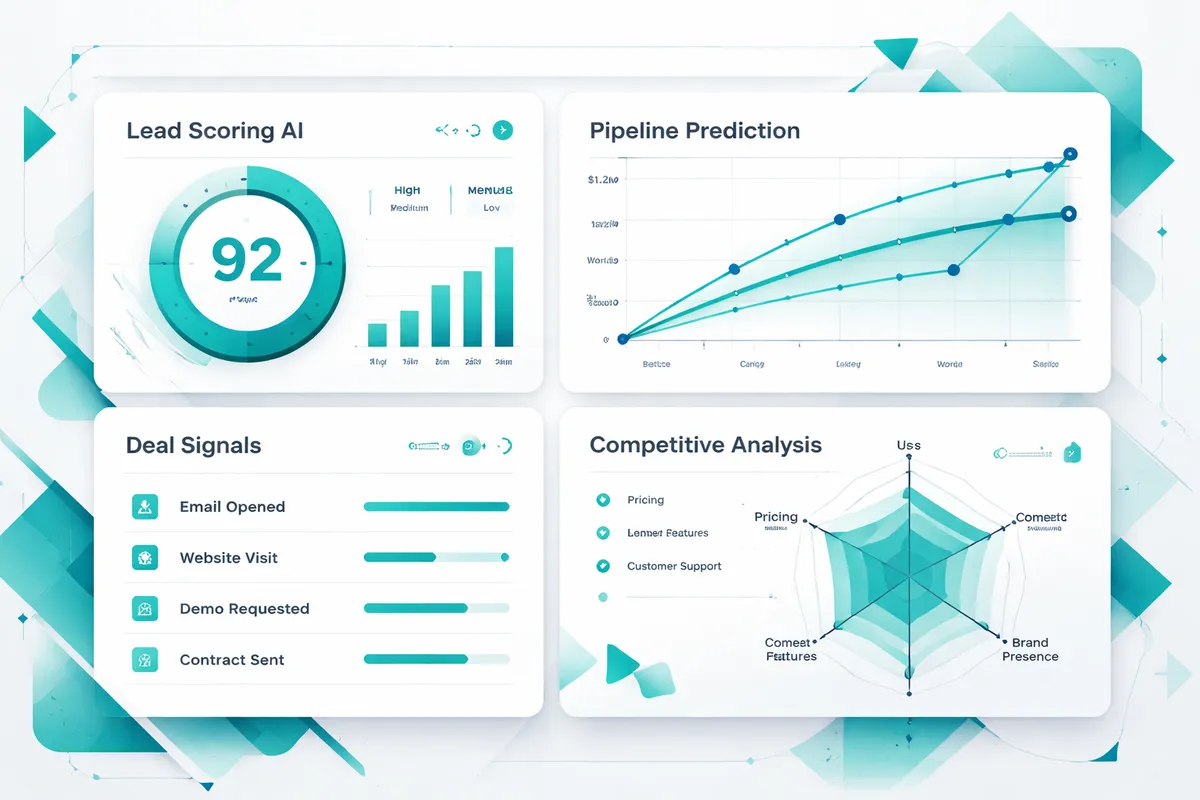
We build a lead scoring model calibrated to the specific patterns in the business's data. Each active opportunity receives a score that reflects its similarity to previously closed opportunities and dissimilarity from previously lost ones. A contractor looking at twelve active quotes sees them ranked by close probability rather than by the sequence in which they arrived. The quotes that look most like historical wins get priority follow-up. The ones that look like historical losses get a lighter touch or a revised approach.
We configure a dashboard that makes scores and insights visible to whoever manages sales in the business. The contractor sees their pipeline with probability scores and recommended next actions. The therapy practice manager sees referral source quality metrics and patient completion rate trends. The preschool director sees inquiry conversion rates by channel and family characteristic clusters that predict enrollment.
Industries We Serve in Irving Park
Contractors and home services businesses on Montrose Avenue and throughout Irving Park use AI sales intelligence to identify which project types, sizes, and customer profiles convert most reliably, how long different types of opportunities typically take to resolve, and where in the follow-up sequence most opportunities are won or lost. Contractors stop investing equal energy in every quote and start putting disproportionate attention on the ones that look like their historical wins.
Medical and dental practices near Independence Park and along Pulaski Road use AI sales intelligence to evaluate referral source quality, identify which patient profiles have the highest treatment completion and retention rates, and understand which marketing messages are producing inquiries that convert to long-term patients versus those that produce one-visit patients who do not return. Practice growth becomes more efficient when it is directed at the right sources and patient types.
Professional service firms operating throughout Irving Park and adjacent North Center use AI sales intelligence to understand which client types they serve best, which discovery conversation signals predict a successful engagement, and which proposal elements are associated with closed versus lost opportunities. Business development effort concentrates on the highest-probability prospects rather than distributing evenly across all leads.
Preschools and childcare centers near Athletic Field Park and Horner Park use AI sales intelligence to evaluate which inquiry channels produce the highest enrollment conversion rates, which family characteristics are associated with long-term re-enrollment, and which points in the enrollment conversation are most associated with families choosing not to proceed. Enrollment efforts focus on channels and conversations that produce families who actually enroll and stay.
Insurance agencies and financial service providers operating in Irving Park use AI sales intelligence to identify which client characteristics predict long-term retention, which account behaviors correlate with non-renewal risk, and which prospect profiles match their best historical clients. Prospecting effort focuses on the prospect types where the business has a strong historical track record.
Specialty retailers and family businesses along Milwaukee Avenue and Elston Avenue use AI sales intelligence to understand which customer acquisition channels produce customers with the highest lifetime value, which product categories drive the most profitable repeat purchase patterns, and which customer behaviors indicate elevated retention risk. Retention investment focuses on the customers and behaviors that matter most.
What to Expect Working With Us
1. Data audit and opportunity assessment. We review the business's historical sales data, assess what information is available about each opportunity and how it resolved, and determine whether sufficient history exists to build a reliable predictive model. We provide a clear assessment of what insights the available data can support before any model development begins.
2. Pattern analysis and model development. We analyze closed and lost opportunities to identify the characteristics that distinguish them, build a lead scoring model calibrated to the business's specific patterns, and validate model accuracy against held-out historical data before using it to score active opportunities.
3. Dashboard configuration and integration. We configure a sales intelligence dashboard that makes scores and insights visible to the business's sales function, integrate it with existing CRM or pipeline tracking tools where possible, and configure automated alerts for high-priority situations such as stalled high-score opportunities or sudden changes in referral source patterns.
4. Team calibration and ongoing model refinement. We train whoever manages sales activity on how to interpret scores and recommendations, monitor model accuracy as new opportunities close and resolve, and refine the model periodically as the business accumulates additional resolution data. Models improve continuously as more outcomes become available to train against.