How We Build AI Integration for Irving Park
We begin by understanding the existing systems and the workflows that run through them. What data does each system hold? What tasks are currently done manually that require pulling information from these systems? Where do staff spend time copying information from one place to another or running manual analyses that could be automated? This discovery phase is specific and detailed. We are not looking for general AI opportunities. We are looking for the precise integration points where AI capability plugs into existing data to produce specific workflow improvements.
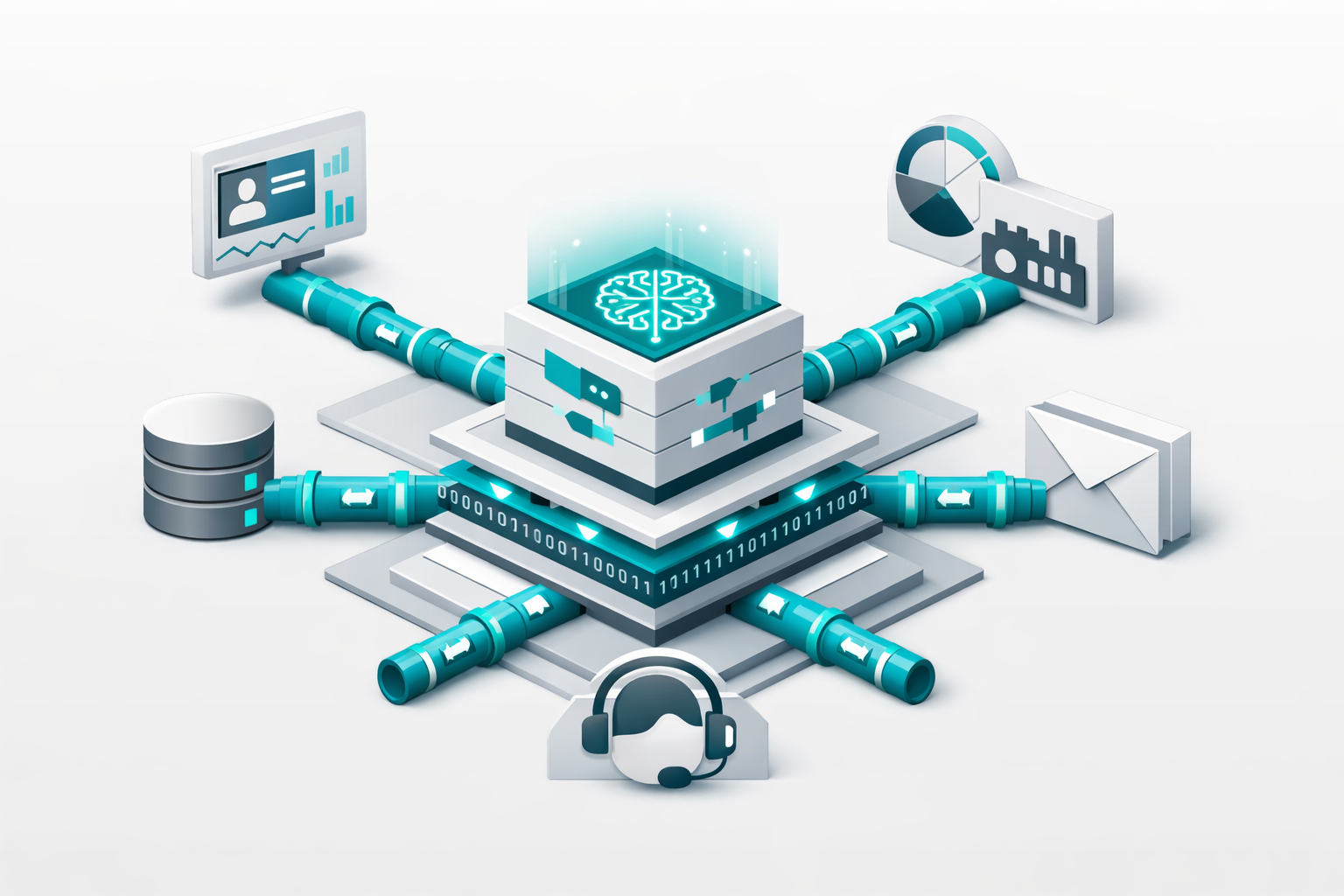
We design integration architecture based on what we learn. For each identified opportunity, we document the data that needs to flow, the transformation it needs to undergo, the AI capability that processes it, and where the output needs to go. A patient care instruction integration, for example, needs to pull the day's appointment completion records from the scheduling system, feed each patient's procedure details and care protocol into an AI drafting model, and push the resulting instructions into the practice's patient communication system for same-day delivery. Every step of that flow is specified before any code is written.
We build middleware connections that handle authentication, data transformation, error handling, and monitoring. Most Irving Park businesses use a mix of cloud-based software with modern APIs and older installed systems with less flexible interfaces. We work with both. Where a system has a clean API, we connect to it directly. Where it does not, we use scheduled exports, database connections, or other approaches that achieve the same result without requiring system replacement.
Testing is thorough and uses real business data. Before any integration goes live, we run it against historical records to verify that the data flows correctly, the AI processes it accurately, and the output reaches the right destination in the right format. Edge cases discovered during testing are addressed before deployment rather than after.
Industries We Serve in Irving Park
Medical and dental practices on Irving Park Road and Pulaski Road use AI integration to connect patient management systems with AI drafting tools for care instructions and patient communication, to link appointment systems with AI scheduling optimization, and to integrate billing data with AI anomaly detection that flags unusual claim patterns before they reach the payer. Staff spend more time on patient care and less on documentation.
Home services contractors and general contractors operating throughout Irving Park use AI integration to connect project management systems with AI cost analysis, to integrate supplier invoice processing with job costing, and to link client communication records with AI drafting tools that generate status updates and change order documentation. Project administration time drops while client communication quality improves.
Auto service and repair shops along Elston Avenue and Pulaski Road use AI integration to connect vehicle history records with service recommendation engines, to integrate parts inventory with automated reorder systems, and to link completed service records with AI-generated customer follow-up communications. Service advisors spend less time on administrative tasks and more time on customer interaction.
Preschools and childcare centers near Independence Park and Athletic Field Park use AI integration to connect enrollment records with parent communication tools, to link daily observation logs with AI-assisted developmental progress reports, and to integrate billing systems with automated tuition reminder sequences. Directors spend less time on paperwork and more time on curriculum and family relationships.
Specialty food shops and retailers along Milwaukee Avenue use AI integration to connect point-of-sale systems with inventory management, to link sales history with AI demand forecasting, and to integrate customer purchase data with personalized recommendation and promotion systems. Owners get operational intelligence without manual spreadsheet assembly.
Family restaurants near Gompers Park use AI integration to connect reservation systems with kitchen capacity planning, to link inventory systems with AI-driven ordering recommendations, and to integrate customer feedback channels with automated response systems. Restaurant owners see integrated operational intelligence that previously required manual assembly across multiple reports.
What to Expect Working With Us
1. System audit and integration opportunity mapping. We document every system the business uses, trace current manual workflows, and identify the integration points where AI capability would produce the highest return. We prioritize opportunities by impact on staff time and operational quality before any development begins.
2. Integration design and specification. We design the complete data flow for each prioritized integration, specifying inputs, transformations, AI processing, and outputs. We document this specification clearly and get business owner approval before coding starts.
3. Development, testing, and validation. We build integrations, test them against real business data, validate output quality, and address edge cases. We do not consider an integration ready for deployment until it has processed representative historical data without errors.
4. Deployment, monitoring, and maintenance. We deploy integrations, monitor performance continuously, and respond to any errors or anomalies. As the business's systems or processes change, we update integrations accordingly. AI tools also evolve over time. We maintain compatibility as both sides of each integration develop.