How We Build AI Data Pipelines for Irving Park
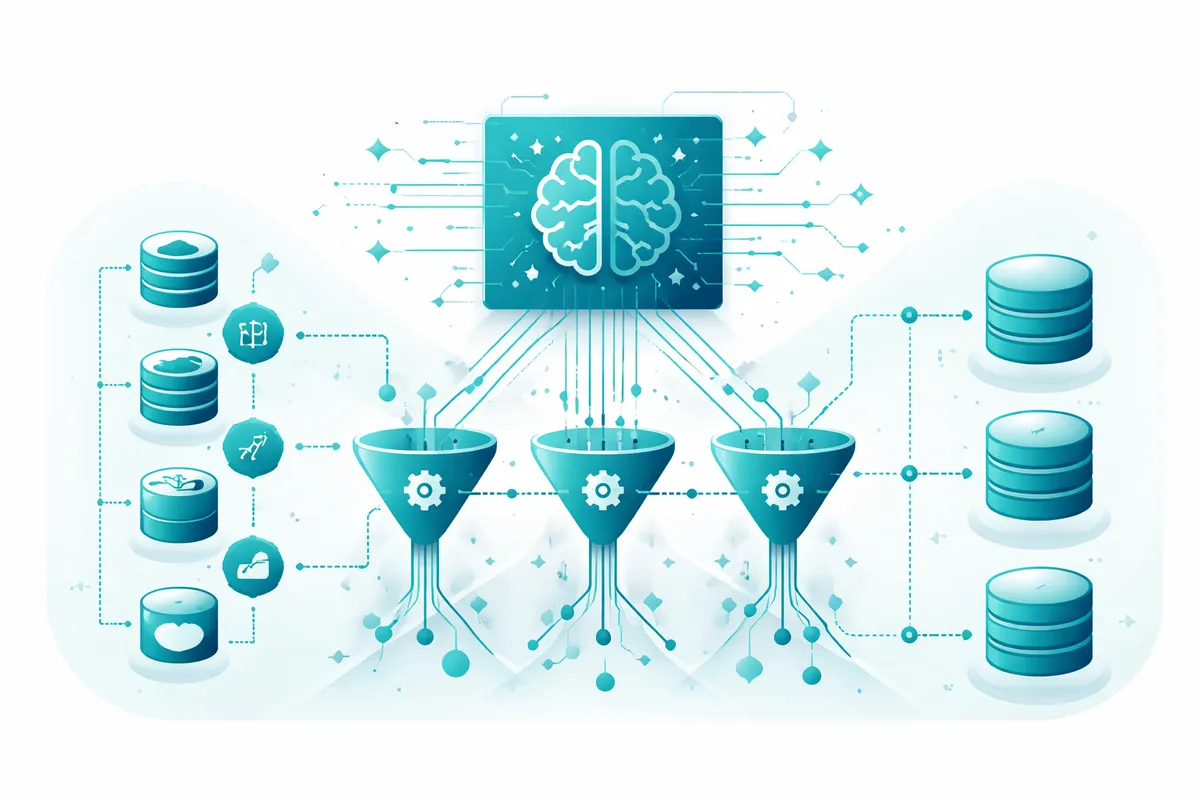
The engagement begins with a systems inventory. We document every software application your Irving Park business uses and identify the data flows between them: what information originates in each system, what other systems need that information, and how it currently moves. For a medical practice on Irving Park Road, that might include the EHR, the practice management system, the billing platform, the scheduling system, the patient communication platform, and the accounting software. For a contractor near Independence Park, it might include estimating software, project management tools, subcontractor payment systems, and accounting.
From the systems inventory, we map the data flows that have the highest volume, the highest error rate, and the highest labor cost. These become the priority pipelines in the implementation plan. We identify the data transformation logic required at each pipeline step: when appointment data from the scheduling system feeds the billing platform, what field mapping, format conversion, and validation rules apply. When parts order data from the shop management system posts to accounting, what account code assignments and category rules apply.
Pipeline development uses APIs where available and robotic process automation where APIs do not exist. Most modern business software exposes APIs that allow system-to-system data transfer without custom development. Older or specialized systems common in trades and auto service businesses sometimes require RPA: automated workflows that interact with the software interface the way a human user would, without manual input. We assess the right approach for each pipeline during the systems inventory.
Testing is comprehensive before any pipeline goes live. We run the complete data flow through representative scenarios, compare automated pipeline outputs against manual entry results, and identify discrepancies for correction. A data pipeline that produces consistently accurate outputs from day one requires this level of validation before deployment.
Industries We Serve in Irving Park
Medical and dental practices on Irving Park Road and Pulaski Road manage some of the most complex data flow environments of any small business in Irving Park. Patient data flows from intake forms through EHR systems through billing platforms through payment processors through accounting software, with each step currently requiring manual intervention. AI data pipelines for healthcare practices connect these systems directly, reduce billing error rates, and free clinical administrative staff to focus on patient interaction rather than data entry.
Auto service shops on Elston Avenue and Milwaukee Avenue manage vehicle service records, parts inventory, work order processing, customer communication, and accounting across multiple systems that rarely talk to each other natively. A data pipeline connecting the shop management system to parts ordering, invoicing, customer notification, and accounting eliminates the redundant entry that currently occupies a significant portion of service advisor time.
General contractors and construction trades operating near Athletic Field Park and Independence Park manage project data across estimating, project management, subcontractor coordination, and accounting systems that each hold pieces of the same project picture. A contractor with AI data pipelines connecting these systems sees a real-time project cost picture without waiting for manual reconciliation. Job margin analysis that currently takes an hour per project takes seconds when data flows automatically.
Preschools and childcare programs near Gompers Park and throughout the Irving Park corridor manage student enrollment, billing, attendance, and parent communication data across systems that require manual coordination. A childcare operation with an AI data pipeline connecting enrollment records, billing, attendance tracking, and parent communication reduces the administrative burden on program directors who should be focused on program quality.
Specialty retail and neighborhood businesses along Irving Park Road and Pulaski Road manage inventory, point-of-sale, and accounting data that currently requires manual export and import between systems. A hardware store or specialty food shop with a pipeline connecting POS data to inventory management and accounting reduces daily data entry overhead and improves the accuracy of its financial reporting.
Professional services firms on Irving Park Road and throughout the corridor manage client data across CRM, project management, billing, and communication systems. An insurance agency, financial advisory, or legal services firm with AI data pipelines connecting client records, activity tracking, billing, and communication achieves better client record accuracy and reduces the administrative overhead that affects service delivery capacity.
What to Expect Working With Us
1. Systems inventory and data flow mapping. We document all software systems in your Irving Park business, map the data flows between them, and identify the priority pipelines by volume, error rate, and labor cost. This mapping is the foundation for the implementation plan.
2. Pipeline architecture and development. We design and build the data pipelines, including field mapping, transformation logic, validation rules, and error handling. Build time varies by pipeline complexity and system integration method: API-based pipelines for a two-system connection take two to four weeks; multi-system integration for a medical practice takes six to ten weeks.
3. Testing and validation. We test all pipelines against representative data scenarios, validate accuracy against manual entry baselines, and confirm that data flows correctly through the full chain before deployment.
4. Deployment, monitoring, and optimization. We deploy pipelines in your Irving Park business environment, monitor data flow accuracy and volume through the first sixty days, and address any edge cases or data quality issues that emerge from live operation.