How We Build Accounting Automation for Irving Park
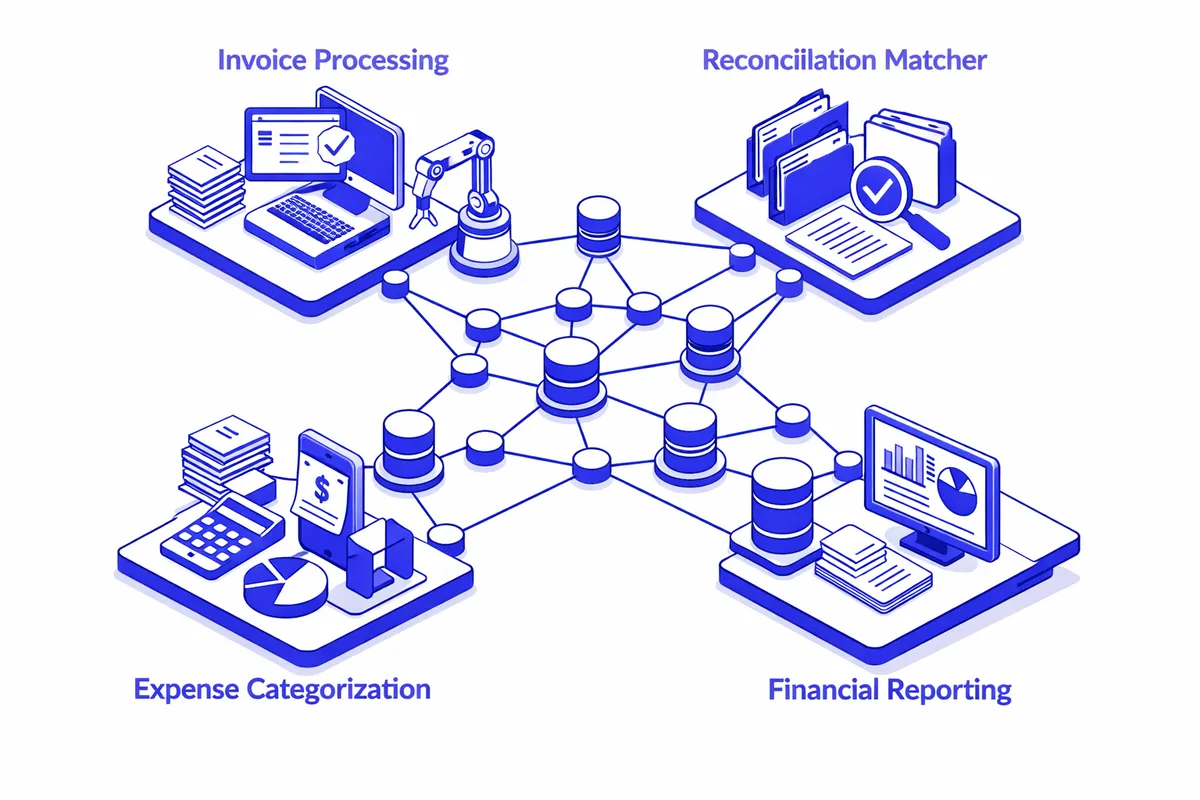
We start with the business's own close cycle, not a template. For a family restaurant on Irving Park Road, the close cycle involves daily sales reconciliation, weekly supplier invoice posting, biweekly payroll, and monthly food cost analysis. We map each step, identify which ones follow rules rather than require judgment, and sequence automations based on where the most labor is concentrated.
For medical practices, we begin with the billing workflow: claim submission timing, expected payment windows by payer, denial tracking, and payment posting. Most practices we work with have a three-week gap between claim submission and posted payment that could be two weeks shorter with proper automation, and that gap affects both cash flow visibility and the speed with which denied claims get addressed.
For contractors and auto service businesses, job costing is the first priority. We connect work order or project management systems to the accounting platform so material costs and labor charges post to the right job automatically rather than requiring manual entry at month-end. The time savings from eliminating that month-end data entry project alone typically justifies the automation investment.
We build on top of QuickBooks, Xero, or the platforms these businesses already use, and we test every automation against three months of historical data before it touches live transactions. Irving Park business owners do not have time for an automation that introduces new errors while eliminating old ones.
Industries We Serve in Irving Park
Family restaurants and neighborhood dining establishments along Irving Park Road automate daily sales reconciliation, supplier invoice matching against delivery records, and food cost percentage calculations tied to weekly purchasing. A restaurant running four to six regular suppliers benefits immediately from purchase order matching automation that flags delivery discrepancies before payment runs.
Auto service and auto repair shops near Pulaski Road automate parts inventory reconciliation against repair orders, supplier invoice matching, and core return tracking. The paper-to-digital gap in most auto service accounting is where the majority of reconciliation errors live, and closing it through automation saves hours of manual matching work every week.
Family medical and dental practices serving the residential neighborhoods around Independence Park and Athletic Field Park use accounting automation to manage insurance claim tracking, payment posting, patient balance billing, and denial management. A practice with four to six providers billing multiple insurance carriers has accounts receivable complexity that deserves systematic automation rather than manual tracking across spreadsheets.
Contractors and trade businesses working throughout Irving Park and the Northwest Side automate job cost tracking, subcontractor invoice processing, and draw schedule billing. A general contractor with six to eight active jobs cannot manually track accurate cost-to-complete on each without accounting infrastructure that updates in real time.
Specialty food shops and neighborhood grocers on Montrose Avenue and Irving Park Road automate daily register reconciliation, wholesale account receivable tracking, and supplier statement matching. For a specialty food retailer managing fifteen to twenty supplier relationships, accounts payable automation that matches invoices against orders and schedules payment runs saves significant manual effort each week.
Preschools and childcare businesses near Horner Park automate tuition invoicing, payment receipt tracking, and subsidy reconciliation for families receiving state childcare assistance. Childcare accounting involves a specific mix of direct parent payments and government program reimbursements that requires careful separation in the general ledger, and automation enforces that separation consistently.
What to Expect Working With Us
1. Business-specific process mapping. We spend the first sessions learning your actual workflows, not applying a template. A family restaurant and a medical practice have fundamentally different accounting rhythms, and the automation we build reflects those differences.
2. Priority sequencing by labor concentration. Not every automation delivers equal time savings. We sequence builds based on where the highest volume of manual work sits in your current close cycle, so the first automation you get live is the one that returns the most time.
3. Historical validation before going live. Every automation runs against three months of actual transactions before touching current data. We compare automated outputs against what your team produced manually to validate that the automation is correct before it runs unsupervised.
4. Bookkeeper-maintainable documentation. We deliver documentation your bookkeeper or office manager can use to understand what each automation does and how to handle the exceptions it surfaces. The goal is a system your team can operate, not one that requires us to troubleshoot every month.