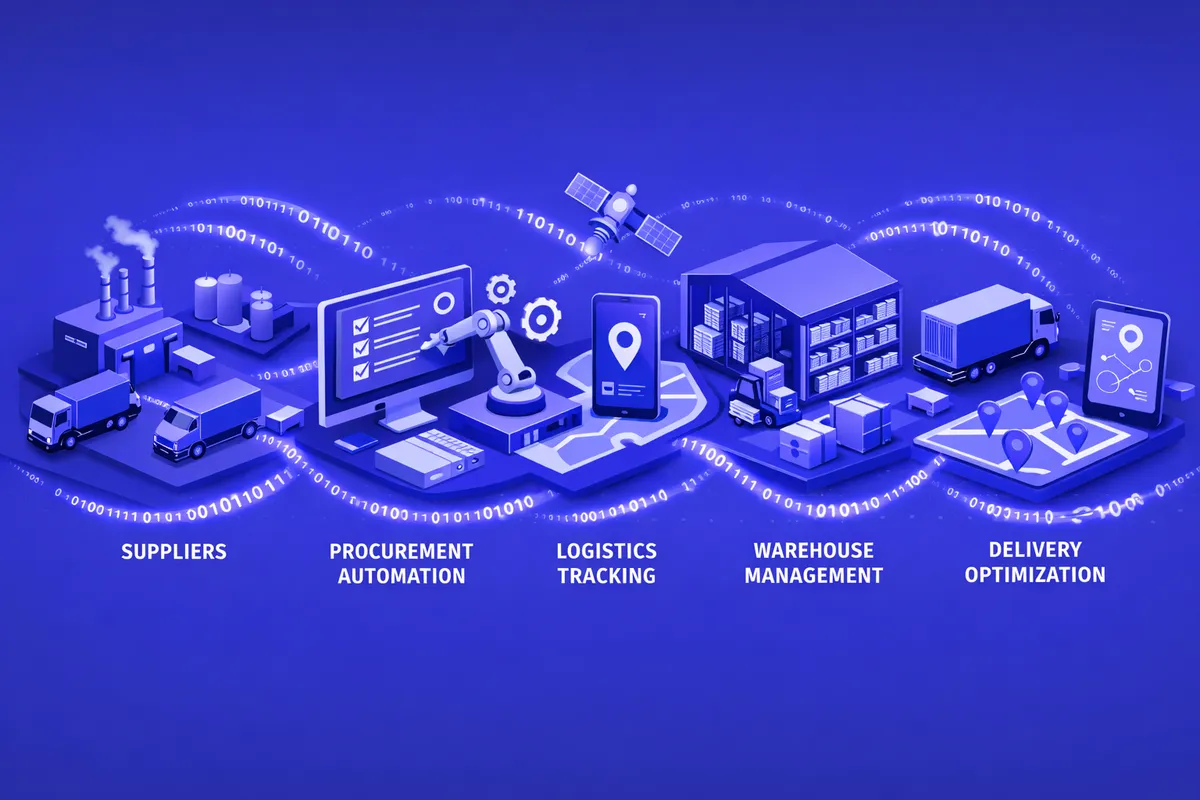
How We Build Supply Chain Automation for Hyde Park
Process mapping is the foundation of every supply chain automation engagement. We trace your current supply chain from demand signal through ordering, delivery confirmation, receiving, and payment, documenting every manual step, every handoff between people or systems, and every decision point where automation can replace manual judgment or manual coordination. For Hyde Park's research and healthcare organizations, this mapping includes the compliance checkpoints and approval hierarchies that constrain how automation can operate.
Integration architecture for Hyde Park supply chain automation connects to the systems your organization already uses: the ERP systems that larger institutions and medical practices run, the procurement platforms that university-affiliated organizations may be required to use for certain purchase categories, the accounting systems that small businesses and nonprofits manage, and the vendor portals and EDI connections that suppliers provide. Automation that works independently of existing systems creates double-entry work rather than eliminating it.
For research organizations, automation design includes grant accounting integration. Purchase orders for grant-funded supplies need to be coded to the correct grant account, within the approved budget for that grant's supply categories, and subject to the approval routing that grant management requires before orders are placed. We build these constraints into procurement automation workflows so that automated ordering respects the grant management rules that govern research spending.
Exception handling is designed into every automated workflow from the first system design conversation. A supplier that misses a delivery confirmation, an order that would exceed an approval threshold, a delivery that does not match the purchase order: each exception triggers the right alert, surfaces the affected order, and initiates the appropriate human review. Earlier exception detection through automated monitoring means more options to resolve issues before they create downstream consequences.
Industries We Serve in Hyde Park
UChicago Medicine-affiliated practices and medical groups near the hospital campus automate medical supply procurement, inventory replenishment, and vendor management workflows that comply with medical supply regulatory requirements and institutional procurement standards.
University of Chicago research centers and laboratories automate laboratory and research supply procurement with grant accounting integration, institutional approval routing, and vendor communication workflows that reduce the administrative burden on researchers and research coordinators.
Nonprofits and community organizations throughout Hyde Park automate program supply procurement, vendor management, and the operational purchasing workflows that consume staff time that could be directed toward program delivery and community service.
Restaurants and food businesses on 53rd Street and the 57th Street commercial cluster automate inventory replenishment, produce ordering, and vendor delivery tracking with workflows that account for the academic calendar-driven demand patterns specific to Hyde Park's food economy.
Retail and specialty businesses in Harper Court and along Hyde Park's commercial corridors automate inventory management, purchase order generation, and vendor communication that currently require manual attention at every step of the procurement cycle.
What to Expect Working With Us
1. Process assessment. We map your current supply chain workflows in detail, identify the highest-cost bottlenecks where automation delivers the clearest ROI, and produce a prioritized automation roadmap with honest cost-benefit estimates for each opportunity. For Hyde Park's research and healthcare clients, this assessment includes compliance constraint mapping that shapes what automation can and cannot do.
2. Design and integration architecture. We design automated workflows, define integration architecture with your existing procurement, inventory, and accounting systems, and produce technical specifications before implementation begins. For institutional clients, this design phase includes review by your procurement or compliance stakeholders before development starts.
3. Implementation and monitoring. We implement highest-priority automations first, test against real data and operational scenarios, and deploy with monitoring infrastructure that detects exceptions and performance issues from day one. For Hyde Park's regulated clients, monitoring includes compliance checkpoint coverage.
4. Expansion and optimization. We extend automation to additional process areas based on the operational data from deployed workflows, optimize live workflows based on real performance data, and expand visibility dashboards as the automated footprint grows.