How We Build Logos for Hyde Park
Every engagement begins with discovery. For Hyde Park businesses, this means understanding the specific community you serve, the professional or academic context you operate in, and the visual benchmarks set by the institutions and competitors your customers compare you to. A business on 57th Street is located steps from the Seminary Co-op, Medici on 57th, and the architecture of a Gothic university campus. That visual context matters.
We produce three to five distinct logo concepts for each client, each exploring a different strategic direction. Concepts are presented in realistic contexts: how the mark looks on a business card, on a restaurant menu, in a website header, and on a social media profile. Hyde Park clients evaluating logo concepts are not looking at abstract shapes. They are evaluating how each system would represent their organization in the specific competitive and community context they inhabit.
Once a direction is selected, we refine through two focused revision rounds. Typography is calibrated. Proportions are tested at every relevant scale from a 16-pixel favicon to signage appropriate for a 53rd Street storefront or a medical practice entrance. Color is finalized with specifications appropriate for the venues and channels where the mark will appear.
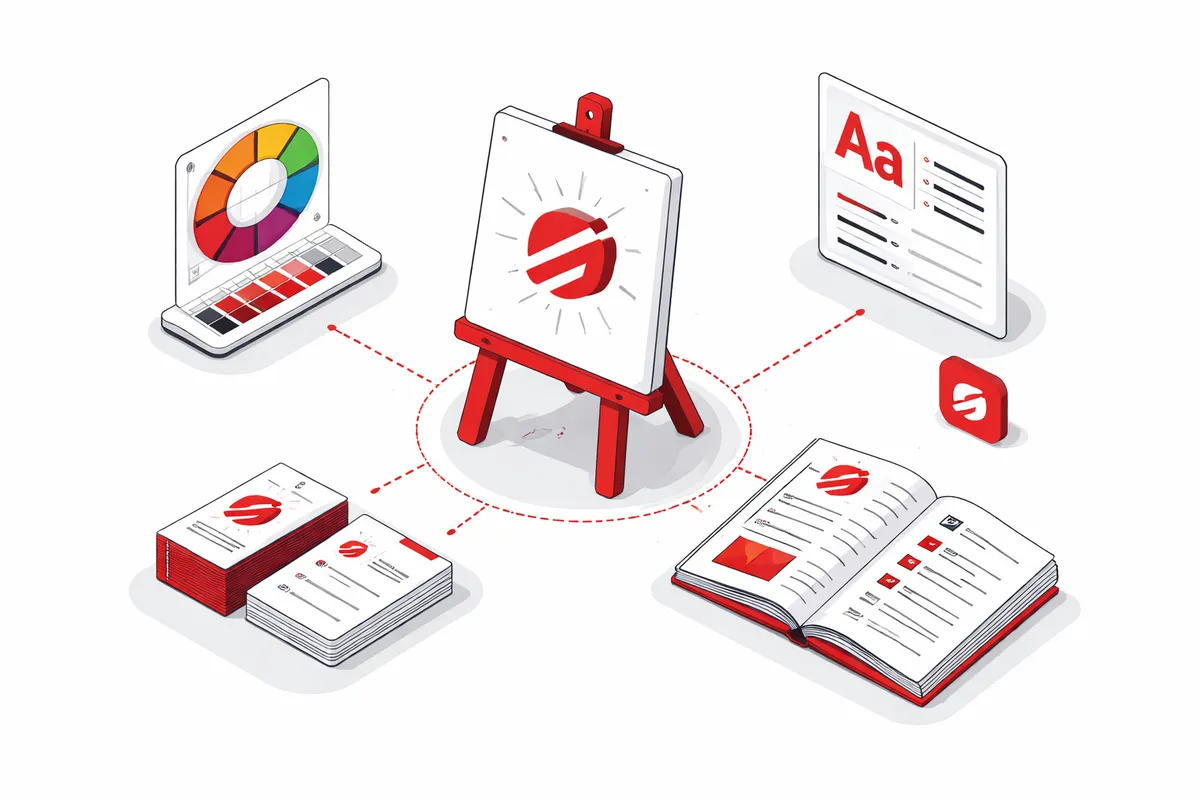
The final deliverable is a complete brand guidelines document with primary logo, secondary marks, and icon variations. All Pantone, CMYK, RGB, and hex color specifications. Typography selections with font names, weights, and usage rules. Clear space requirements and minimum size specifications. Usage examples showing correct application. Every file organized and labeled for your printer, web developer, and signage vendor.
Industries We Serve in Hyde Park
Medical practices and healthcare organizations adjacent to UChicago Medicine need brand marks that project clinical competence, institutional trust, and warmth appropriate to patient relationships. We design marks that perform on medical signage, patient-facing printed materials, digital patient portals, and the referral materials physicians share with colleagues.
Restaurants and food businesses on 53rd Street, near the 57th Street cluster, and throughout the Hyde Park commercial corridors need brand marks that feel specific to the neighborhood rather than generic. The community's expectation of intentionality extends to the restaurants it supports.
Academic and research-adjacent businesses including Polsky Center startups, consulting firms with UChicago affiliations, and professional services organizations serving the academic community need brand systems that communicate credibility in both academic and commercial contexts.
Nonprofits and community organizations including the Hyde Park Art Center, Experimental Station tenants, and neighborhood civic organizations need professional visual identities that honor their mission and compete credibly for institutional partnerships and grant attention.
Retail and independent businesses along Harper Court, Powell's Books, Hyde Park Produce, and the broader commercial corridors need marks that feel rooted in the neighborhood's character: intellectually honest, unpretentious, and built to last.
What to Expect Working With Us
1. Discovery session. We learn your organization's mission, your competitive context in Hyde Park, your customer or constituent profile, and the channels where your logo needs to perform. This is a working conversation, not a questionnaire. It shapes the creative direction specifically to your situation in the neighborhood.
2. Three to five concept presentations. Each concept is presented in realistic context applications, not as isolated shapes on a white background. You see how each direction would perform on your specific business's materials before choosing a path forward.
3. Two rounds of focused refinement. Once you select a direction, we tune the mark through two revision rounds focused on typography calibration, proportion adjustment, color finalization, and scale testing. Changes are driven by function and audience fit, not aesthetic preference alone.
4. Complete brand guidelines delivery. Primary logo, secondary marks, icon variations, all color specifications in every required format, typography selections, clear space rules, minimum size specifications, usage guidance, and every file format your vendors will need.