How We Build Legacy System Integration for Hyde Park
Our process begins with a discovery phase that takes the existing system seriously. We do not assume we know what is inside a legacy system before we have examined it. We document data structures, identify every existing connection point, catalog the business logic embedded in custom fields and workflows, and assess what integration approaches are viable given the system's actual capabilities.
For Hyde Park's UChicago Medicine-adjacent businesses and medical practices, this discovery phase includes compliance mapping. Every integration point that touches patient data requires architecture that satisfies HIPAA technical safeguards: encryption in transit and at rest, access logging, role-based permissions, and vendor agreements. We design these controls into the integration from the start rather than treating them as an afterthought.
For academic and research contexts, discovery includes understanding data governance requirements. Grant-funded research data often carries specific handling requirements from NIH, NSF, or other funders that affect how data can be exposed through integration layers. We account for these requirements in our integration design so the resulting system is both functional and compliant with the funding terms under which the data was collected.
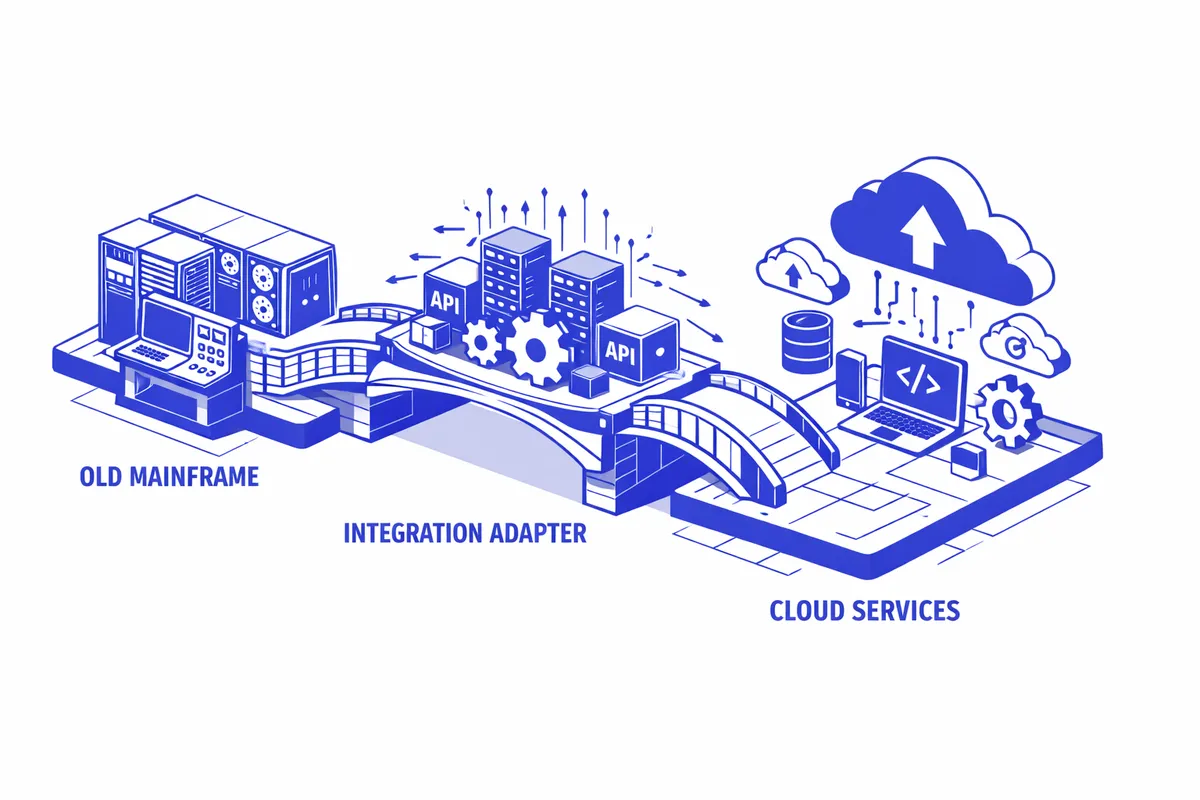
Integration architecture selection depends entirely on what the legacy system can support. Systems with accessible databases receive database-level integration. Systems with limited connectivity receive file-based or batch integration using their native export capabilities. Systems with no programmatic interface receive RPA-based integration that automates interactions through the user interface. We do not force a single approach onto every situation.
Industries We Serve in Hyde Park
Academic research organizations affiliated with the University of Chicago face data integration challenges that combine technical legacy complexity with compliance requirements from research funders. We build integration layers that connect legacy research databases to modern analysis platforms without disrupting the data structures that define years of accumulated research.
UChicago Medicine-affiliated practices and research groups need clinical system integration that handles HL7 messaging, FHIR API connectivity, and HIPAA-compliant data flows between legacy clinical systems and modern patient engagement and analytics tools.
Nonprofits and community organizations along 53rd Street and throughout Hyde Park run program management, donor tracking, and case management systems that need connections to modern reporting tools, grant management platforms, and community engagement applications.
Small businesses in the Hyde Park commercial corridors on 53rd Street and Harper Court manage accounting, inventory, and customer data in systems that cannot communicate with modern platforms. Integration extends the useful life of these systems while delivering the modern connectivity the business needs.
Medical practices near the UChicago hospital campus operate billing and clinical systems that predate current interoperability standards. Connecting these to insurance verification platforms, patient scheduling tools, and revenue cycle management systems requires integration architecture that bridges the gap between legacy and modern communication protocols.
What to Expect Working With Us
1. Discovery and documentation. We examine your legacy system as it actually exists, not as it was originally designed. We document data structures, integration capabilities, embedded business logic, and compliance requirements. For Hyde Park's academic and healthcare organizations, this phase produces the institutional knowledge documentation that protects against the loss of the single expert who currently understands the system.
2. Integration architecture design. Based on discovery, we design the integration approach that fits the specific capabilities of your legacy system and the requirements of the modern tools you need to connect. We present options with honest assessments of trade-offs, timelines, and costs before any development begins.
3. Development and testing. We build the integration layer using production-representative data volumes and test against real-world scenarios including error conditions, data quality issues, and performance under the transaction loads the integration will experience. For regulated Hyde Park organizations, testing includes compliance scenario coverage.
4. Deployment and ongoing monitoring. We deploy with monitoring that alerts on errors, data inconsistencies, and performance changes. Legacy integrations surface unexpected behaviors over time as the legacy system encounters new data conditions. We remain engaged post-launch to address these discoveries and refine the integration based on operational experience.