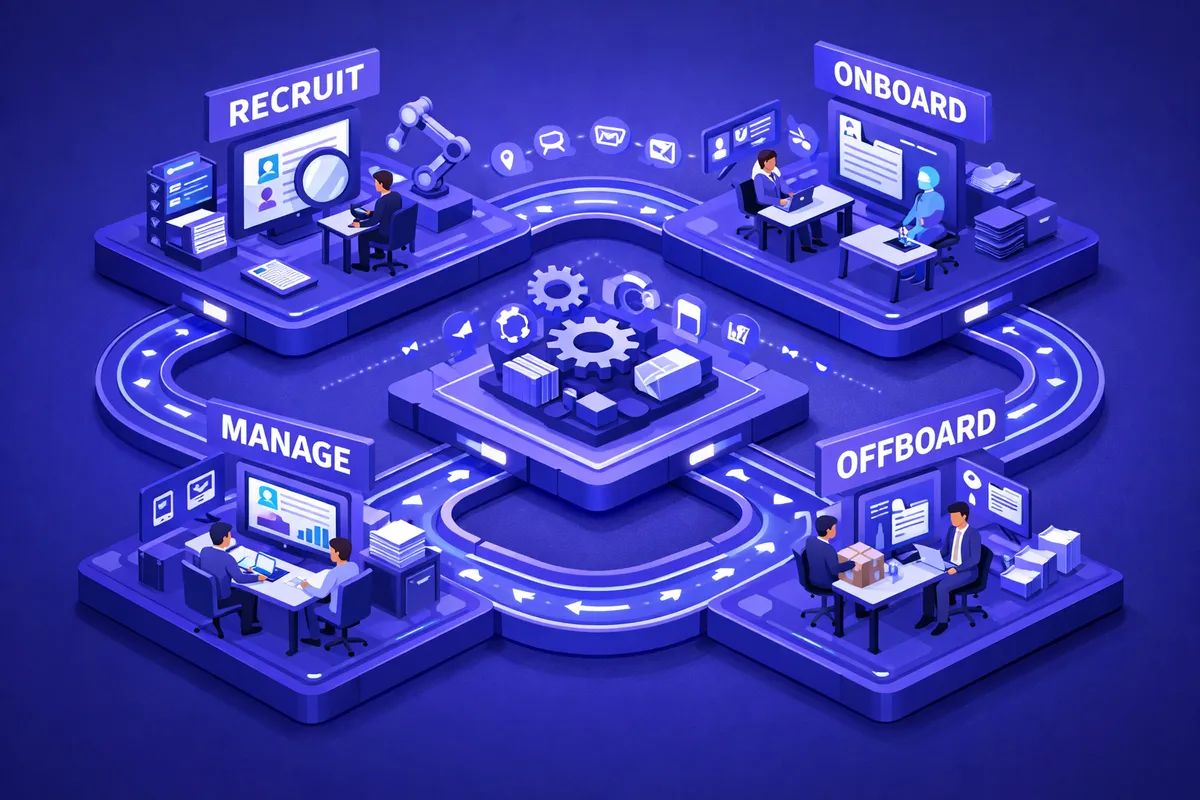
How We Build HR Automation for Hyde Park
Every engagement begins with a workflow audit. We map every HR process your organization currently executes, identifying each step, each decision point, each system touchpoint, and the human time required for each. For Hyde Park organizations with specific compliance requirements, we map the compliance obligations alongside the operational workflows. A nonprofit's grant employment compliance requirements are mapped at this stage. A healthcare practice's clinical credentialing requirements are mapped at this stage. The audit produces a clear picture of where automation delivers value and where human judgment is genuinely required.
We design automation workflows that are specific to your organizational structure and your Illinois and Chicago compliance obligations. Generic HR automation templates designed for a retail chain in a state with simpler employment law do not handle the specific requirements of a Hyde Park grant-funded nonprofit or a medical practice operating under UChicago Medicine's credentialing standards. We build automation that reflects your actual compliance environment, not a generic approximation of it.
Integration with your existing HRIS and payroll systems is central to every implementation. Automation that does not connect to your payroll processing, your HRIS records, and your benefit administration platform creates data silos that require manual reconciliation, defeating the purpose of automation. We assess your existing system landscape during discovery and design automation that connects to it through supported APIs and integration pathways.
Industries We Serve in Hyde Park
Healthcare Practices and Clinical Organizations: Clinical credentialing automation, license expiration tracking, continuing education compliance, and the clinical staff onboarding workflows that involve credential verification, background checks, and access provisioning across multiple systems. HIPAA-compliant handling of clinical employment records is a foundational design requirement.
Nonprofits and Grant-Funded Organizations: Grant-funded position management, time tracking connected to grant expenditure reporting, multi-funder position allocation, and the compliance documentation workflows that grant audits require. Onboarding automation for organizations with high program staff turnover reduces HR administrative burden significantly.
Educational Organizations: Instructor onboarding automation for organizations with part-time and contract instructors, credential and certification tracking for teaching-licensed staff, and the session-based scheduling and payment workflows that educational organizations manage across large instructor pools.
Research Commercialization Startups: Onboarding automation for companies scaling from two to twenty employees in a short period, benefits enrollment automation, time-off management, and the HR policy infrastructure that early-stage companies need to establish before their first major hire encounters a gap in their employment processes.
Professional Services Firms: Onboarding workflows for licensed professionals that connect credential verification to HR records, professional development tracking, and the performance review and goal-setting automation that professional service firms use to manage staff development at scale.
What to Expect Working With Us
1. Workflow audit and compliance mapping. We document every HR process and map every compliance obligation your organization carries under Chicago, Illinois, and federal employment law. The audit produces a prioritized automation roadmap showing which processes deliver the most immediate compliance and efficiency value.
2. Automation design and compliance integration. We design each automation workflow with compliance requirements embedded in the design. For healthcare clients, clinical credentialing requirements shape onboarding automation design. For nonprofit clients, grant employment requirements shape time tracking and reporting automation design. Illinois and Chicago employment law requirements are built into the relevant process automations, not added as reminders after the fact.
3. Integration build and HRIS connection. We build automation integrations with your existing HRIS, payroll, and benefits administration systems. Integration testing verifies that data flows correctly and that automation actions produce the correct downstream effects in your operational systems before anything goes live.
4. Launch, training, and compliance monitoring. We train HR managers and administrators on automation management and exception handling. Post-launch compliance monitoring confirms that automation is correctly handling all relevant compliance requirements in production. Ongoing retainers cover compliance updates as laws change and expansion of automation to additional workflows.