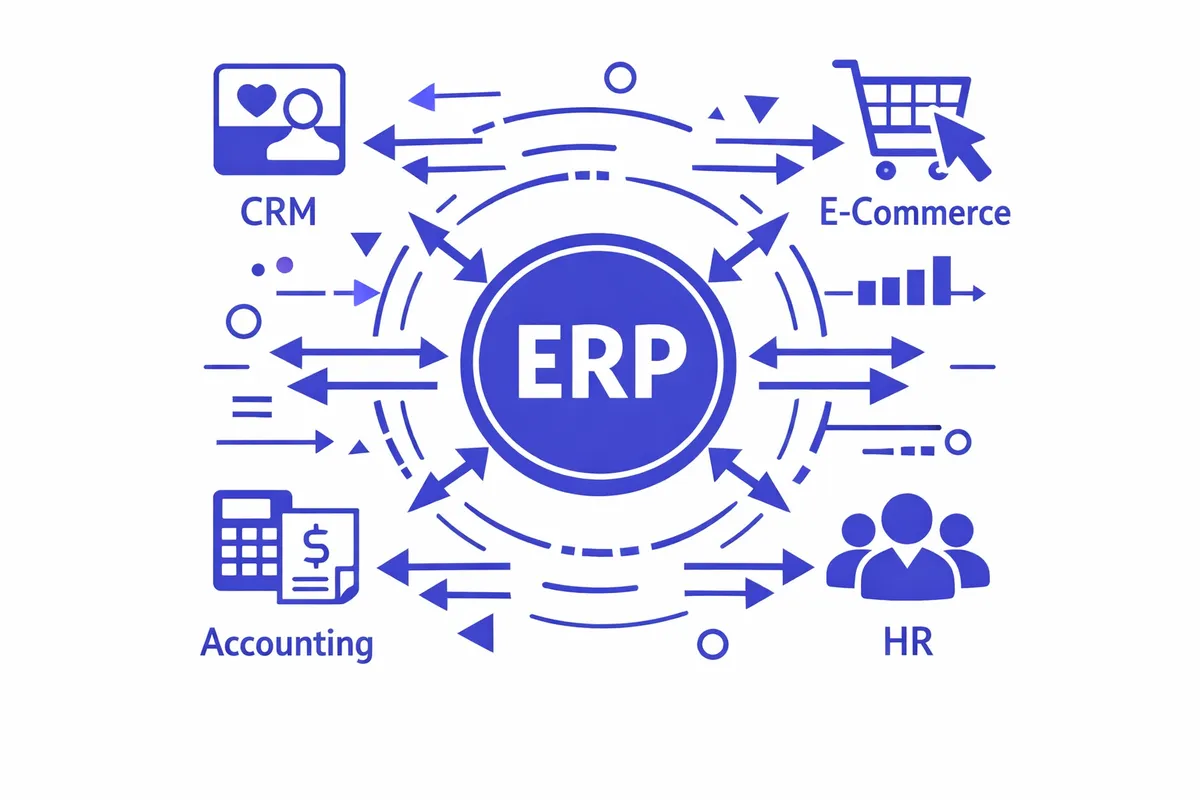
How We Build ERP Integrations for Hyde Park
Every integration engagement begins with a system audit. We document every platform in your operational stack, the data each system generates and consumes, the data flows that currently exist, the data flows that should exist but do not, and the manual processes that currently bridge the gaps. This audit produces a prioritized integration roadmap based on the combination of operational impact and technical feasibility rather than a theoretical vision of perfect system connectivity.
Integration architecture design precedes any code. For each planned integration, we specify the data flow direction, the triggering events, the transformation logic that converts data from one system's format to the other's, the error handling approach, and the monitoring requirements. For healthcare integrations, we design HIPAA compliance into the architecture at this stage. For nonprofit integrations connecting financial and grant management systems, we design the expenditure allocation logic at this stage. For research startup integrations connecting commercial and research accounting systems, we design the cost separation logic at this stage.
We build error handling, retry logic, and monitoring into every integration from the beginning. The value of an integration is measured over the years it operates in production, not just in the weeks after launch. Integrations without monitoring fail silently and without alerting. Integrations without error handling lose data when either connected system has a transient failure. Integrations without retry logic require manual intervention for problems that should resolve automatically. We design for operational reliability over the long term, not just for initial functionality.
Industries We Serve in Hyde Park
Healthcare Practices and Clinical Organizations: Medical practices and health technology companies near UChicago Medicine manage clinical, billing, scheduling, and supply chain systems that need HIPAA-compliant integration. Revenue cycle integrations that connect clinical documentation to billing reduce claim delays and manual coding burden. Supply chain integrations that connect procurement to inventory tracking prevent both stockouts and excess inventory.
Nonprofits and Grant-Funded Organizations: Grant management platforms, financial systems, time tracking tools, and program management software all hold pieces of the operational picture that grant compliance requires. Integrations connecting these systems automatically generate the expenditure reporting, effort reporting, and budget tracking that funder compliance demands without requiring program staff to manually assemble it.
Research Commercialization Companies: Polsky-backed startups managing sponsored research alongside commercial operations need integrations that maintain appropriate financial separation between research and commercial accounting while giving leadership an integrated operational view. CRM to accounting integration, research financial management to commercial financial management integration, and scientific data management to commercial analytics integration are common requirements.
Educational Organizations: Educational service providers managing student enrollment, curriculum delivery, and financial operations need integrations connecting student information systems, learning management platforms, and accounting software. When a student's enrollment status in the student information system automatically updates their access permissions in the learning management platform, the manual access management work disappears.
Professional Services Firms: Attorneys, consultants, and advisors serving Hyde Park's professional community manage time tracking, billing, CRM, and accounting systems that need connected data flows. Time entries that automatically generate draft invoices, client communication records that automatically update CRM activity histories, and invoice payments that automatically update accounts receivable all reduce the administrative burden on professional staff.
What to Expect Working With Us
1. System audit and integration architecture. Two weeks of system documentation, data flow mapping, and gap analysis produce a prioritized integration roadmap. For healthcare and nonprofit clients, compliance requirements are mapped alongside operational requirements. Integration architecture documentation, including data flow diagrams, transformation logic, and error handling design, is reviewed and approved before development begins.
2. Phased build with monitoring. We build integrations in priority order with monitoring infrastructure included in every deployment. Each integration is tested against production-realistic data volumes and deliberately tested against error conditions and edge cases before it handles live data. Financial and clinical integrations receive independent reconciliation checks that cross-verify system state against the integration's record of transactions.
3. Stabilization and documentation. Every integration launches with a stabilization period during which we monitor performance closely and resolve any edge cases that real operational data reveals. Complete integration documentation is delivered, including data flow specifications, field mappings, transformation logic, and troubleshooting procedures.
4. Ongoing maintenance. ERP integrations require maintenance as the connected platforms release updates, as business processes change, and as integration requirements evolve. Most Hyde Park clients maintain ongoing retainers that cover monitoring, API update handling, and incremental modifications rather than managing each change as a separate project engagement.