How We Build Data Analytics and AI for Hyde Park
Every engagement begins with the decisions, not the data. We identify the organizational decisions that are currently made with insufficient information and work backward to the data and analytical capabilities needed to make them better. For a Hyde Park nonprofit, those decisions are often program resource allocation, donor retention investment, and grant pursuit strategy. For a medical practice, they are staffing and scheduling efficiency, billing optimization, and care gap identification. For a Polsky startup, they are customer acquisition cost by channel, product feature engagement, and cohort retention. Analytical infrastructure built around specific decisions produces tools that get used. Infrastructure built around what the data can theoretically support produces dashboards that collect dust.
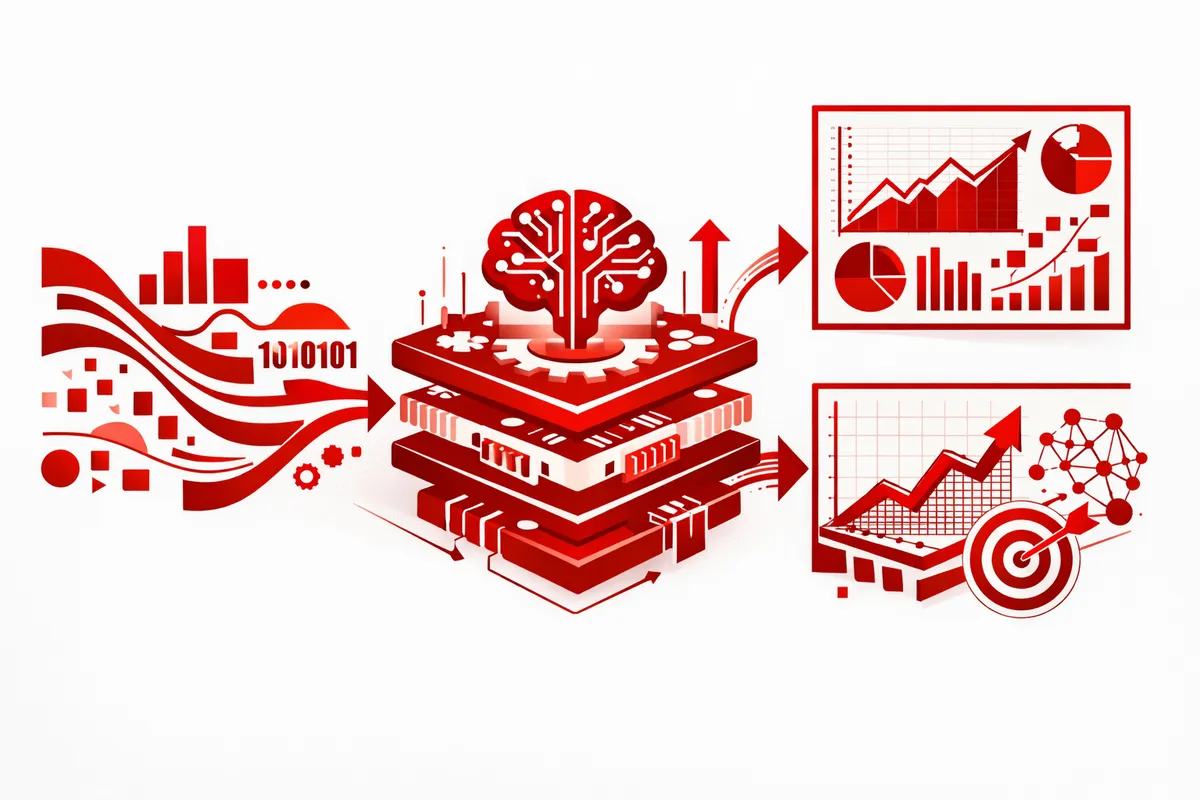
We design data pipelines that move data from your operational systems into a unified analytical environment automatically and reliably. For Hyde Park organizations with compliance requirements, data pipelines are designed to handle those requirements at the architectural level. PHI is de-identified or excluded from analytical datasets. Research data is handled within data use agreement constraints. Sensitive community data is aggregated to the level that protects individual privacy while preserving the patterns that analysis needs.
AI and machine learning components are built on clean data foundations. Models trained on inconsistent, incomplete, or poorly structured data produce unreliable outputs that create worse decisions than no model at all. We invest in data quality and data engineering before model development, because the quality of the model is bounded by the quality of the data it learns from. This sequencing is not inefficient. It is the difference between an analytical capability that your organization can trust and one that it eventually stops using because its outputs do not match reality.
Industries We Serve in Hyde Park
Healthcare Practices and Health Technology: Medical practices near UChicago Medicine and the health technology companies building on the medical campus's relationships need HIPAA-compliant analytics that separates protected health information from operational and clinical analysis. We build healthcare analytics that surfaces care utilization patterns, billing performance, and operational efficiency within frameworks that satisfy HIPAA's data handling requirements.
Nonprofits and Social Impact Organizations: Grant-funded nonprofits need program outcome analytics that satisfy funder reporting requirements and support strategic program decisions. Donor analytics that identifies retention risk, major gift potential, and acquisition channel effectiveness is the foundational capability that well-resourced development operations use to raise money more efficiently. We build integrated nonprofit analytics that serves both the program and development functions.
Research Commercialization Companies: Polsky Center-backed companies and UChicago-affiliated ventures need organizational analytics that match the rigor of the analytical work they do in their core domain. Customer behavior analytics, product engagement analysis, cohort retention modeling, and unit economics measurement give these companies the operational self-knowledge that their scientific sophistication would otherwise not translate into business decisions.
Educational Organizations: Test preparation companies, tutoring organizations, and educational service providers manage student outcome data that analytics can transform into instructional improvement and business performance insights. Student progress analytics, instructor effectiveness measurement, and curriculum engagement analysis are organizational capabilities that educationally sophisticated Hyde Park organizations should apply to their own operations.
Community and Policy Research Organizations: Organizations applying University of Chicago social science to community or policy problems need data infrastructure that supports rigorous analysis and credible reporting. Geographic analysis, longitudinal outcome tracking, and program evaluation methodologies require data engineering and analytical infrastructure that most community organizations build informally rather than deliberately.
What to Expect Working With Us
1. Decision-focused discovery. We begin by identifying the specific decisions your leadership team needs to make better and the data your organization currently generates that is relevant to those decisions. This produces an analytical strategy prioritized by decision impact rather than by what the data can theoretically support.
2. Data infrastructure design. We design the data warehouse architecture, pipeline approach, and analytical tool stack based on your data volumes, team skill level, and long-term analytical ambitions. For regulated industries, compliance requirements are foundational design constraints.
3. Incremental delivery with working analytics. We build in phases, delivering working dashboards and reports within the first eight to twelve weeks regardless of total project scope. Complex environments with machine learning components are delivered in phases with the foundational reporting layer first.
4. Ongoing model maintenance and analytical capability development. Analytics requires ongoing attention: new data sources, evolving analytical questions, model performance monitoring, and capability development as the organization's analytical maturity grows. Most Hyde Park clients maintain ongoing retainers to support these needs rather than treating analytics as a one-time implementation.