How We Build Customer Portals for Hyde Park
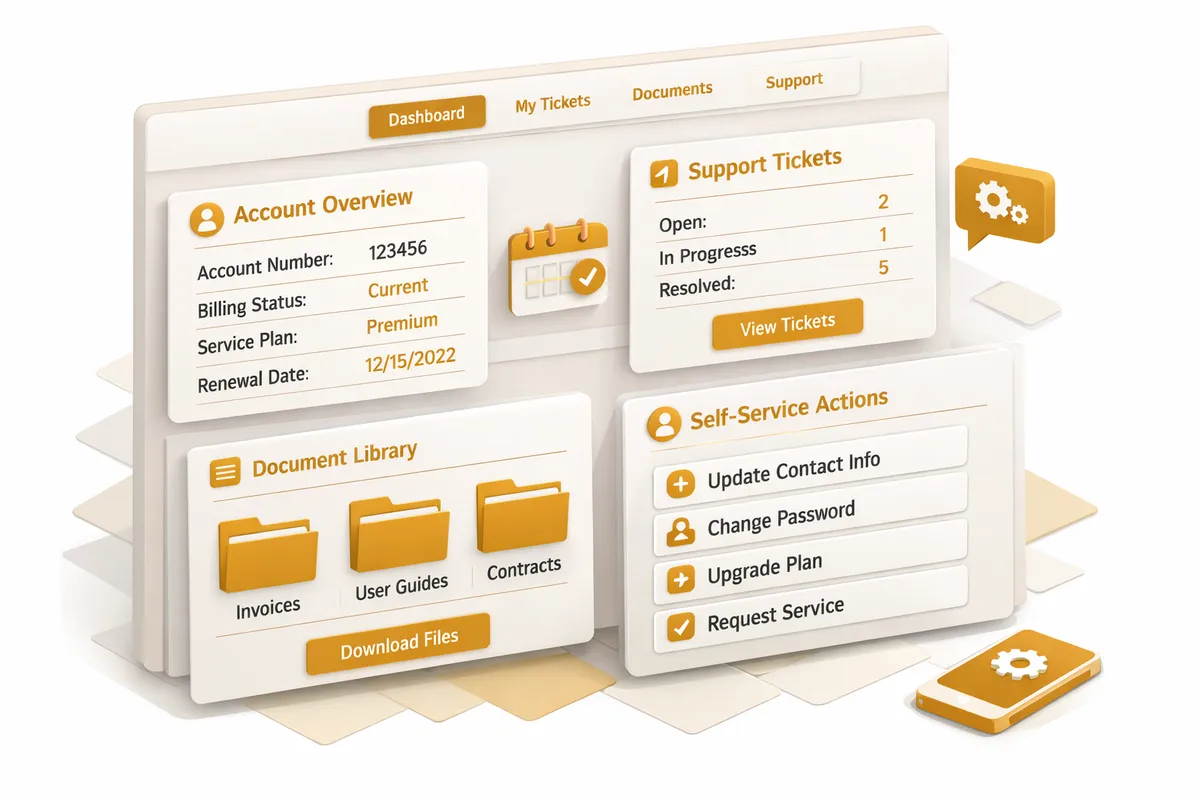
Portal development begins with customer journey mapping. We trace the interactions your customers most frequently initiate, identify which of them are candidates for digital self-service, and prioritize portal features based on the combination of customer need and staff cost reduction. For a Hyde Park nonprofit, the highest-value portal features might be grant report access for funders and program data access for partner organizations. For a medical practice, they are appointment management, clinical result access, and billing self-service. For a consulting firm, they are document access, project status visibility, and invoice management.
Security architecture is foundational in every portal we build. Hyde Park organizations serve populations with high data sensitivity expectations: patients with HIPAA-protected clinical information, clients with legally privileged documents, donors with private financial information, and research participants with IRB-protected data. Role-based access controls that limit data visibility to what each user is authorized to see are the starting point. Encryption at rest and in transit, multi-factor authentication, session management, and complete access audit logs are all designed into the system before the first feature is built.
Integration with your existing operational systems is what makes the portal genuinely useful. A patient portal that does not connect to your EHR serves only the documents you manually upload. A client portal that does not connect to your billing system shows only the invoices you remember to add. A funder portal that does not connect to your financial reporting system requires staff to manually populate the information the funder expected to access automatically. We design integrations with your EHR, CRM, billing platform, accounting system, and document management infrastructure so the portal reflects your current operational reality without staff effort.
Industries We Serve in Hyde Park
Healthcare Practices and Clinical Organizations: Medical practices and specialty providers near UChicago Medicine need patient portals for appointment management, clinical result access, billing, and secure messaging that satisfy the digital expectations of a medically literate patient population. HIPAA compliance is built into every healthcare portal we design. Practices that can offer UChicago Medicine-comparable portal experiences build patient loyalty and reduce the staff time consumed by routine inquiries.
Nonprofits and Grant-Funded Organizations: Hyde Park nonprofits manage relationships with multiple stakeholder groups simultaneously: funders reviewing grant performance, program partners coordinating service delivery, and community participants accessing program resources. Portals that give each stakeholder group the appropriate self-service access to their relevant information reduce the communication overhead that these multi-stakeholder relationships generate.
Professional Services and Consulting Firms: Attorneys, financial advisors, and management consultants serving Hyde Park's professional community need client portals that provide document access, project status visibility, and billing transparency. For practices serving the university community and adjacent professional networks, the portal quality reflects on the firm's overall service quality in the minds of analytically sophisticated clients.
Educational and Training Organizations: Educational service providers managing student relationships need portals where students and families access progress reports, assignment feedback, scheduling information, and billing. For tutoring organizations and test preparation companies serving Hyde Park's academically oriented student population, a well-designed student portal reduces administrative staff burden while meeting the digital expectations of the families being served.
Research and Academic Service Organizations: Organizations providing services to research teams and academic departments need portals where research groups access deliverables, project timelines, billing, and communication history. The academics and administrators who manage these relationships expect self-service capabilities as a matter of professional standard.
What to Expect Working With Us
1. Customer journey mapping and feature prioritization. We trace your customers' most frequent digital needs, quantify the staff time consumed by each interaction category, and develop a prioritized portal feature set based on combined customer value and operational cost reduction. This mapping produces a development roadmap grounded in measurable business impact rather than feature preferences.
2. Security architecture and compliance design. We design role-based access controls, authentication requirements, data encryption, and audit logging before any portal feature is built. For healthcare portals, HIPAA technical safeguards are designed into the architecture. For portals handling legally privileged or financially sensitive information, we design security controls appropriate to the sensitivity level of each data category.
3. Phased development with highest-value features first. Core portal features, authentication, document access, and account management are typically live within ten to fourteen weeks. Payment capabilities, deeper system integrations, and secondary user role support are added in subsequent phases while the core portal is already serving your customers.
4. Post-launch adoption monitoring and iteration. We track portal adoption rates by feature and by user segment, identifying where customers are not using capabilities that should serve them and addressing the usability gaps that actual use reveals. Most Hyde Park portals see significant adoption growth in the three to six months following launch as users develop habits around the self-service capabilities available to them.