How We Build Custom ERP for Hyde Park
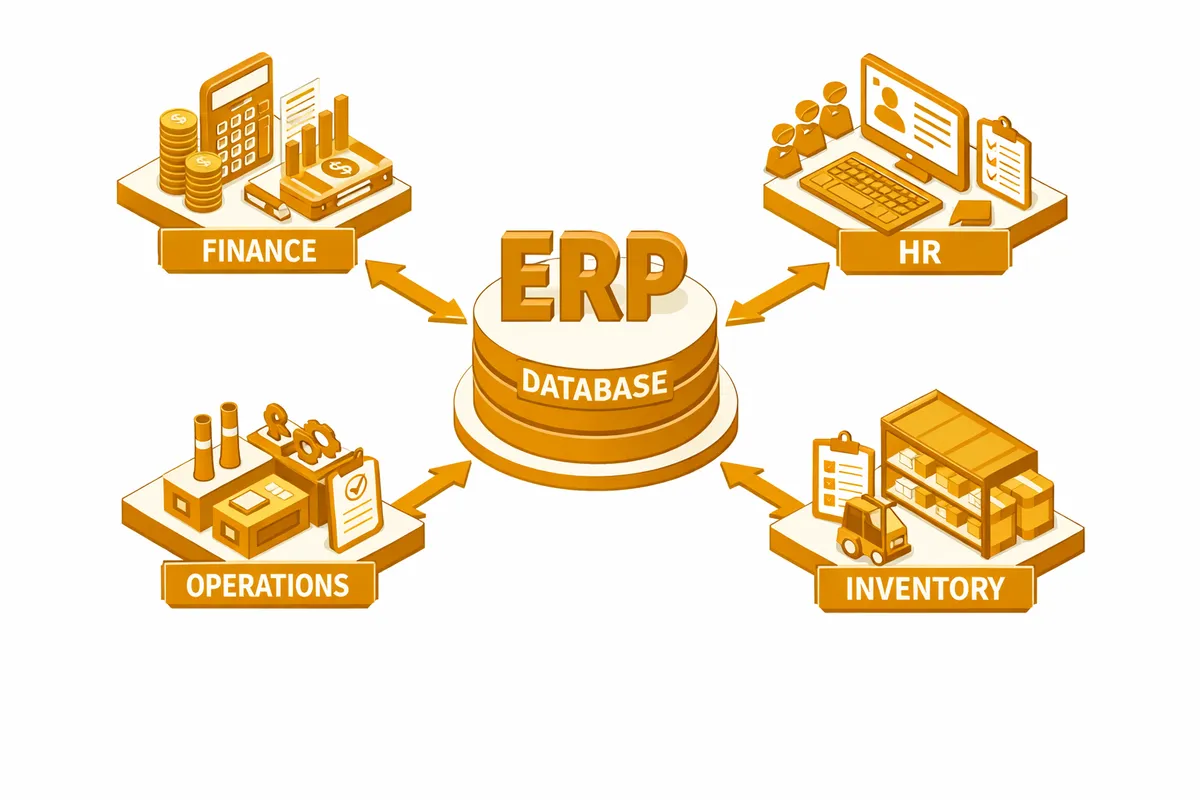
We begin with a comprehensive operational mapping that covers all departments and all operational domains: financial management, program or service delivery, supply chain and procurement, human resources, and reporting. For Hyde Park organizations with complex compliance requirements, we map the compliance framework alongside the operational workflows so that every design decision accounts for the regulatory requirements that the system must satisfy.
The architecture phase produces a module structure, data model, and integration plan reviewed and approved before development begins. For a nonprofit client, this means the fund accounting architecture, grant tracking data model, and program reporting structure are fully designed and validated against the organization's actual grant requirements before any code is written. For a healthcare organization, this means the clinical and financial separation is designed into the data model from the start rather than applied as an access control overlay on top of a unified database.
Phased delivery means your organization is using a working, valuable system within fourteen to twenty weeks for the highest-priority modules, rather than waiting for a complete system before gaining any operational benefit. Each phase is built on the foundation of the previous one, so the system that serves you in year three is a coherent extension of the system that launched in month five, not a collection of separately built modules bolted together after the fact.
Industries We Serve in Hyde Park
Nonprofits and Grant-Funded Organizations: Fund accounting, grant expenditure tracking, program financial management, and compliance reporting are operational requirements that off-the-shelf commercial ERP systems do not handle correctly. We build nonprofit ERP with fund accounting as a foundational data model requirement, not a configuration overlay. Grant tracking connects financial transactions to specific grants and program activities automatically, producing the compliance documentation that funders require.
Healthcare Practices and Medical Organizations: The practices surrounding UChicago Medicine and the specialty providers serving Hyde Park's hospital economy need ERP that manages clinical supply chain, administrative operations, and revenue cycle within a HIPAA-compliant framework. Clinical and financial data are handled with the separation that HIPAA requires while the operational picture remains integrated.
Research Commercialization Companies: Polsky-backed companies managing sponsored research expenditures alongside commercial operations need ERP that handles both accounting regimes simultaneously. Sponsored research cost accounting, indirect cost recovery, and compliance reporting alongside commercial revenue recognition and standard business financial management require a unified system with the flexibility to handle both.
Educational and Training Organizations: Educational service providers managing student enrollment, curriculum delivery, instructor scheduling, and financial operations need ERP that connects all four domains. When a student's payment status is visible to the curriculum delivery system, when instructor payment is triggered by session completion records, and when enrollment reporting draws from a single source of truth, the administrative burden that currently consumes staff time disappears.
Healthcare Supply and Medical Device Distribution: Organizations supplying the healthcare ecosystem around UChicago Medicine manage lot tracking, sterilization records, and regulatory documentation alongside standard supply chain operations. Generic distribution ERP handles the standard supply chain side but not the healthcare-specific compliance requirements. Purpose-built systems handle both.
What to Expect Working With Us
1. Operational mapping and requirements definition. Two to three weeks of structured workshops across every department. For healthcare and nonprofit clients, this includes compliance framework mapping alongside operational workflow documentation. The output is a complete ERP specification reviewed and approved before architecture design begins.
2. Module architecture and design. We design the module structure, data model, integration architecture, and compliance framework before development begins. Hyde Park organizations with complex compliance requirements see the complete data architecture and approve it before any code is written. No compliance gaps discovered at launch.
3. Phased implementation. We prioritize modules by operational impact and deliver in phases. Your highest-priority modules are live within fourteen to twenty weeks. Subsequent phases add operational coverage without disrupting what is already running. The full system typically achieves complete operational coverage within nine to fifteen months.
4. Training, validation, and ongoing support. Every phase includes training for the teams who operate it. For organizations with compliance requirements, we conduct formal validation testing before each phase launches. Ongoing maintenance retainers cover regulatory updates, new module development, and platform performance management as the organization evolves.