How We Build Custom CRM for Hyde Park
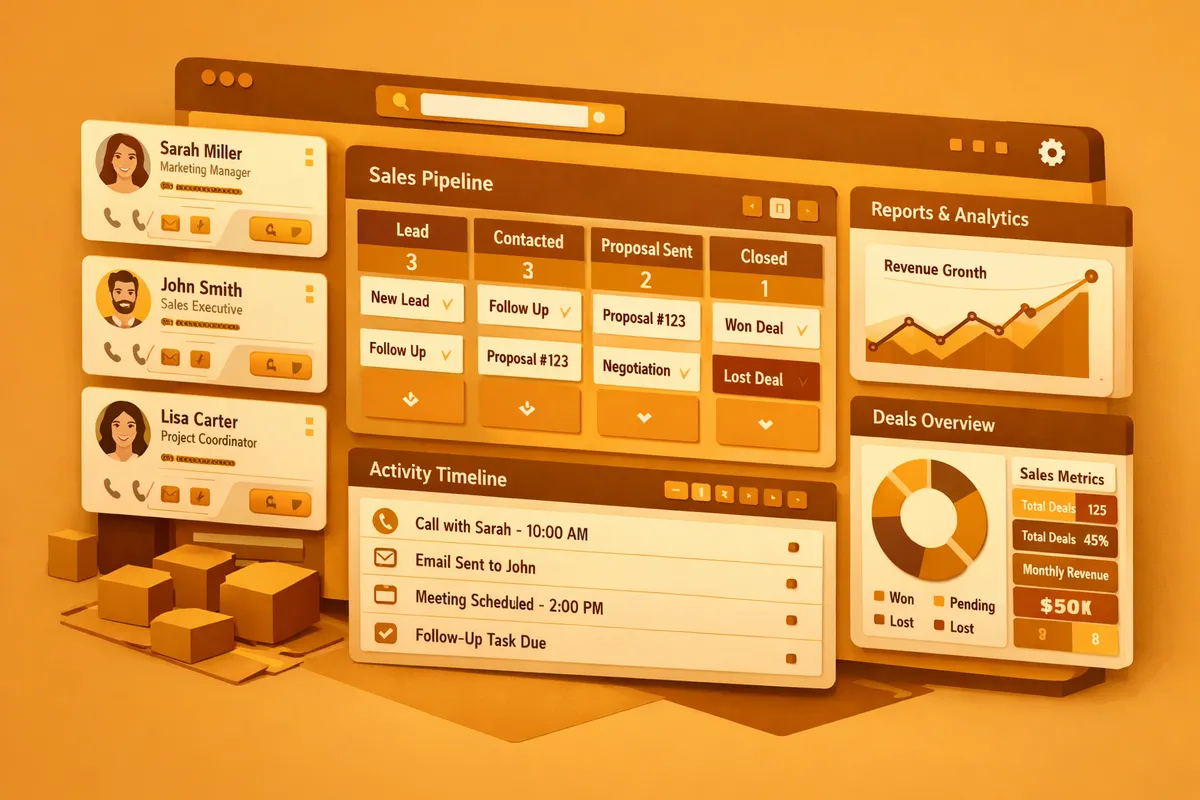
Discovery is where we earn the right to build. We spend two to three weeks with your team mapping your actual workflows, relationship models, and data requirements. We ask about the relationships your system needs to represent, the reports your leadership uses to make decisions, the integrations your team currently handles manually, and the specific moments where your current CRM fails your team most visibly. We map the institutional relationships that create integration requirements: what data needs to flow from outside your organization into your CRM automatically.
From discovery, we design a data model that represents your actual relationship reality. For a Hyde Park nonprofit, that might mean a contact object that can simultaneously represent a donor, a program participant, a volunteer, and a board member, with clear relationship records connecting that person to every relevant organizational context. For a medical practice, that might mean a referral relationship model that tracks the history and health of each referring provider relationship alongside patient records and institutional relationships. For a consulting firm serving the university, that might mean a contact hierarchy that captures the institutional structure of the university alongside the individual relationships within it.
We build in phases, delivering the core relationship management capabilities first, then adding reporting, automations, and integrations in subsequent phases. Your team is using a real CRM within eight to ten weeks, not waiting for a six-month implementation to produce a finished product.
Industries We Serve in Hyde Park
Nonprofits and Philanthropy Organizations: Hyde Park's nonprofits at the Hyde Park Art Center, the Court Theatre at 55th Street, and organizations working across the South Side need CRMs organized around donor relationships, grant relationships, and program participant relationships with the ability to see the full picture of how each person connects to the organization across all three dimensions. We build nonprofit CRM with relationship depth, not just contact lists.
Healthcare Practices and Medical Groups: Medical practices near UChicago Medicine and the specialty providers serving Hyde Park's hospital economy need CRM systems that track referring provider relationships, patient family relationships, and institutional relationships with insurance networks alongside clinical operations. HIPAA compliance is a foundational design requirement, not an add-on.
Research Commercialization and Technology Transfer: Polsky Center-backed ventures and technology transfer advisors manage relationships with research groups, potential licensees, investors, and institutional partners that no standard CRM data model can represent cleanly. We build CRM for the commercialization pipeline that captures the multi-dimensional relationships it involves.
Professional Services and Consulting: Consultants, attorneys, and advisors serving Hyde Park's professional community manage long-horizon, multi-stakeholder relationships that require CRM systems organized around client relationships and engagement history rather than deal stages and pipeline values.
Academic and Educational Organizations: Test preparation companies, tutoring organizations, and educational service providers near 57th Street Books and the Seminary Co-op manage student relationships, institutional relationships with schools and universities, and instructor relationships that require purpose-built CRM structures.
What to Expect Working With Us
1. Discovery workshops. Two to three weeks of structured conversations with your team, mapping workflows, relationship models, and data requirements. We produce a complete CRM specification you review and approve before architecture begins. For Hyde Park organizations with complex institutional relationships, this phase includes mapping the external systems whose data should flow into the CRM.
2. Data model and architecture design. We design the relationship objects, data model, integration architecture, and dashboard framework before development begins. You see the blueprint and approve it. This prevents the misalignment that derails CRM implementations when technical design proceeds without business validation.
3. Phased build. We deliver a working CRM within eight to ten weeks covering your highest-priority relationship management capabilities. Subsequent phases add reporting depth, workflow automations, and external integrations based on the prioritization your team established during discovery.
4. Adoption support and iteration. We track adoption rates alongside feature delivery and address the usability gaps that actual use reveals. A CRM that is technically complete but poorly adopted produces no value. We design for adoption from the discovery phase and support it through post-launch monitoring, training, and iterative refinement.