How We Build Business Process Automation for Hyde Park
We begin every engagement by mapping current processes at the step level. Not the idealized version of the process documented in a procedures manual, but the process as it actually runs on a typical Tuesday, including the workarounds, the exception handling, and the informal communications that patch gaps in the official workflow. For Hyde Park organizations, this mapping often reveals that the formal process and the actual process have diverged significantly as staff adapted to the limitations of the tools they were given.
Process mapping produces a prioritized list of automation candidates. We rank each candidate on three dimensions: the volume of time consumed across all staff who touch the process, the error frequency in manual execution, and the downstream impact when the process is slow or incorrect. High scores on all three dimensions indicate the strongest automation candidates, the ones where automation pays back fastest and most clearly.
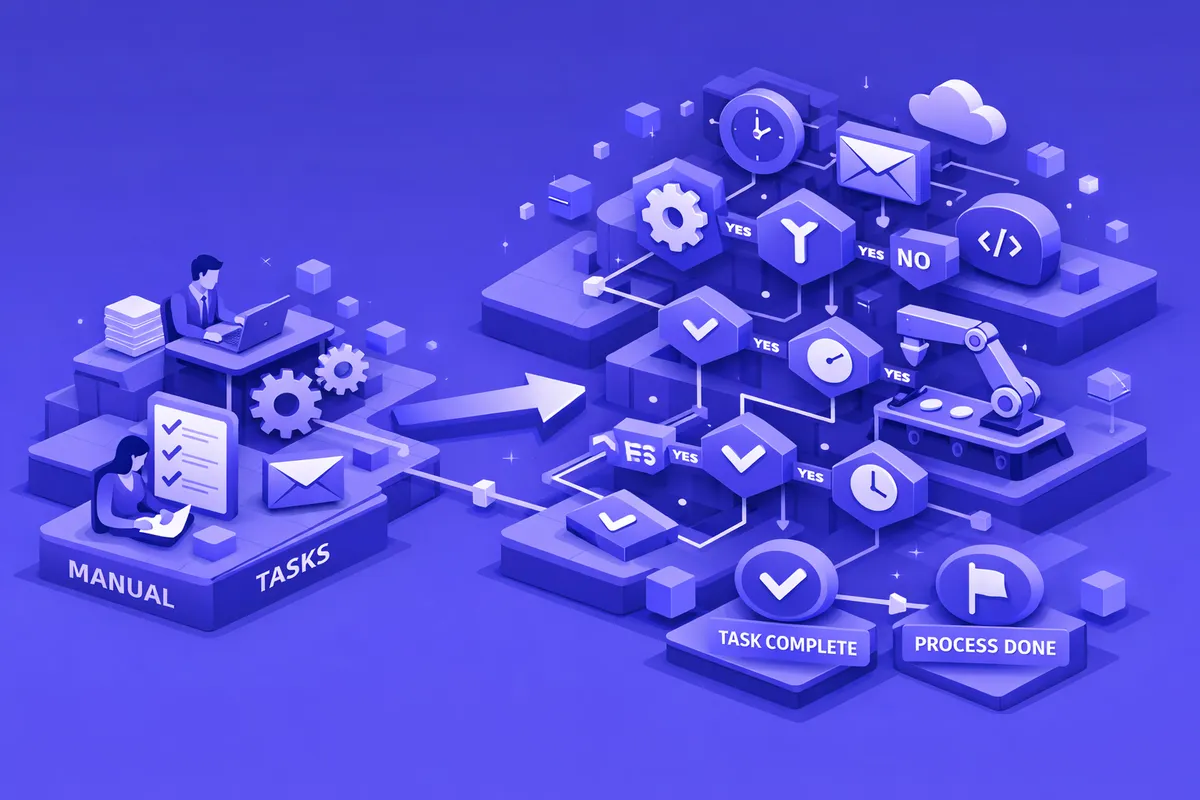
For each selected process, we design the automated workflow, the system integrations it requires, the exception handling logic, and the monitoring that makes the automation's performance visible. Every automated workflow has a clearly defined set of scenarios it handles automatically and an equally clearly defined set of conditions under which it stops and routes to a human for judgment. The human escalation path is designed as carefully as the automation path, because the value of automation depends on humans being able to handle exceptions efficiently.
We build automation that integrates with your existing systems rather than replacing them. Hyde Park organizations have invested in their CRMs, EHRs, accounting platforms, and project management tools. Automation should work through those investments, not require abandoning them for new systems that promise automation as a feature.
Industries We Serve in Hyde Park
Nonprofits and Mission-Driven Organizations: The grant management cycle, from application through reporting through renewal, is one of the most process-intensive workflows in the nonprofit sector, and most of it is automatable. We build automation for Hyde Park nonprofits that handles grant tracking, reporting workflow generation, donor acknowledgment, and program enrollment documentation without consuming staff hours that should go to programmatic work.
Healthcare and Clinical Practices: Medical practices near UChicago Medicine manage insurance verification, prior authorization, appointment scheduling, patient communication, and billing workflows that follow predictable patterns in the majority of cases. HIPAA-compliant automation for these workflows reduces administrative staff burden, accelerates revenue cycle performance, and improves patient communication consistency.
Research Commercialization Companies: Polsky-backed startups building commercial products from UChicago research handle customer onboarding, support request routing, invoice generation, and investor communication workflows that automation manages completely, freeing founders for product development and customer relationships.
Educational and Academic Services: Test preparation organizations, tutoring companies, and continuing education providers near 57th Street Books and the Seminary Co-op manage student enrollment, scheduling, progress tracking, and communication workflows that run on predictable patterns amenable to automation.
Independent Professional Services: Consultants, attorneys, and advisors serving Hyde Park's educated professional community manage client intake, engagement documentation, billing, and follow-up communications that automation handles more consistently than any individual practitioner does while juggling client work simultaneously.
What to Expect Working With Us
1. Process mapping and prioritization. We spend two weeks documenting your workflows at the step level and quantifying the cost of each. The output is a ranked automation roadmap with specific ROI projections for each initiative. You choose the starting point based on your organizational priorities. We design the architecture before any building begins.
2. Automation design and integration. We design the automated workflow including all exception paths, build the system integrations the workflow requires, and document the complete decision logic before implementation begins. For Hyde Park organizations with compliance requirements, we review the automation design against those requirements at this stage and adjust before development, not after.
3. Phased build and structured acceptance. We build automation in phases and test each against real operational data before launch. You and your team review each automated process in a structured acceptance period before it handles live workflows. This acceptance process is the point at which your team's knowledge of edge cases becomes part of the system design.
4. Results measurement and expansion. We establish baseline metrics before each automation launches and report results after deployment. Time saved, error rate reduction, and staff capacity redirected to higher-value work are all measured and documented. Most Hyde Park clients find that initial automation success reveals adjacent opportunities, and ongoing retainers allow for systematic expansion.