How We Build Autonomous Workflow Agents for Hyde Park
Process mapping comes first. We work with your team to trace every step of a workflow from its initiating event to its completion: what triggers it, what decisions are made at each step, what systems are touched, what data is read and written, where delays occur, and where errors accumulate. For Hyde Park organizations with institutional relationships, we map the external touchpoints as well, because an agent that handles your internal steps but cannot navigate an institutional approval process is only half useful.
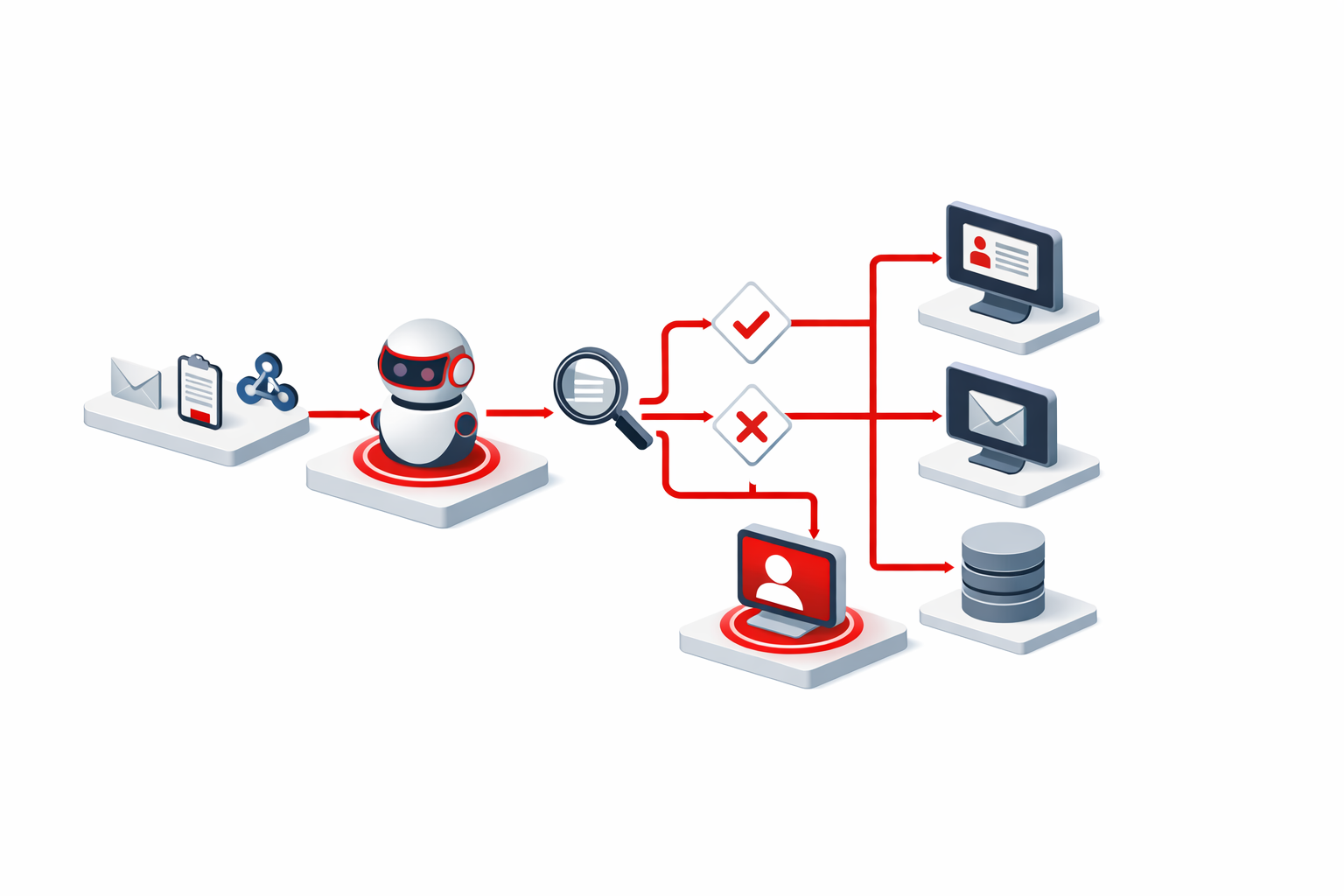
We classify each step in the workflow by its automation potential. Decisions with clear criteria and access to the right data are fully automatable. Decisions requiring human relationship context, novel situations, or sensitive judgment are routed to the appropriate person with all relevant context pre-assembled. The goal is not to automate everything but to automate the clear cases reliably and make the exceptions as easy as possible for humans to handle.
The agents we build have defined access to your systems through API connections. They do not operate through screen simulation or fragile web scraping. They interact with your platforms through supported integration pathways, which makes them stable when platform interfaces change and auditable because every action is logged through the platform's own activity records. For Hyde Park organizations with compliance requirements, this audit trail is as important as the automation itself.
Industries We Serve in Hyde Park
University-Affiliated and Academic Businesses: Organizations that supply services to the University of Chicago, employ faculty researchers as consultants, or operate within UChicago's vendor ecosystem navigate process requirements that autonomous agents handle more reliably than any human coordinator could manage consistently. Purchase order routing, contract renewals, and compliance documentation workflows are strong candidates.
Healthcare and Clinical Practices: Medical practices and health technology companies near UChicago Medicine manage patient communication, referral coordination, prior authorization, and insurance verification workflows that are pattern-based and high-volume. Autonomous agents handle the administrative backbone so clinical staff remain focused on care.
Nonprofits and Social Enterprises: Hyde Park's nonprofit organizations at the Hyde Park Art Center, the Experimental Station on South Dorchester Avenue, and throughout the neighborhood manage grant reporting, donor acknowledgment, program enrollment, and compliance documentation workflows that autonomous agents handle without consuming development staff or program officer time.
Research Commercialization Startups: Polsky Center companies building from UChicago research need operational infrastructure from day one. Autonomous agents for customer onboarding, investor update distribution, vendor management, and support request routing give these startups the process backbone they need without the operations hire they cannot yet afford.
Educational and Professional Services: The tutoring companies, consulting practices, and professional service firms serving Hyde Park's educated population manage scheduling, billing, and client communication workflows that autonomous agents handle completely, freeing practitioners to focus on client work rather than administrative coordination.
What to Expect Working With Us
1. Process audit and workflow selection. We spend the first two weeks mapping your highest-volume, most burdensome workflows. We quantify the time each workflow consumes across all staff involved, the error frequency in manual execution, and the downstream impact when delays occur. This audit identifies the three to five automation candidates that will deliver the most immediate operational relief for your Hyde Park organization.
2. Agent design and integration architecture. We design the agent's decision logic, its access to your systems, its escalation rules, and its logging requirements. For Hyde Park organizations with institutional relationships or compliance obligations, we map the governance touchpoints within the agent design so that automated actions satisfy audit and documentation requirements.
3. Staged deployment with human oversight. We launch each agent handling its routine cases while human reviewers watch the outputs. This oversight period, typically two to four weeks, builds confidence in the agent's decision-making and catches edge cases before full autonomy is granted. Most Hyde Park clients are surprised by how few edge cases arise in practice for workflows that seemed complex when managed manually.
4. Performance monitoring and expansion. We provide dashboards showing what each agent processed, what decisions it made, and what it escalated. Monthly reviews identify new automation candidates and refine decision thresholds based on real operational data. Successful agents typically reveal adjacent workflow opportunities within the first few months.