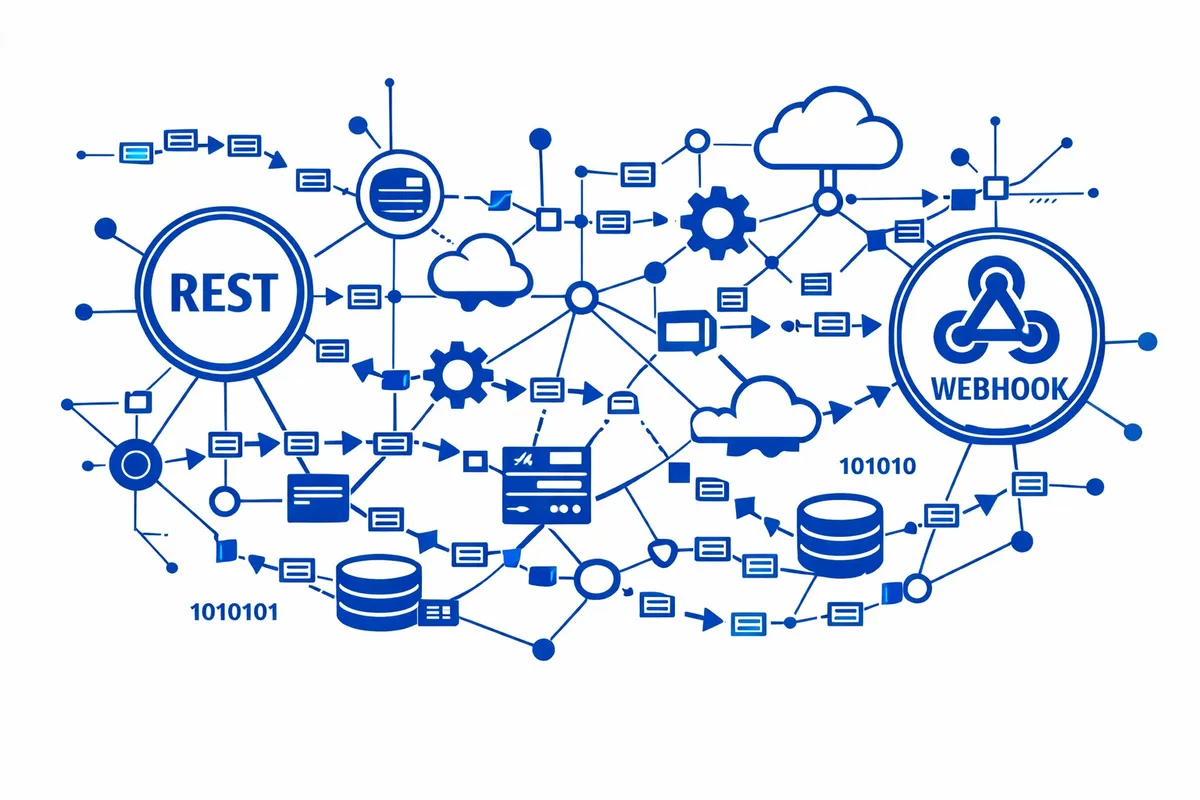
How We Build API Development for Hyde Park
Our engagements start with a problem definition, not a technology choice. We want to understand what the organization is trying to accomplish, what data needs to move, where it currently lives, and what the constraints are. Only after that is clear do we make recommendations about the specific technical approach. For many Hyde Park clients, the first deliverable is a written technical design document that details the data flow, the endpoints, the security model, the expected performance, and the integration points. You approve that design before we write any code.
We typically build APIs using modern, well-supported technology stacks: Node.js with TypeScript, Python for data-heavy pipelines, Postgres as the default database. We use managed infrastructure wherever possible so the ongoing operational burden is minimal. For a Hyde Park client, the goal is almost always to minimize the amount of infrastructure the client has to operate themselves. We deploy to cloud platforms with automatic scaling, monitoring, and backup, so the API runs reliably without the client needing to manage servers.
Security is built into the core design, not bolted on. For any API handling sensitive data, we implement proper authentication, authorization, encryption in transit and at rest, audit logging, and rate limiting. For medical practices, we handle HIPAA compliance. For research groups working with sensitive data, we handle IRB and institutional data governance requirements. For firms handling client data, we handle confidentiality and professional responsibility obligations. The security model is documented clearly so compliance reviewers can validate it.
Documentation is a deliverable in its own right. Every API we build comes with usage documentation that a developer can read and use without coming back to us every time. If your engineering team will take over the API later, the documentation makes that handoff clean. If a future developer inherits the work, they can pick it up without reverse-engineering the system. We have seen too many custom APIs built by consultants who left no documentation, forcing the client to either rebuild from scratch or maintain a system nobody understands. We refuse to leave our clients in that position.
Ongoing support is modest and transparent. After launch, we offer support tiers that match the operational criticality of the API. A research pipeline that is used occasionally needs less support than a production API powering a startup's core product. We match the support level to the actual need, and we do not sell unnecessary ongoing commitments. Most Hyde Park clients run on light post-launch support because we have built the system well enough that it does not need constant intervention.
Industries We Serve in Hyde Park
Research groups affiliated with the University of Chicago including computational research teams, medical research groups at the Duchossois Family Institute and UChicago Medicine, and social science teams across the Quad use our services for data pipelines, instrument integrations, and analysis workflows that require custom API work.
Startups incubated through the Polsky Center and the broader UChicago entrepreneurship community use our services for product API development, customer-facing integrations, and infrastructure to support early customer onboarding. Small, pre-Series-A teams get the development capacity without hiring a full engineering team.
Medical practices and clinical operations near UChicago Medicine, including specialty clinics and independent providers, use our services for EMR integrations, specialty workflow tools, patient-facing integrations, and clinical data exchange. All work is HIPAA compliant and respects clinical data governance standards.
Law firms and professional services practices along Lake Park Avenue, 53rd Street, and Cornell Drive use our services for practice management integrations, document management connections, billing system integrations, and client-facing tools. Small firms gain operational efficiency that previously required much larger in-house technology investments.
Nonprofits and cultural institutions with complex data flows between donor databases, program management tools, fund accounting systems, and communications platforms use our services for the specific integrations that commercial tools fail to cover. The neighborhood has many such organizations, and most have hit the limits of what off-the-shelf automation can handle.
Small businesses and retailers along 53rd Street, 57th Street, and Harper Court running ecommerce, point of sale, and marketing operations use our services for the integrations that tie these systems together when the native connections are missing or inadequate.
What to Expect Working With Us
1. Problem definition and design. We start with a discovery phase that maps out what you are trying to accomplish and what the constraints are. The output is a written technical design document for your approval. This phase usually runs one to two weeks.
2. Build and test. We build the API in short iterations with you seeing working components throughout. We test against real data flows before anything goes to production. Build phases typically run three to eight weeks depending on complexity.
3. Deploy and document. We deploy to managed cloud infrastructure, document the system thoroughly, and train the people on your side who will interact with the API going forward. You get everything you need to understand and operate what we have built.
4. Ongoing support. We offer right-sized support after launch. For most Hyde Park clients, this is a modest monthly retainer that covers monitoring, minor updates, and response to issues as they arise.