How We Build AI Sales Intelligence in Hyde Park
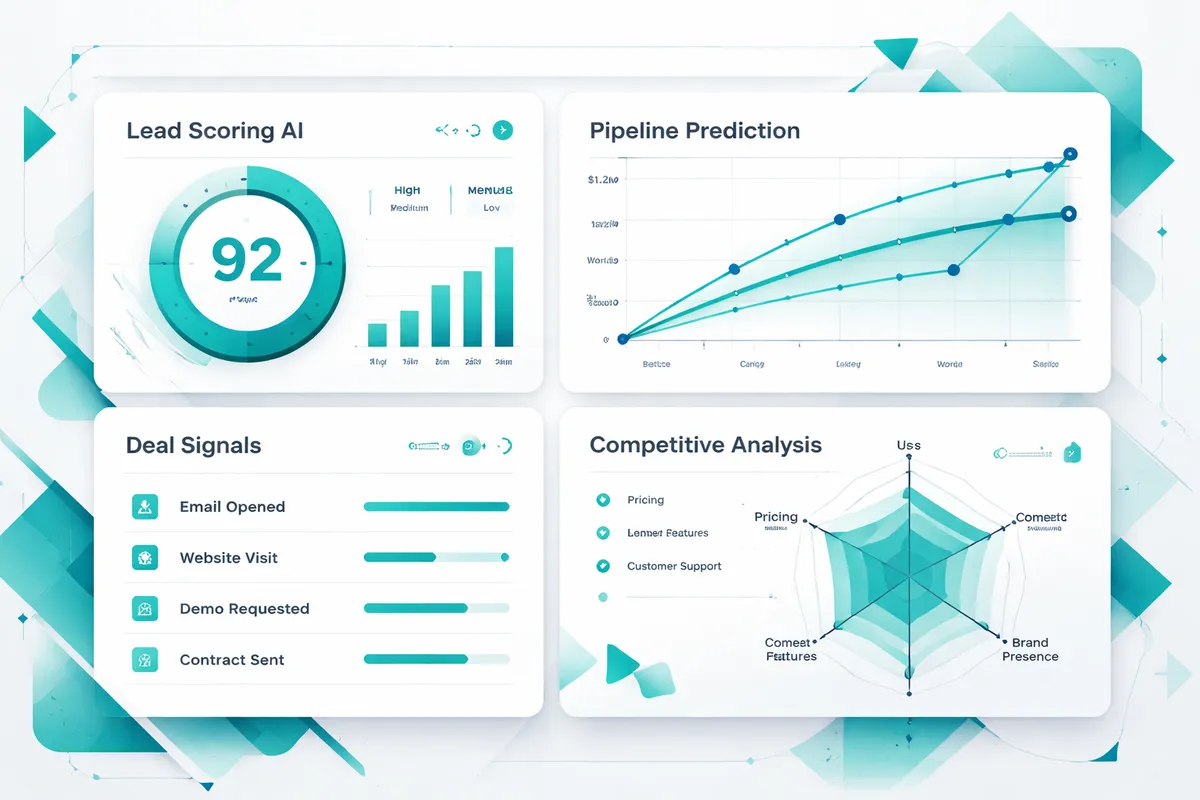
We connect your data sources: CRM records, email activity, website analytics, phone logs, and transaction history. The AI cross-references these signals to build engagement profiles for each prospect and customer. For professional services near campus, we build lead scoring models that factor in academic department, role, budget authority signals, and engagement depth across multiple touchpoints over time. For retail businesses on 57th Street, we build customer lifetime value models that identify your most profitable segments and predict future spending. For restaurants, we analyze reservation patterns, ordering frequency, and spend levels to identify VIP customers and those at risk of lapsing.
The deployment includes specific calibration for the academic calendar, since Hyde Park prospect behavior follows university rhythms rather than commercial rhythms. A prospect who goes quiet in July is likely on summer research sabbatical, not cold. The intelligence system learns to distinguish these academic calendar lulls from genuine disengagement.
Industries We Serve in Hyde Park
Professional service firms near the university use sales intelligence to prioritize outreach across faculty, departments, and institutional contacts. A firm can identify that a particular department is showing increased engagement across multiple contacts, signaling an upcoming procurement decision, and position themselves ahead of competitors who are not tracking engagement at the contact cluster level. The ability to detect multi-contact engagement within a single university department is one of the most valuable capabilities for professional services selling into academic institutions.
Bookstores and specialty retailers build customer intelligence that segments by academic discipline, purchase frequency, and lifetime value, enabling targeted promotions that convert at 3 to 5 times the rate of general campaigns. The Seminary Co-op customer who buys philosophy texts responds differently to outreach than the one who buys economics texts. An intelligence system trained on purchase history knows this and tailors outreach accordingly.
Restaurants on 53rd Street identify their highest-spending regulars, track visit frequency trends, and flag customers whose visits are declining before they lapse entirely. The intelligence also surfaces the private dining and catering opportunities hiding in the existing customer base, identifying which customers have hosted private events and which ones are approaching occasions when they typically do.
What to Expect Working With Us
1. Data integration and customer profiling. We connect your CRM, email platform, website analytics, and transaction history into a unified customer view. For professional services with institutional clients, we build contact-level and account-level profiles that capture both individual engagement signals and department-wide buying patterns.
2. Academic calendar calibration and lead scoring. We build scoring models calibrated to Hyde Park's academic rhythms: grant cycle timing, quarter start and end patterns, conference season engagement spikes, and the specific decision-making timelines of the institutional market. The scoring reflects when Hyde Park buyers are actually ready to move forward, not when generic lead scoring algorithms would flag them as ready.
3. Alert configuration and outreach playbooks. We configure triggers for the situations that matter in the Hyde Park market: a faculty prospect who has re-engaged after a summer hiatus, a department administrator whose engagement has intensified across multiple contacts, a residential VIP who has not visited in 60 days. Each trigger generates a recommended action with timing guidance.
4. Ongoing monitoring and quarterly reviews. We review performance quarterly, with particular attention to how the scoring models perform across academic year transitions. We refine as needed and update the models when significant institutional changes, like new department leadership or major grant awards, shift the buying patterns of key prospects.