How We Build AI Model Training in Hyde Park
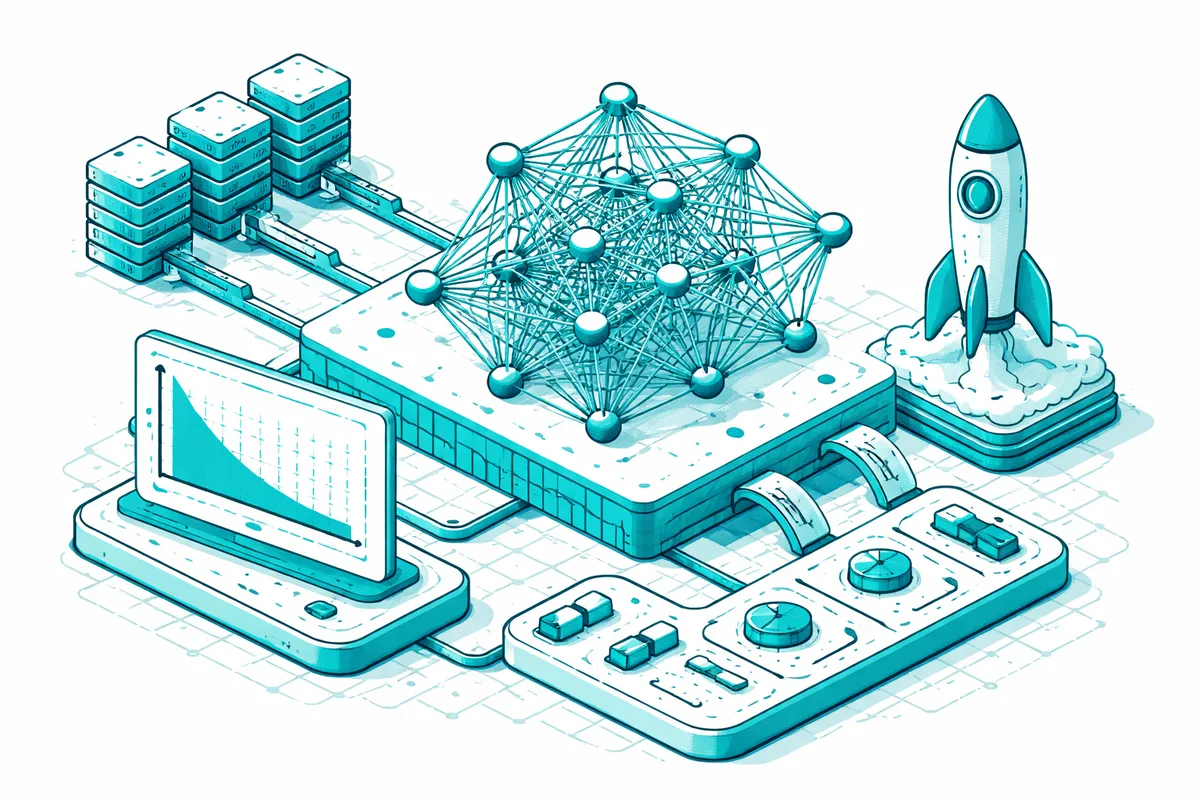
We start with your existing data: sales records, customer interactions, reservation histories, inventory turnover, and any other operational data you have accumulated. We clean and structure this data, accounting for the academic calendar and seasonal patterns specific to Hyde Park. Then we train models for your use case. For a restaurant on 53rd Street, that might be a demand forecasting model that accounts for university events, weather, and day-of-week patterns. For a bookstore on 57th Street, it could be a recommendation engine trained on reading habits and academic discipline. For a professional service, it might be a client acquisition model that predicts which prospects convert based on engagement patterns. Every model is validated against historical data before deployment.
We deliver models iteratively so you can see how they perform before committing to full deployment. Subsequent refinements improve accuracy on the patterns that matter most to your business. We monitor performance after launch and update the model as your data grows, ensuring it stays calibrated to Hyde Park's evolving commercial landscape as the neighborhood continues to develop.
Industries We Serve in Hyde Park
Bookstores and specialty retailers train recommendation models on academic purchase patterns and reading interests. A model trained on Seminary Co-op data understands that a customer buying phenomenology texts is more likely to want continental philosophy than self-help, which is the kind of nuance that generic recommendation engines miss completely. These models also predict seasonal demand shifts as syllabi change, allowing buyers to anticipate titles before reading lists are posted publicly.
Restaurants build demand models that account for the academic calendar, conference schedules, and the specific traffic patterns of 53rd Street. A model can predict that alumni weekend will drive 50% more covers on Saturday night and suggest prep quantities accordingly. The same model learns that the week after finals ends is one of the slowest of the year, a pattern invisible to any tool not trained on Hyde Park-specific data.
Professional services develop client scoring models calibrated to the academic market, predicting which faculty, researchers, and departments are most likely to engage. Educational service providers build enrollment prediction models that account for university admission cycles and demographic shifts. Property managers train occupancy models that reflect the predictable turnover driven by degree completion and international scholar appointments.
What to Expect Working With Us
1. Discovery and data audit. We inventory your existing data sources and map them against the academic calendar events and commercial cycles that drive Hyde Park demand. We identify where your data is richest and which gaps need filling before reliable modeling can begin. For Hyde Park businesses, this step often reveals that the academic calendar is either captured poorly or not at all in existing records, which we address in data engineering.
2. Data preparation and model design. We structure your data to incorporate academic calendar signals, conference schedules, museum exhibition timelines, and other Hyde Park-specific features. We select the right model architecture for your use case and define how we will measure success before training begins. You approve the approach before any computational resources are committed.
3. Training, validation, and refinement. We train the model on your historical data and test it against periods it has never seen, with explicit attention to how it performs during academic quarter transitions, orientation weeks, and other Hyde Park-specific demand peaks. Performance is shared transparently, including honest assessment of where the model is strong and where it has limits.
4. Deployment and ongoing monitoring. We integrate the model into your existing workflow and train your team on how to act on its outputs. For Hyde Park businesses, the model often reaches its highest accuracy after capturing a full academic year of real-world data. We schedule quarterly reviews to assess performance and incorporate new patterns as the neighborhood's commercial profile continues evolving.