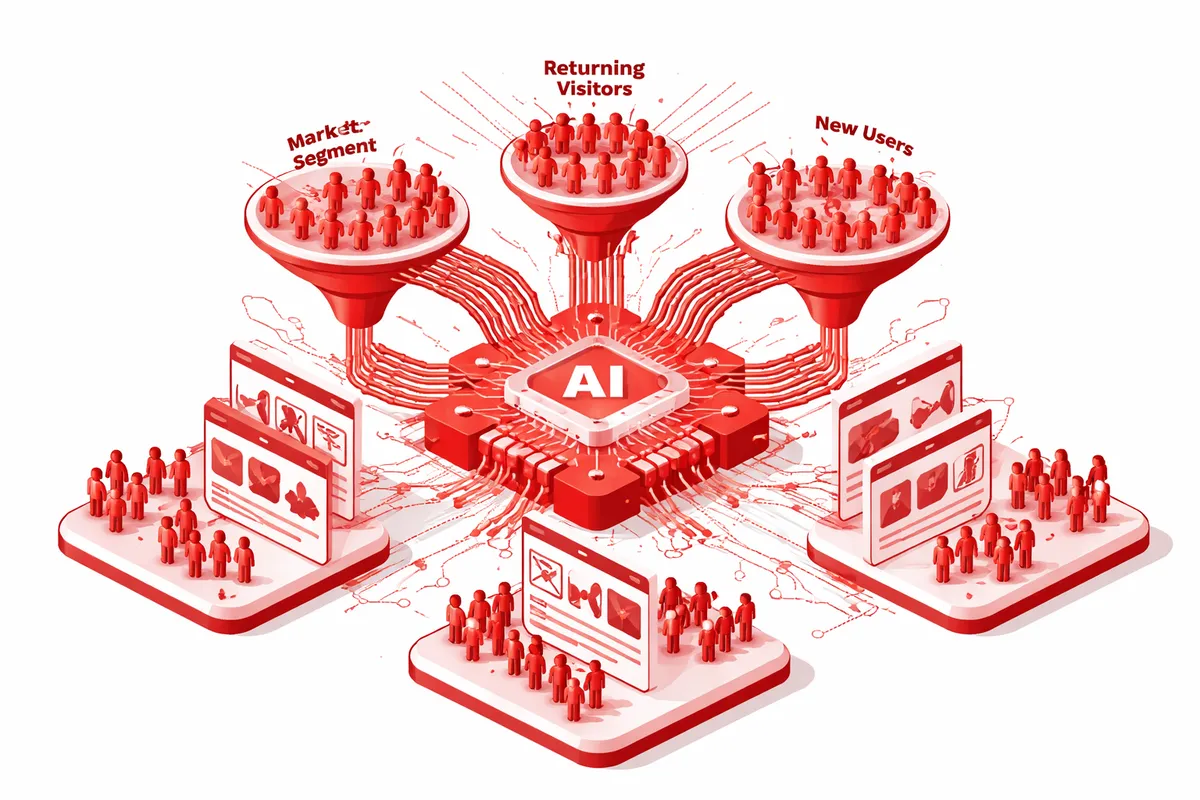
How We Build AI Content Personalization in Hyde Park
We start by mapping your customer data architecture. POS transaction history, email list engagement patterns, website behavior data, loyalty program records, and any CRM data your business maintains all contain signals about customer segments and individual preferences. We identify what data you have, fill gaps where possible, and build the segmentation model on the strongest available evidence.
For most Hyde Park businesses, we identify five to seven distinct audience segments with meaningfully different communication needs. A bookshop near Seminary Co-op typically serves academic specialists with known subject interests, browsing trade readers, students on course-material missions, gift-givers, and occasional visitors from the Museum of Science and Industry. Each segment responds to entirely different content, and the system automates delivery of each variant without manual audience maintenance.
We build content templates for each segment reflecting both communication register and substantive interests. Content for UChicago faculty reads differently than content for first-year graduate students, which reads differently than content for Hyde Park residents unaffiliated with the university. The templates establish structure; the AI fills in specific personalization signals for each individual within a segment.
Academic calendar alignment is built into the campaign architecture from the start. We map the University of Chicago academic year into the campaign scheduling logic so that content shifts automatically as the calendar shifts. The system knows that the first week of September requires different messaging than the week before Finals. Commencement season content is scheduled in advance and updated based on the specific events and programming each spring.
Multilingual delivery is configured for the language distribution in your actual customer base. A business on 55th Street that serves a substantial Mandarin-speaking student and faculty population gets campaign variants built and maintained in Mandarin. Language assignment can be set by customer preference, derived from engagement patterns, or assigned based on geographic or demographic signals in the customer record.
Industries We Serve in Hyde Park
Bookshops and specialty retailers near 57th Street and the Seminary Co-op use AI personalization to recommend products calibrated to each customer's demonstrated academic interests, reading history, and browsing behavior. A customer who regularly buys critical theory titles receives suggestions in that vein when a relevant new release arrives. A student who bought course materials in September receives a different campaign than a faculty member who buys across subjects throughout the year. For used and rare book dealers near Dorchester Avenue, personalization tracks the specific subject areas each customer has expressed interest in and notifies them when relevant items arrive.
Restaurants and cafes along 53rd Street and near Harper Court use personalized campaigns to increase visit frequency and convert one-time visitors into regulars. A first-time visitor who comes during orientation week receives a follow-up campaign calibrated to new customers. A regular who visits twice a week receives loyalty recognition and early access to seasonal menu changes. International students receive campaigns in their preferred language with content sensitive to dietary and cultural preferences. The system reduces the reliance on discount promotions by substituting relevance for price incentives, which protects margins while improving retention.
Professional service firms near campus, including legal practices, financial advisors, and consulting firms, use AI personalization to segment communication by client type, service area, and lifecycle stage. A faculty member who used the firm for estate planning receives different ongoing communication than a UChicago administrator using the firm for organizational consulting. New client welcome sequences are distinct from long-term relationship maintenance content.
Cultural nonprofits and arts organizations near the Museum of Science and Industry and in the broader Hyde Park cultural corridor use personalized content to match programming announcements to the specific interests of their subscriber base. An organization running twenty events per year cannot expect every subscriber to care about every event. Personalization routes jazz programming announcements to subscribers who have attended jazz events, academic lecture invitations to faculty subscribers, and family programming promotions to subscribers with children in their profile. Attendance improves not because more messages are sent but because the messages that are sent reach people who actually want to come.
Medical practices and health service providers near UChicago Medicine use personalization to maintain patient communication relevant to each patient's care history. A patient who received sports medicine services receives injury prevention content. A patient using the practice for annual wellness care receives preventive health content calibrated to their profile. Communication stays connected to each patient's actual situation rather than broadcasting generic wellness content to a diverse population.
Academic publishers and research service organizations embedded in the Hyde Park knowledge corridor segment communication by discipline and research stage. A researcher who downloads methodology guides receives follow-up content at that level. An editor engaging with publishing process content receives different ongoing communication than a faculty author navigating manuscript submission for the first time.
What to Expect Working With Us
1. Audience and data mapping. We connect to your customer data sources and map the distinct audience segments present in your Hyde Park customer base. Faculty, graduate students, international community members, longtime neighborhood residents, and occasional visitors from outside the neighborhood each represent distinct behavioral and communication profiles. We document the segmentation logic before building so you understand how the system classifies your customers and why.
2. Segment content development with depth standards. We build content variants that match the intellectual expectations of Hyde Park's audience. Faculty-facing content is substantive and specific, not promotional. Student-facing content is calendar-aware and practical. International audience content is multilingual and culturally calibrated. Every variant is reviewed against the standard: does this earn attention from someone who filters aggressively, or does it read as generic outreach with a name field swapped in?
3. Academic calendar-aligned campaign launch. Your personalized campaigns go live with scheduling tied to the University of Chicago academic calendar. The system knows which weeks are high-intensity and which are transition periods. First-of-quarter campaigns are structured differently from mid-quarter maintenance campaigns. Commencement season content is distinct from summer session content.
4. Segment performance tracking and refinement. We track open rates, click-through, and downstream conversion by segment and report monthly on what is working and what needs adjustment. Content underperforming within a segment gets revised based on engagement data, not assumptions. The system improves each academic year cycle as it accumulates more signal about your specific customer base.