How We Build AI Governance for Hyde Park
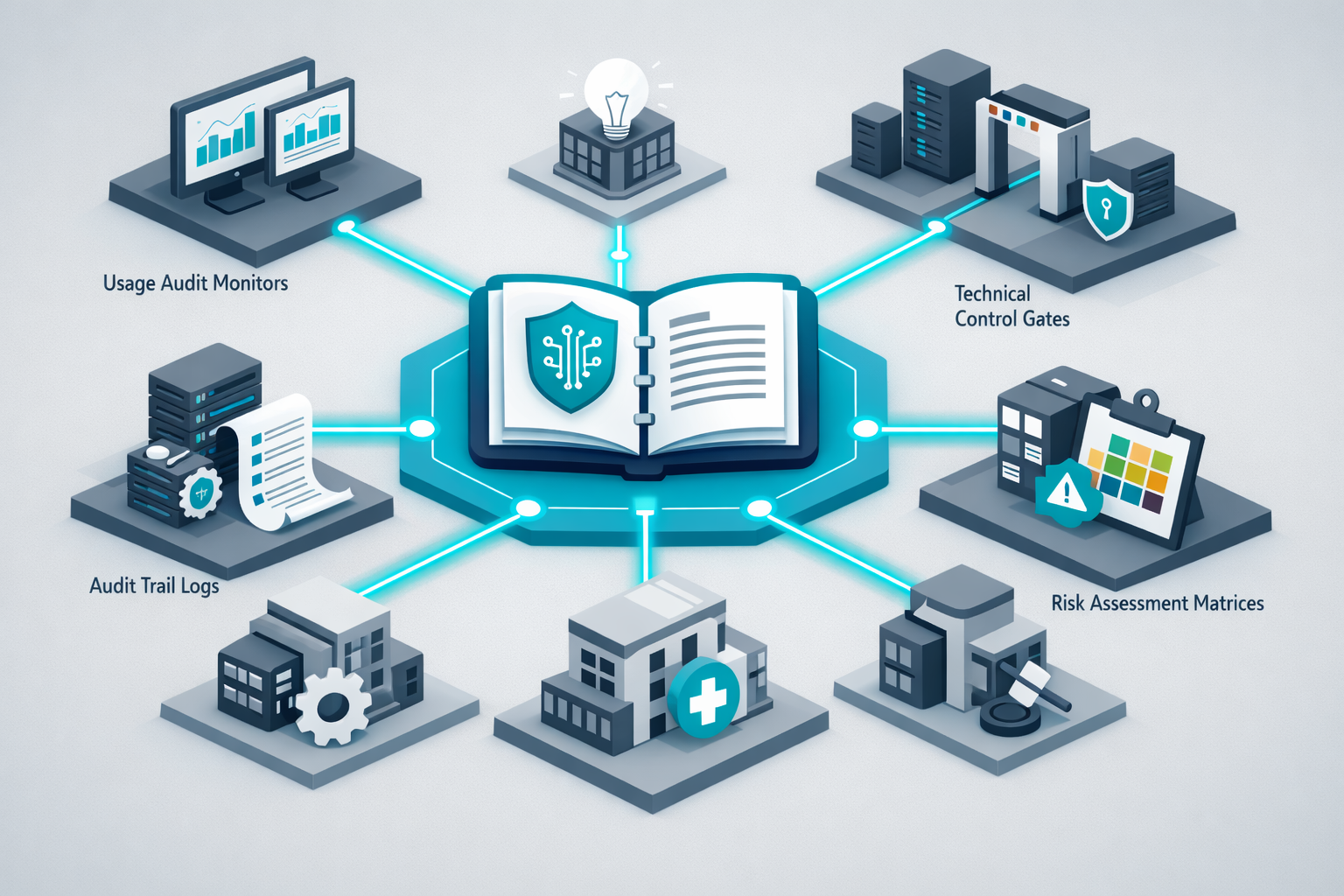
AI usage audit first. Before we write any policy, we map what AI tools your organization is actually using, by whom, with what data, for what purposes. This audit is often the first time leadership sees the full picture. A medical practice usually discovers that clinical staff are using at least three or four AI tools that IT never authorized. A nonprofit often finds AI usage in program delivery, fundraising, and administrative functions that nobody explicitly decided to adopt.
Risk mapping against layered regulations. We identify the specific regulations, contractual obligations, and institutional requirements that apply to your organization. For a UChicago Medicine-adjacent practice, that includes HIPAA, Section 1557, Illinois health information law, and any specific contractual terms in payer agreements that touch on AI. For a research organization, that includes IRB protocols, federal grant terms, institutional data governance, and publication ethics standards. For a nonprofit, that includes grant-specific data handling requirements, donor privacy expectations, and Illinois state law.
Policy design that teams can actually follow. AI acceptable use policies, data classification rules that define what information can flow to which AI tools, output review requirements, vendor assessment criteria, and incident response procedures. Policies are written to be enforceable and operational, not aspirational documents that sit unread in a shared drive. For each role in the organization, the policy tells staff exactly what they can and cannot do with AI tools.
Technical controls that make policies real. Data loss prevention rules that prevent protected data from reaching unauthorized AI endpoints. Approved tool whitelists integrated into your identity and access management systems. Logging infrastructure that creates the audit trails HIPAA and other frameworks require. Output monitoring that flags potentially problematic AI-generated content before it reaches external audiences. Without technical controls, policies are suggestions. With them, governance is embedded in the workflow.
Training calibrated to the audience. Clinical staff need different training than administrative staff. Research coordinators need different training than fundraising staff. We build role-specific training modules that explain what the rules are, why they exist, and what the practical application looks like in the workflows each group actually runs. Training is followed by competency checks so the organization can document that staff understood the requirements.
Industries We Serve in Hyde Park
Medical practices and specialty clinics connected to UChicago Medicine need AI governance that protects PHI rigorously while enabling the genuine clinical and administrative benefits AI can deliver. We build frameworks that identify HIPAA-compliant AI tools with signed BAAs, establish clear rules for what patient data can flow to which tools, implement technical controls that block unauthorized uploads, and create audit trails that support HIPAA compliance reviews. For practices involved in research, we layer in the IRB-adjacent considerations that clinical research workflows require.
Research organizations and the Polsky Center ecosystem need AI governance that respects IRB protocols, grant-specific data handling requirements, and publication ethics. Research-commercial ventures often inherit expectations from their parent research institutions that they do not fully understand until an investor or partner asks about data governance. We build the frameworks early so ventures are not retrofitting governance during a Series A diligence process.
Academic publishers and scholarly services face governance challenges around peer review integrity, editorial independence, and the ethical implications of AI in academic workflows. Frameworks for these organizations address how AI can and cannot be used in editorial decisions, how authors should disclose AI usage, and what technical controls prevent AI from corrupting the integrity of the publication process.
Nonprofits and community organizations across the South Side face AI governance challenges around donor privacy, program participant confidentiality, and grant-specific data handling requirements. Organizations working with sensitive populations, whether victims of violence, unhoused individuals, or children, have particularly strong confidentiality obligations. We build frameworks that protect the people the organization serves while still letting staff benefit from AI productivity gains.
Higher education-adjacent organizations, including UChicago-affiliated programs, Charter schools, and educational nonprofits, face FERPA requirements, student data privacy expectations, and institutional data governance standards. Frameworks for education organizations address AI use in student-facing applications, data handling for educational records, and the ethical considerations around AI in learning environments.
Professional services firms along 53rd Street, Lake Park Ave, and Harper Court serving healthcare, research, and nonprofit clients inherit governance obligations from their client relationships. Law firms face privilege concerns when client information flows to AI tools. Accounting firms face confidentiality obligations written into engagement letters. We build firm-level governance frameworks that satisfy both client expectations and professional responsibility standards.
What to Expect Working With Us
1. AI usage audit. We map every AI tool in use across the organization, the users, the data, the business purposes, and the current gap between practice and required governance. This typically takes two to four weeks depending on organizational size and produces the factual foundation for every governance decision that follows.
2. Risk assessment and framework design. From the audit, we build a risk assessment mapped to the specific regulatory and institutional requirements that apply to your organization. The governance framework includes policies, data classification, vendor assessment criteria, and incident response procedures. For Hyde Park organizations operating under layered obligations, the framework explicitly addresses each layer.
3. Technical control implementation. Data loss prevention, approved tool whitelists, access controls, output monitoring, and audit logging all implemented in your actual technology environment. Not a theoretical architecture document. Real controls deployed and tested.
4. Training, committee setup, and handoff. Role-specific training delivered to every team with AI usage. AI governance committee established with charter, cadence, and decision authority. Documentation and procedures handed off so your organization can operate the framework independently going forward, with optional ongoing advisory for organizations that want continued support.