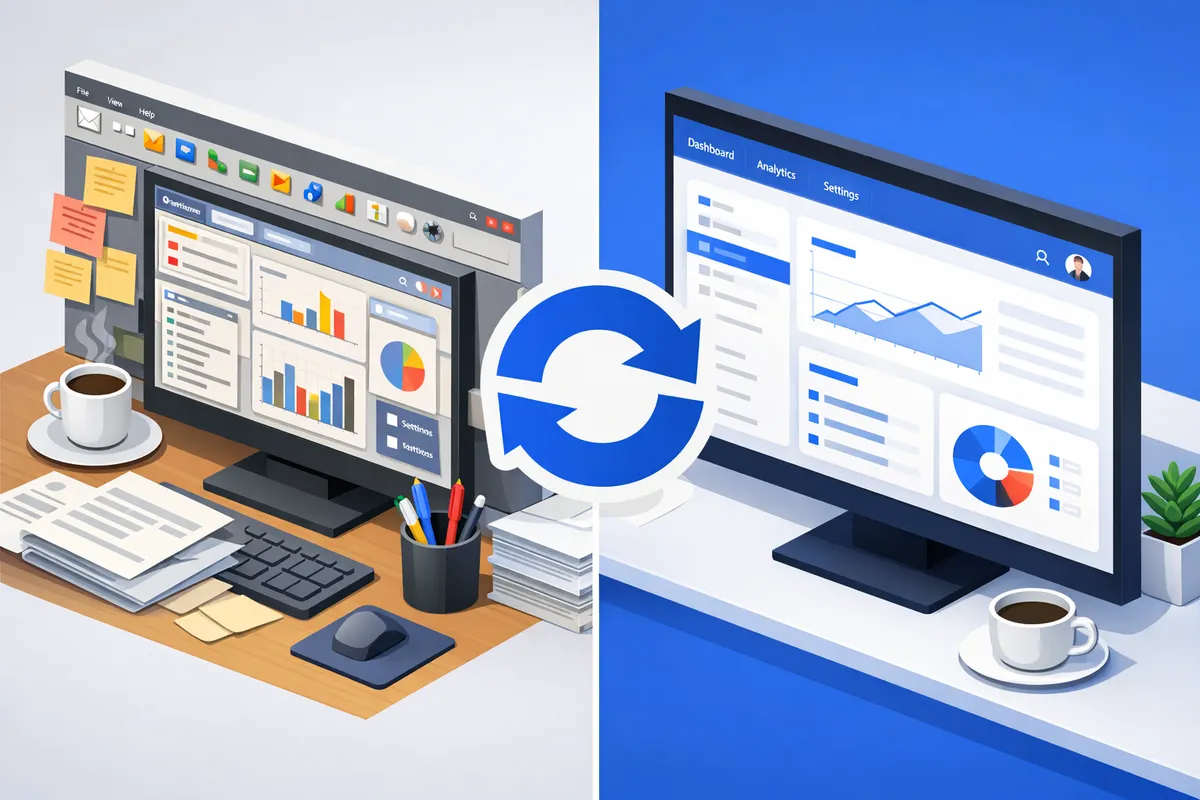
How We Build Website Redesigns for Humboldt Park
We start by talking to the people who use the current website most: the staff who update it, the customers or community members who navigate it, and if possible, the people who have tried to use it and left. What are they looking for? Where do they get stuck? What does the current site communicate about the organization that is wrong or incomplete? That conversation shapes the redesign in a way that no amount of analytics data alone can achieve.
Bilingual architecture is established before a single design decision is made. For organizations serving Humboldt Park's Spanish-speaking community, the question is not whether to build in Spanish but how to structure the bilingual experience: a parallel site structure with full translations, a language toggle with persistent preference storage, or a community-specific entry point that routes users to their preferred experience. We make this decision in collaboration with the organization based on how their audience actually uses digital tools, not based on what is easiest to build.
Design draws on the visual character of the neighborhood rather than defaulting to generic web aesthetics. The murals on Division Street, the flags on the gateway structures, the color vocabulary of the community's self-expression: these inform the design without being borrowed wholesale. A restaurant's website that feels like it belongs to this neighborhood, this street, this community, communicates something that a standard template cannot. We build that specificity into the design process.
Development uses modern, maintainable foundations: a CMS that the organization's staff can update without calling a developer, a hosting configuration optimized for Chicago-area page load performance, and a technical setup that includes proper SEO foundations, analytics instrumentation, and the schema markup that improves how the site appears in search results. The organization gets a complete handoff with training.
Industries We Serve in Humboldt Park
Puerto Rican restaurants and family-owned food businesses along Division Street and Western Avenue need websites that communicate the character of the food, the history of the family, and the specifics that make a first-time visitor want to come in: the menu, the hours, the ambiance, and the easy path to making a reservation or placing an order. We design restaurant sites that prioritize mobile experience because that is how the majority of visitors arrive, and we make the menu accessible without a PDF download.
Cultural nonprofits and community organizations near the National Museum of Puerto Rican Arts and Culture and La Casita carry institutional histories that deserve a digital home proportional to their significance. An organization that has been doing cultural preservation and community development work for decades should have a website that reflects that legacy. We build organizational websites with strong archival presentation, event management, membership features, and donation functionality that serves the mission rather than just checking the "we have a website" box.
Community health centers and social service agencies on North Avenue need websites that function as patient-facing service portals: new patient intake, appointment requests, health resource libraries, staff directories, and multilingual content. We design health center websites with accessibility compliance and bilingual parity as non-negotiable requirements, not optional enhancements.
Independent coffee roasters and specialty food producers near Pulaski Road and California Avenue need e-commerce websites that convey quality and origin as effectively as in-person retail does. A specialty coffee brand's website is its national storefront. We build these sites with product storytelling, e-commerce functionality, and the mobile checkout experience that converts visiting browsers into paying customers.
Community advocacy organizations operating near Roberto Clemente Community Academy need action-oriented websites: petition pages, event registration, volunteer sign-up, and constituent communication that drive engagement rather than passively presenting information. We design advocacy sites to be operationally active, not just informational.
Bike shops and specialty retailers along the neighborhood's commercial corridors often have the most outdated web presences of any business type in Humboldt Park. A redesign that includes service scheduling, product display, and a clear local SEO structure transforms a website from a digital afterthought into a tool that generates appointments and customers.
What to Expect Working With Us
1. Discovery session and current-site audit. We review your current website with you: what is working, what is failing, and what the redesign needs to accomplish. We pull analytics data if available and conduct a technical audit that identifies performance, SEO, and structural issues that the redesign will need to address. For bilingual organizations, we audit both language versions independently. This session produces the brief that guides every subsequent decision.
2. Strategy and architecture before visual design. We establish the site structure, the primary user journeys, the bilingual architecture, and the content strategy before designing a single page. For community organizations on Division Street that have accumulated years of content on the current site, this is where decisions are made about what to carry forward, what to archive, and what to create new. A redesign that inherits the old site's content structure is usually a step sideways, not forward.
3. Design system and page designs reviewed in full before development. We design the visual system and the key page templates and present them for review before development begins. This is the last point at which structural changes can be made without significant cost. We walk through the designs with the full team that will need to sign off, including the people who will be managing the site afterward, so there are no surprises after launch.
4. Build, training, and launch with SEO continuity. Development produces a fully tested site in a staging environment. We implement all redirects from old URLs to new equivalents before launch. We train the staff who will manage the site on how to update content, add events, and manage the bilingual content workflow. Post-launch monitoring confirms search rankings are maintained and performance targets are met.