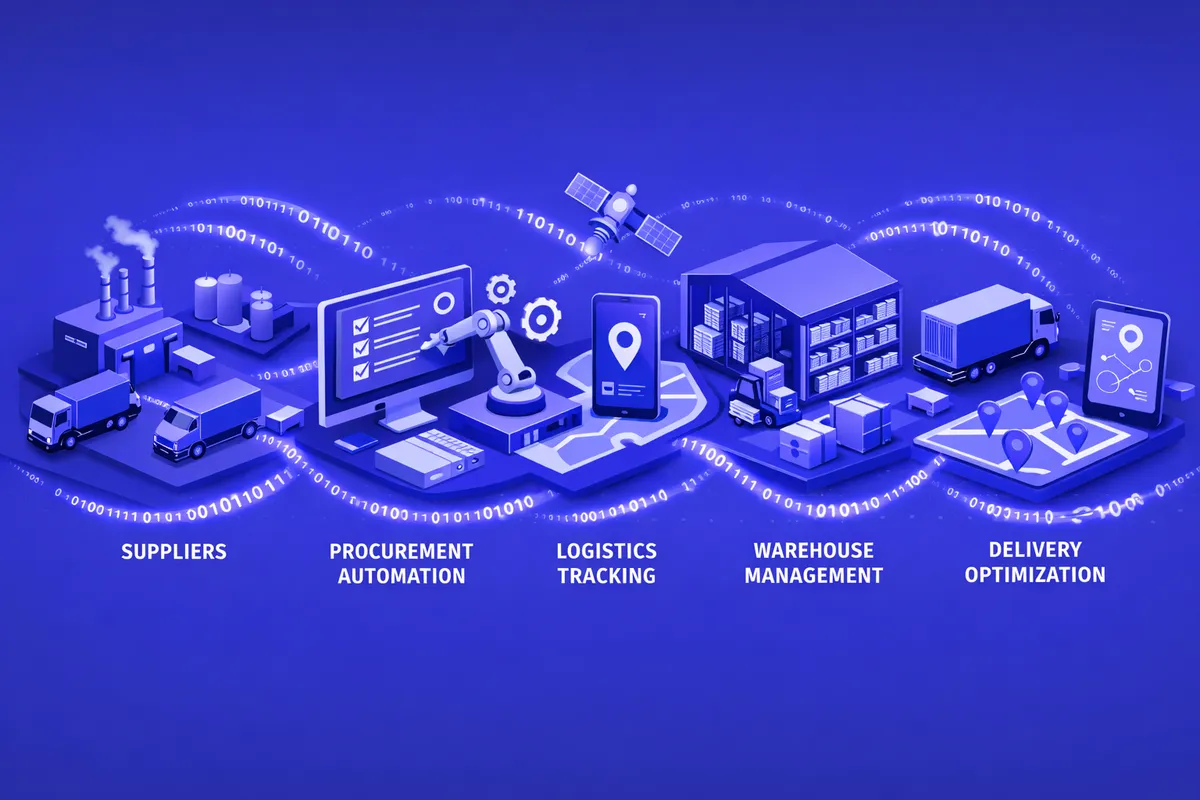
How We Build Supply Chain Automation for Humboldt Park
Supply chain automation for Humboldt Park operators begins with documenting the full vendor landscape, including the informal purchasing channels that most small operators rely on alongside their formal distributor relationships. Many Division Street businesses manage specialty ingredient sourcing through direct relationships with smaller suppliers who do not use formal order systems. We document these relationships and design automation that accommodates them, including vendor communication through email templates or phone-based order logging rather than EDI.
From the vendor map, we design reorder logic for each product category. Fresh items, specialty goods, dry goods, and supplies each have different reorder triggers. For a Puerto Rican restaurant near Humboldt Park, the reorder logic for fresh produce ties to daily sales velocity. The reorder logic for specialty dry goods ties to a fixed periodic review cycle. The reorder logic for paper goods and supplies ties to a stock level threshold. Each category runs its own automation track.
We connect the procurement automation to your point-of-sale or inventory system when one exists. For Humboldt Park businesses that track inventory through manual counts or basic spreadsheets, we start with a lightweight inventory layer that feeds the automation. The goal is a system that works with your current operation, not one that requires you to change everything before you see any benefit.
Vendor performance tracking is a core component for Humboldt Park operators who want data to support community-aligned vendor decisions. The monitoring layer records on-time delivery rates, invoice accuracy, and order fulfillment completeness for every vendor. When a local supplier is performing, the data shows it. When a supplier is slipping, the data shows that too.
Industries We Serve in Humboldt Park
Puerto Rican restaurants and cafes along Division Street and the Paseo Boricua corridor manage procurement of specialty ingredients where substitution is not acceptable. Automated ordering based on sales velocity and par levels ensures that the signature dishes that define the restaurant's identity remain available without requiring the owner to manually track every ingredient's depletion rate across a menu of dozens of items.
Small grocers and bodegas on California Avenue and North Avenue serve a customer base that relies on them for culturally specific products unavailable at chain supermarkets. Automated reorder alerts calibrated to the actual turnover rate of each SKU prevent stockouts on high-demand specialty items while also preventing over-ordering of slower-moving goods that tie up shelf space and working capital.
Community health centers and social service organizations near La Casita and Roberto Clemente Community Academy manage procurement of clinical supplies, office materials, and program supplies across grant-funded budgets where cost accountability is required by funders. Automated purchase order generation with category coding and budget allocation tracking provides the procurement documentation that grant reporting requires.
Bike shops and specialty retail on Division Street manage small but complex inventory where individual SKUs have specific reorder points, minimum quantities, and supplier relationships. Automated reorder management for specialty parts and accessories prevents the stockout on a commonly needed item that sends customers to a competitor.
Independent coffee roasters and specialty food producers in Humboldt Park source raw materials from specific origins where seasonal availability and commodity pricing affect purchasing decisions. Automated purchase order timing based on roasting schedules and production volume prevents the raw material shortage that disrupts production, while vendor performance tracking records whether origin-specific suppliers are maintaining quality and delivery commitments.
Cultural organizations and nonprofits tied to the National Museum of Puerto Rican Arts and Culture and the broader Paseo Boricua institutional community manage procurement for programming, events, and facility operations. Automated vendor workflows for event-based procurement generate purchase orders, track delivery confirmations, and route invoices for approval without requiring staff to build the purchase coordination from scratch for each program cycle.
What to Expect Working With Us
1. Vendor and channel documentation. We spend the first two weeks mapping every vendor relationship, including informal sourcing channels. For Humboldt Park businesses with mixed formal and informal procurement, this documentation phase is where the institutional knowledge gets captured before automation is applied.
2. Reorder logic design by category. We design the specific reorder triggers and order parameters for each product category based on your actual sales patterns, lead times, and storage constraints. You review and approve the logic before we build anything.
3. Build and integrate with existing systems. We build the automation and connect it to your inventory tracking and accounting systems. For businesses without formal inventory systems, we design a lightweight layer that makes the automation functional without requiring a full system replacement.
4. Performance monitoring and vendor reporting. After go-live, the monitoring dashboard tracks vendor delivery performance, invoice accuracy, and order fulfillment rates. You have the data you need for vendor conversations, funder reporting, and community accountability without building the reports manually.