How We Build Progressive Web Apps for Humboldt Park
The discovery phase for a PWA project in Humboldt Park starts with a genuine conversation about connectivity and device profiles. We ask what devices your users actually have, what network conditions they are on when they use your service, and which tasks are most critical to work offline. The answers shape the caching strategy and the offline functionality scope more than any theoretical best practice does.
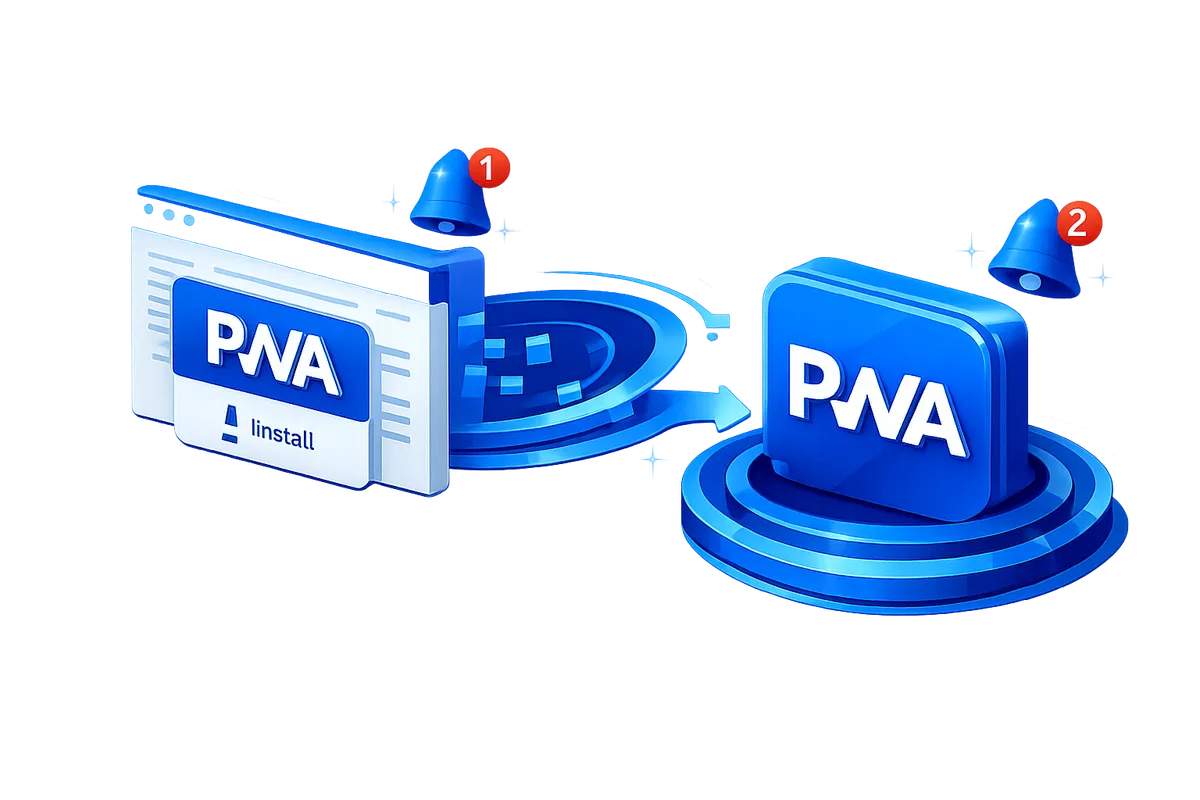
Architecture decisions follow. We build on React or Next.js with a service worker implementation that caches the application shell, critical data, and high-priority content paths. The offline experience is designed as a first-class scenario, not a fallback. For a community organization distributing a resource directory to Humboldt Park residents, the entire directory should be browsable offline after a single initial load. For a food business on Western Avenue using a PWA for order management, the order-taking workflow should function without a live connection and sync when connectivity resumes.
Bilingual support is built into the architecture from the start for organizations serving Humboldt Park's Spanish-speaking community. Language preference is stored in the service worker cache so the app delivers content in the user's preferred language even in offline mode. This is not a translation toggle added on top of an English-first application. It is a localization architecture built into the foundation.
Performance optimization targets the specific hardware and network conditions relevant to this neighborhood. We test on mid-range Android devices, not just high-end phones. We optimize for 3G and LTE conditions, not just WiFi. The performance benchmarks we use reflect the actual user environment, and the PWA delivers genuine speed under those conditions.
Industries We Serve in Humboldt Park
Community health centers and clinics along North Avenue have some of the strongest use cases for progressive web apps in Humboldt Park. A patient-facing PWA for appointment booking, health education content, and care coordination resources that works on any device and functions on a weak signal serves the patient population more effectively than either a native app with download friction or a slow desktop website. We build health organization PWAs with appropriate data security and bilingual support.
Cultural organizations and nonprofits near the National Museum of Puerto Rican Arts and Culture and La Casita use PWAs for event programming guides, membership management, community resource directories, and volunteer coordination tools. A PWA that operates offline is particularly valuable for outdoor events along Division Street during the Puerto Rican Day Parade season, when cellular networks are congested and staff need to check volunteer assignments or event schedules without relying on a live connection.
Puerto Rican restaurants and food businesses on Division Street and Western Avenue use PWAs for customer-facing menus, loyalty programs, and online ordering. A PWA menu that loads instantly, caches updates automatically, and functions on every device eliminates the need for separate iOS and Android apps while providing a better experience than a mobile-optimized website.
Community advocacy organizations near Roberto Clemente Community Academy distribute constituent outreach tools, petition collection interfaces, and event organizing resources through PWAs that reach community members directly without requiring an app download. Organizers in the field can use the PWA to record canvassing data offline and sync it when they return to a connected area.
Small grocers and specialty food retailers along California Avenue use inventory management PWAs to track stock across both physical and online channels without requiring a specific device or operating system. A PWA that runs on whatever hardware the owner already has is more practical than a native inventory system that requires specific hardware or an annual software license.
Bike shops and recreational retailers along the neighborhood's commercial corridors use PWAs for service scheduling, customer communication, and parts lookup. A service scheduling PWA that the owner can access from the shop floor on a tablet and a customer can use from their phone without downloading an app serves both user types with a single codebase.
What to Expect Working With Us
1. Connectivity and device profile assessment. We begin with a frank conversation about who uses your digital experience, on what devices, in what network conditions. For organizations serving Humboldt Park's community, this typically reveals that offline functionality and performance on mid-range hardware are higher priorities than the features that get emphasized in technology press. We build to your actual user profile.
2. Architecture decision and feature scoping. We present the PWA architecture appropriate for your use case: the caching strategy, the offline feature set, the data sync approach, and the bilingual support structure. You see the technical decisions and the rationale before development begins. The feature scope is defined at this stage so there are no surprises in the project cost.
3. Staged development with testing on real devices. Development progresses in phases with functional testing on the actual devices and network conditions your users rely on at each stage. We do not wait until launch to discover that the PWA is slow on a budget Android phone with LTE connectivity. Performance testing happens throughout, not at the end.
4. Launch, distribution, and staff training. PWA distribution is simpler than native app distribution, but it still requires intentional rollout. We prepare the launch communications, train staff on how to guide users to add the app to their home screen, and set up monitoring for installation rates, session behavior, and offline usage patterns. The data from the first 60 days shapes the first optimization cycle.